


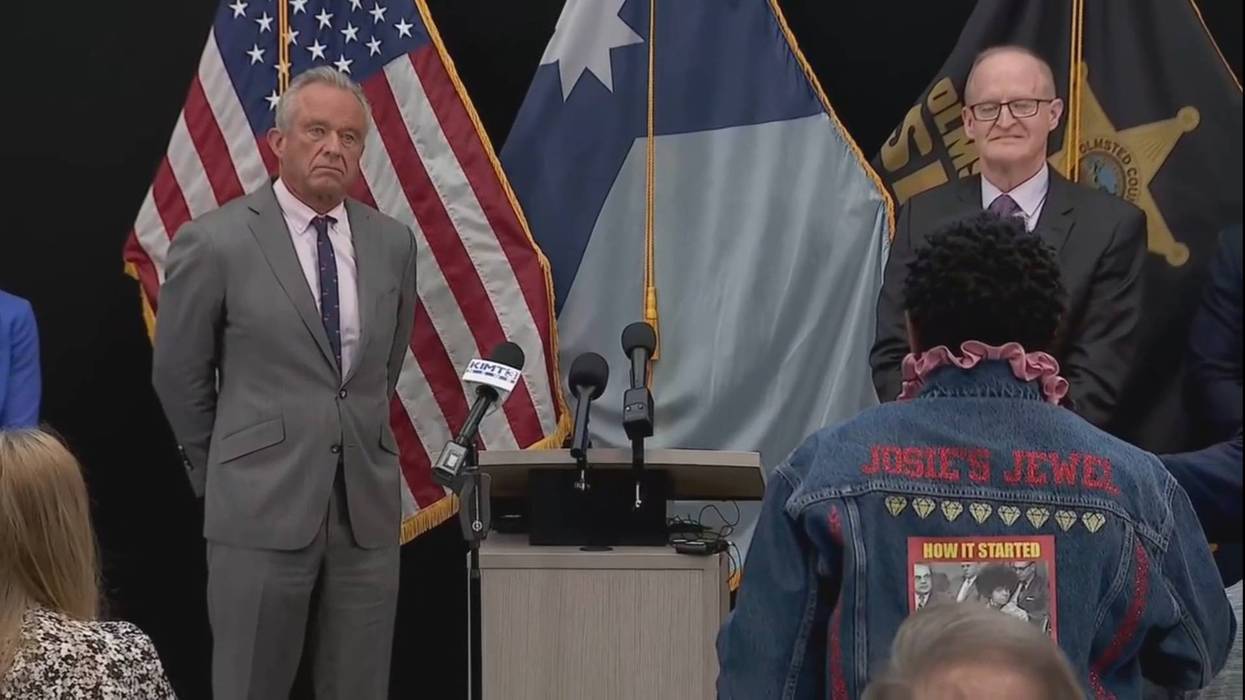

At a press conference in Rochester, U.S. Health and Human Services Secretary Robert F. Kennedy Jr. launched a new federal partnership that will accelerate urgency when autistic children and adults go missing.
The National Autism Missing and Endangered Person Alert Initiative is a new partnership between HHS, the Department of Justice and FEMA. It will build on missing and endangered person alert capabilities that already exist and FEMA's Integrated Public Alert and Warning System, known as IPAWS, to develop a new national autism-specific alert framework.
Kennedy noted that wandering is a persistent behavior among people with autism, who are frequently drawn to water. He cited grim statistics that make it clear why more intensive policies are needed.
“When an autistic child or adult goes missing every minute matters,” Kennedy said.
“Approximately half of all autistic individuals wander from a safe setting at some point. Consequences can be deadly. Eight autistic individuals die following wandering incidents each month and drowning is the leading cause of death associated with wandering,” he added. “Children with autism are 100 times more likely to die from drowning than neurotypical children.”
The new effort aims to improve how first responders handle autism-related missing-person cases, providing them with specific training and search strategies. Law enforcement officers will learn to understand the immediate danger at stake when a parent or caregiver calls 911 to report that a missing loved one has autism.
“Many, many times we have seen cases around the country when a child or an adult with autism is reported missing and if the kid is a teenager there will be a long wait before authorities activate,” noted National Autism Coordinator Diana Diaz Harrison, the parent of an autistic child.
Sheletta Brundidge, a Twin Cities autism advocate and host of the “Taking Authority Over Autism” podcast, attended the press conference to hear for herself about the new program.
Brundidge has three children with autism including one who is prone to wandering. She has sponsored a national effort that has give away more than a thousand internal combination door locks to improve home safety for families with children on the spectrum.
“I have traveled across the country and every place I go, a child with autism has died. I meet grieving parents and I wish the first responders in those communities had been educated about this,” she said. “It’s about time we have a national spotlight on this problem.”
Saying “Even a stopped clock is right twice a day,” Brundidge, who has previously been critical of Kennedy’s comments regarding autism, thinks he’s right about this initiative.
“On paper, if it’s done properly, it’s everything I could hope for. Now let’s hold them accountable to execute it,” she said.
The press conference about the federal initiative was held in Rochester because of its Project Lifesaver, which was held up as a national model. The Rochester Police Department and Olmsted County Sheriff's Office have achieved success through the community program that uses telemetry transmitter devices worn by autistic individuals. Project Lifesaver achieved an impressive 100% success rate in finding enrolled children before anything bad happened to them.
“I’m going across the country now and looking at programs that work. This is a standout program, a very innovative program that’s used by 38 counties in Minnesota and several in Wisconsin,” Kennedy said. “The awareness among law enforcement about autism, we would love it to be at the level that it is in Rochester everywhere. When they hear autism, they know what to do. We want that knowledge to be baseline knowledge that all officers have.”