

In January, Congressional Republicans moved closer to lifting a 20-year ban on mining near Minnesota's Boundary Waters Canoe Area Wilderness, pushing a resolution to end the moratorium through the House despite environmentalists' warnings that it could devastate a premier destination for campers, kayakers and canoeists.
The resolution now goes to the Senate, and approval there would send it to President Donald Trump for his signature. The resolution could be called to the Senate floor as soon as this week for a vote.
The push to end the ban comes as a Chilean mining company considers opening a copper-nickel mine in the Superior National Forest on the edge of the wilderness area that conservationists say could contaminate the watershed.
There are two camps when it comes to mining near the BWCA: those determined to protect the natural landscape and resources of one of the last true wildnerness areas in the lower 48, and those determined to return northern Minnesota's mining industry, and give the area an economic boost. They also believe mining for those critical minerals will provide a boost to U.S. security interests, making the country less dependent on foreign nations for those vital minerals.
Boundary Waters is a vast swath of remote woods, lakes and swamps in the Superior National Forest in far northeastern Minnesota, stretching for about 150 miles (about 240 kilometers) along the border with Canada.
It remains largely untouched by humans; logging is prohibited, planes must stay above 4,000 feet (1,220 meters) as they fly over it, except in emergencies, and motorized boats are limited to certain areas.
Part of the Superior National Forest is situated on the Duluth Complex, a rock formation that contains deposits of copper, nickel, lead, zinc, iron, silver and gold, according to the Forest Service.
Twin Metals Minnesota LLC, a subsidiary of Chile-based Antofagasta Minerals, submitted a plan with the U.S. Department of the Interior in 2019 proposing to mine copper, nickel, cobalt and other precious metals in the forest.
President Joe Biden's administration blocked the project in 2023, imposing a 20-year moratorium on mining on about 400 square miles (103,600 hectares) in the forest, saying that was necessary to protect the watershed and canoe wilderness.
The competing opinions and division were tackled Tuesday on the WCCO Morning News with Vineeta Sawkar, with each side making their case.
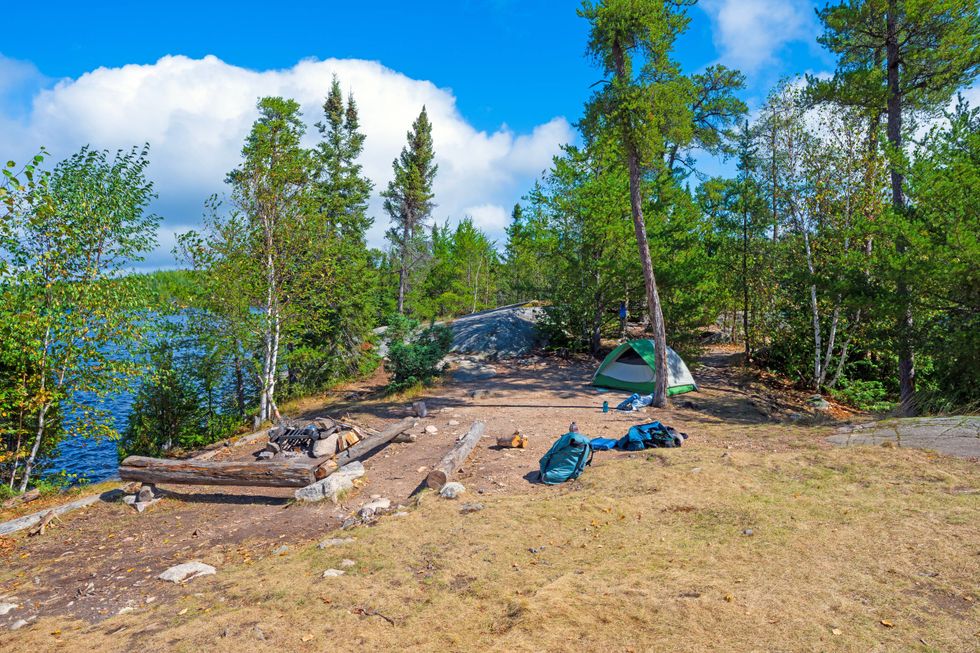 Boundary Waters is a vast swath of remote woods, lakes and swamps in the Superior National Forest in far northeastern Minnesota, stretching for about 150 miles along the border with Canada. It's beloved by campers, canoeists, kayakers, and lovers of the outdoors.(Getty Images / Wildnerdpix)
Opponents of the mine say there's no safe way to protect the BWCA
Ingrid Lyons is the executive director of Save The Boundary Waters and said her push to stop the project is necessary to protect the area.
"What concerns me most about the development or potential development of this mine is that the Boundary Waters is so unique, it's so beautiful, and it's an ecosystem like almost none other in the country," says Lyons. "It's deeply interconnected freshwater. We are so fortunate to have so much abundant freshwater in northeastern Minnesota."
Lyons says copper-nickel mining has been shown to be devastating to local environments.
"This type of mining, hard rock or precious metal mining, in this case it's a copper mine, is one of the most toxic industries in America," Lyons explains. "And it's pretty fundamentally incompatible with wet environments like we have in northeastern Minnesota."
Lyons claims this type of mining has never been proven to be safe, at least up until now.
"There's no example of a mine of this type that's been done without some form of pollution of the ground and surface water, and so, you know, we don't want to be the guinea pig," Lyons adds. And special resources that we don't believe should be risked for potential gains. Sure, I mean, yes, it could benefit the company Twin Metals, but the company is actually owned by a Chilean company and so we're talking about putting at risk American public lands for the benefit, potentially of a Chilean billionaire."
With the upcoming vote in the Senate, Lyons says it is potentially opening up more situations like this in other vulnerable places.
"So that's of concern, and we're hearing concern from across the nation, from hunting and angling groups, from faith groups, conservationists," she explains. "But also just concerned that, I know that people are tired of this back-and-forth. We won these protections that they're trying to undo after a decade of hard work and a lot of input by the American people."
During the Biden administration, a study was conducted by the U.S. Forest Service that proposed 20-year copper mining moratorium on federal land near the Boundary Waters Canoe Area. That study came with intense public interest, with over 95% of 675,000+ public comments favoring protection.
"I'm concerned because I think people's voices are being silenced, and I think that's a really dangerous precedent to set, in addition to what it means for the Boundary Waters watershed," Lyons says.
Should the mine be built near the BWCA watershed, Lyons says the worst-case scenario would be tragic.
"This type of mining is toxic because the rock has something called sulfide which creates sulfuric acid when it's exposed to air and water," she says. "And that leeches heavy metals and basically creates a slurry called acid mine drainage. That acid mine drainage, heavily toxic, could flow, the water flows north in that area and so the path of pollution is directly through the heart of the Boundary Waters. The water is so interconnected you can't trace and mitigate the pollution."
Proponents of the mine says it is needed for the local econonmy and national security
Ryan Sistad is the Executive Director of Better in Our Backyard and he talked about why opening up areas for mining could help communities in northeast Minnesota, who have struggled economically for decades since Minnesota's iron ore mines ceased operations.
"You look at a city like Ely, which is a city right next to where Twin Metals would be mining, their population has dropped by over 40% since 1980, while the rest of Minnesota has been blessed to grow by 25%," Sistad explains. "And so, as industry has been lagging in the state of Minnesota, the Iron Range has been hurting and I would argue has been being left behind. And it's opportunities like Twin (Metal) that could really help change the local economy."
Sistad also notes that the Trump administration's goal of creating more domestic rare earth mineral mining is crucial to national security interests.
"Some of the minerals that Twin (Metals) would be targeting include copper, nickel, cobalt, and then platinum group metals," he explains. "All these things we need for our national defense applications and also for renewable energy technologies, which many of our statewide leaders in Minnesota advocate for. So, I would argue that it makes sense from a regional perspective and then from a national security perspective as well. The more that we're mining critical minerals domestically, the better it is for the U.S."
As for the safety of the mines, something Lyons says cannot be proven to work, Sistad thinks there are protections clearly in place.
"That's why we have existing protections for the BWCA and that's why we have a buffer zone," Sistad adds. "And that's also why we have a permitting process, you know? I think a lot of people, through messaging, when you see different groups talk about this, might get confused. If you're just a normal person and you don't know too much or in depth about these projects. I think a lot of people just assume that once this legislation's approved and passed and signed into law, they're thinking that a mine's gonna be approved and up and running. Twin (Metals) still has to go through the permitting process. That's their main priority right now, is to make sure that they at least have a fair shot to prove that they can do this responsibly and safely."
That includes not just national regulations, but strict regulations in the state of Minnesota, something Sistad argues are some of the best environmental regulations and safety standards in the country, if not the world.
Lyons was concerned that if the area became tainted by the mining process, there would need to be significant money put towards a cleanup and the need for a superfund. Sistad wouldn't comment on that directly, but says that is part of the process.
"I don't wanna speak specifically to what Twin (Metals) is working with on behind the scenes, but I mean, there's a lot of bonds that go into place for new projects that are permitted or are in running where companies have to put a certain amount of of capital aside in the event that there is an accident," he says. "But that's why again, it goes back to the permitting process. That's why you have to go through a process and make sure that you can do it responsibly and safely."
Sistad also added that the U.S. has made it extremely difficult to open new mining projects, something the Trump administration is trying to change.
"When they're saying like environmental regulations are being stripped or whatever else, on average it takes 29 years to permit a new mine in the U.S. It's the second longest permitting timeline in the globe," he says. "And it's getting to a point where, you know, like our friends in Canada and Australia, they're permitting new mines in a 3 to 5 year time period. Including the Rainy River mine, which is a gold mine in Canada that is currently operating in the Rainy River watershed. It's just northwest of Twin Metals across the Canadian border and they've been mining and operating safely since 2017."