


Even though the height of the siege was in the depths of a bitterly cold winter, Operation Metro Surge definitely showed up during swelteringly hot summer days at the Minnesota State Fair.
From framed crop art pieces at the Ag-Hort Building to designs on quilts at the Creative Activities Building to photographs and paintings at the Fine Art Building, many artistic Minnesotans illustrated experiences from Operation Metro Surge in their creative entries.
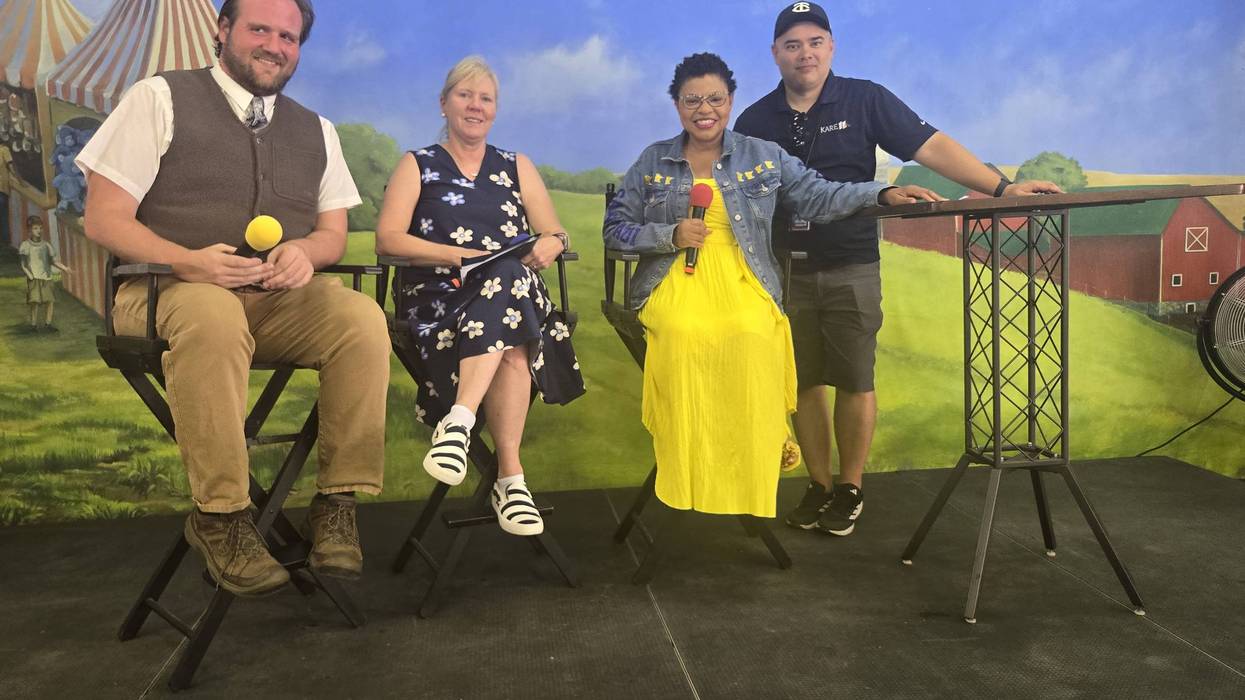
Stories and memories from Operation Metro Surge also took center stage as broadcaster and podcast entrepreneur Sheletta Brundidge debuted her new podcast at the KARE 11 Barn on the State Fairgrounds.
According to Brundidge, her Voices of Minnesota podcast will create a ten-part oral history that gives an audio platform to the Minnesotans who lived it.
“We want to hear the good, the bad, and the ugly, unredacted and unfiltered,” said Brundidge.
Produced and distributed by Brundidge’s podcasting platform ShelettaMakesMeLaugh.com in partnership with KARE 11, Voices of Minnesota ha begun collecting and recording first-person stories for the podcast series.
Seated before a live audience in the KARE 11 Barn, Brundidge led a conversation with Ben Damberg, from the Indivisible Twin Cities Rapid Response Team and Jennifer Prestholdt, vice chair of the Minnesota Truth Council, an independent, nonpartisan, volunteer body created to collect experiences from Operation Metro Surge.
“There's so much trauma that people are still carrying with them,” said Prestholdt about the citizen testimony gathered by the Truth Council.
“It's hugely emotional. I think everyone who's been sharing their stories has broken down crying even when they didn't expect to,” she said. “Our story collectors have been trained in how to talk to people in a trauma-informed way. I think it's created some opportunity and space for healing that needs to happen.”
Prestholdt cited one particularly upsetting story that “really stuck with me” from a recent meeting in St Paul.
“There was a young women from the Southeast Asian community who trained her mother—a grandmother, an elderly woman—she trained her how to climb up into the attic in case ICE agents knocked down their door and and came in, and made her promise never come out of that attic,” she said. “That was really hard to hear.”
Damberg shared his experiences as part of the Minnesota Frog Brigade, a group that donned frog costumes when they participated in numerous community rallies, walks, and protests.
“We wear frog costumes to emphasize the absurdity of the situation, ‘tactical frivolity’ we call it,” he said. “In negative 30 degree temperatures, I was marching in an inflatable frog suit. The condensation from your breath will freeze to the Inside of the suit so it was snowing inside my suit as I was marching.”
While the presence of hundreds of masked ICE officers is no longer part of daily life in the Twin Cities, Damberg warned that the federal force is still detaining immigrants in Minnesota.
“It's not over and it's not done and people from this state are still getting picked up by ICE every day,” he said. “It's all across the state in every area, the resorts in the northern part of the state, the farms in the southwest. The work's not done.”
Future episodes of Voices of Minnesota will record first person stories from clergy, small business owners, community activists, and educators directly impacted by Operation Metro Surge as well as other citizens who responded to federal immigration enforcement operations through large-scale peaceful protests and community mutual aid efforts.