

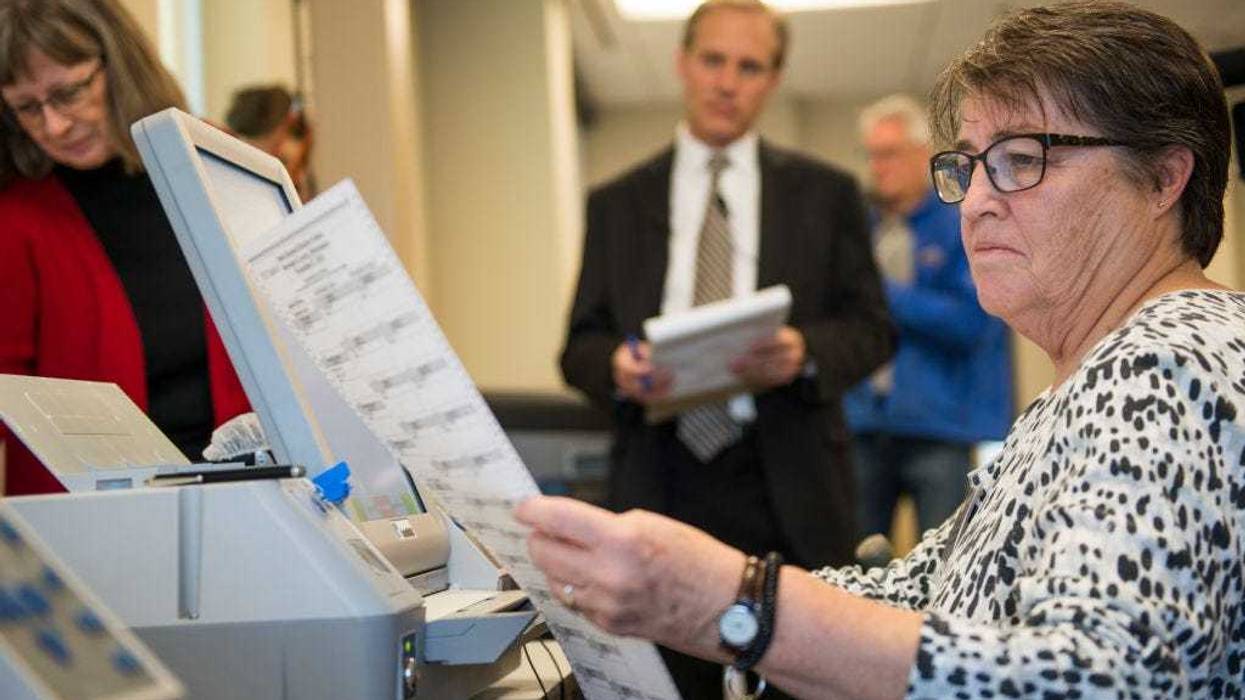
The Supreme Court on Monday ruled that states can count ballots that arrive after Election Day, a persistent target of President Donald Trump. It doesn't mean it affects every state, where rules vary. But the ruling by the nation's highest court does give a clear signal that states will continue to control how they run elections, and avoids a situation where the country's executive office could exert more control over them.
Minnesota Secretary of State Steve Simon weighed-in on the Supreme Court ruling that elections officials may count mail-in ballots that arrive after Election Day, if they were postmarked beforehand.
Simon tells WCCO that the ruling doesn't impact Minnesota at all. In just over half the states, the more forgiving deadlines apply only to ballots cast by military and overseas voters. There are 14 states with grace periods for regular mail ballots.
"Our rule in Minnesota is that if you're voting by mail, the ballot has to arrive by election day," explains Simon. "There's no postmark. There's no arriving a day or two or more afterwards. We have what the majority of states had, so this ruling won't affect us. Our longstanding rule will remain in place."
The outcome spares officials the headache of changing their ballot rules just a few months before the 2026 midterm congressional elections.
Simon also says that in Minnesota, there are a number of ways to continue using mailed ballots.
"Just a reminder that when you get that ballot by mail, you don't have to also return it by mail," he says. "You have options. You can stick it in the mailbox, of course, and if you do that, you can track it to know exactly when it arrived. It has a code just like an Amazon or a UPS package so you can know for sure that it's arrived for processing. But you have other options including and delivering it to the place that sent it to you, the city or the county that sent it to you, and in most cases you can have someone that you know and trust hand deliver it for you. So you don't have to worry about there being a one size fits all approach as long as it arrives by the close of business on Election Day."
The legal challenge was part of Trump’s broader attack on most mail balloting, which he has said breeds fraud despite strong evidence to the contrary and years of experience in numerous states. Trump has repeatedly claimed that his loss to Joe Biden in 2020 resulted from fraud even though more than 60 court decisions and his own attorney general said that argument had no merit.
Trump called the court ruling a “tremendous loss” and renewed his call for Congress to pass the SAVE America Act, which has made it through the House of Representatives but not the Senate.
Justice Amy Coney Barrett, a Trump appointee, wrote for the majority that the practice is legal.
"Nothing in the federal election-day statutes requires ballots to be received by Election Day,” she wrote, adding that the court considered that very narrow question without wading into more sweeping declarations about absentee voting in general or the authority of Congress versus states over election law.
Supreme Court on Monday ruled that states can count ballots that arrive after Election Day, a persistent target of President Donald Trump
Supreme Court on Monday ruled that states can count ballots that arrive after Election Day, a persistent target of President Donald Trump