

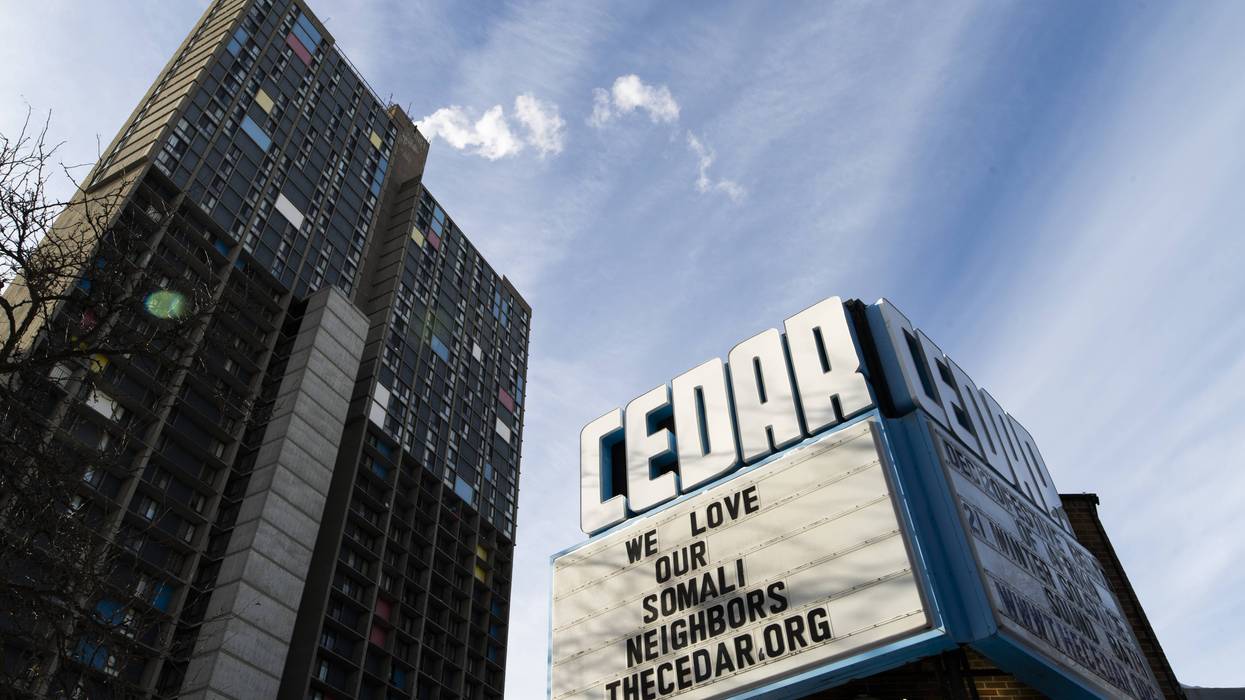
There's strong, local reaction to news that the Temporary Protected Status program for Somalis in Minnesota could end after a ruling from a federal judge last week.
It will not impact a large number of people in Minnesota.
"The few hundred people who are in this program are going to lose their protection, their legal standard of protection,," says Jaylani Hussein, head of the Council of American Islamic Relations in Minnesota.
He says this is very difficult news for the people it does impact.
"This is definitely a gut punch in the community, and we're definitely concerned about escalated deportation," Hussein adds. "While again, the number of people impacted is very small, ending the TPS program for Somalia actually is counterproductive to the entire TPS system."
He says while the Department of Homeland Security claims the conditions in Somalia have gotten better, at the same time, the Secretary of State says that country remains a dangerous place overall. In fact, the U.S. Department of State issued Level 4: Do Not Travel advisories due to active terrorism, violent crime, kidnapping risks, and armed conflict in the East African nation.
That is one of the main reasons many sought that Temporary Protected Status in the U.S. in the first place.
"Obviously this was something we anticipated," adds Hussein. "The program has been under threat since November of last year after the president made a social media remark to end the TPS program."
President Donald Trump has made Somalians a target of the administration. It also shined a national spotlight on significant cases of fraud in the state, much of which has been perpetrated by Somali immigrants and Somali-Americans. More than 90% of the people charged in the state's largest three fraud cases are of Somali descent, according to the U.S. Attorney’s Office for Minnesota.
That includes 72 of the 78 defendants in Feeding Our Future, though the alleged ringleader was a white American woman. Six of the eight defendants in the housing case are Somali, as is the one defendant who was charged in both the autism case and food fraud cases.
In December, Trump labeled Minnesota Somalis as “garbage” and said he didn’t want them in the U.S. He lashed out again in a March 2026 Cabinet meeting.
"They come to our country, low IQs, and they rob us blind," Mr. Trump said to reporters in the room. "Stupid people, and they rob us blind because we have crooked politicians and we have dirty cops. The Attorney General's a dirty cop. It's my opinion. It's only my opinion, and something should be done about him."
That led to Minnesota Somali leaders to call for an end to inflammatory rhetoric from the president.
Hussein said it's unclear how many holders there are in the U.S., but said it ranges from 500 to 2,000 people.
Minnesota has the largest Somali population in the U.S. About 84,000 of the 260,000 Somalis in the U.S. live in the Minneapolis-St. Paul area. The overwhelming majority are American citizens. Almost 58% were born in the U.S and 87% of the foreign-born are naturalized citizens.