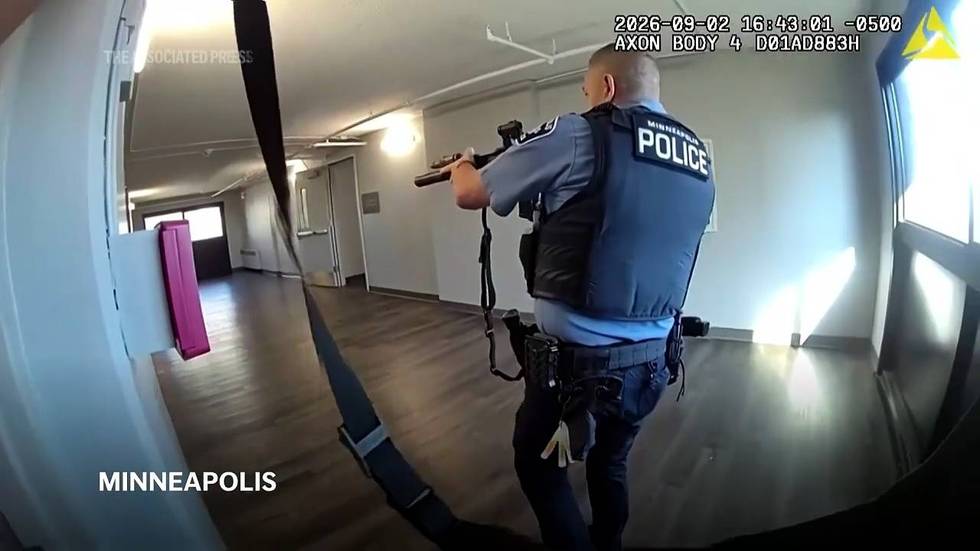


White House border czar Tom Homan announced the end of the immigration enforcement surge in Minnesota on Thursday, a two-month long operation that federal authorities say left Minnesota safer, and less of a sanctuary state for criminals.
Already begun this week, Homan said over the next week or so, more federal ICE and Border Patrol officers would be leaving, heading off to their normal stations or other cities and states where the Trump administration is targeting more enforcement.
The operation, Homan said, is coming to an end thanks to cooperation from local leadership, especially Minnesota Governor Tim Walz, Attorney General Keith Ellison, and Minneapolis Mayor Jacob Frey, along with numerous law enforcement agencies. Now, those same local leaders, have to begin assessing and rebuilding after a chaotic few weeks across the Twin Cities.
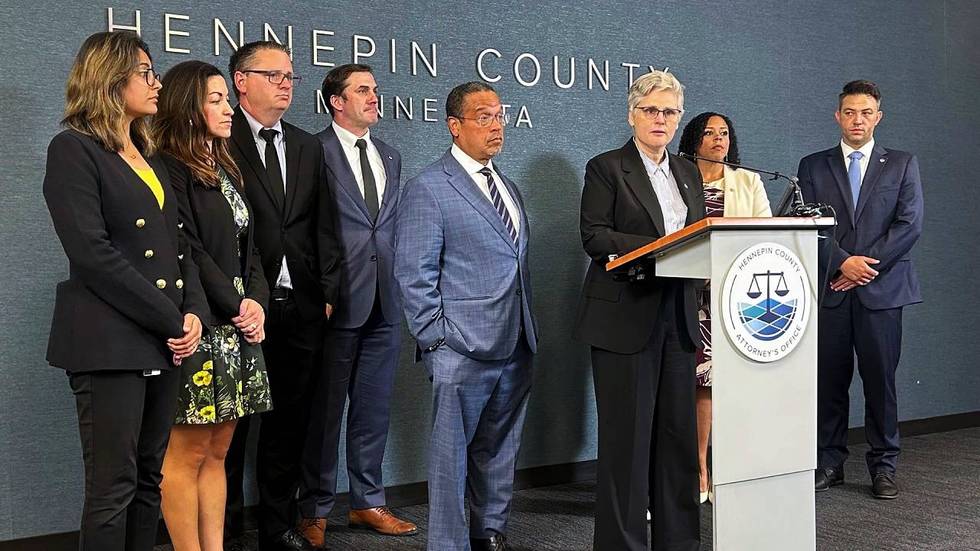
Walz, at a press conference flanked by business owners and the DEED commissioner, said as the end of the surge becomes reality, the toll of the last two months are going to need to be addressed - especially the economic toll.
"The state of Minnesota and our administration is unwaveringly focused on the recovery of what they did, and there will be many steps in this process, many answers that we still need to get and will pursue," Walz explained. "But as we started earlier this week, one of the first things we can do and what we're focusing on today is, what can we start doing on the economic recovery?"
Walz is announcing an economic plan to help small businnesses who have been effect by the surge from lack of foot traffic and lack of workers. He says they are first going to focus on the economic recovery of the immigration enforcement surge.
"The federal government needs to pay for what they broke here," Walz added. "There are going to be accountability on the things that happened, but one of the things is the incredible and immense costs that were borne by the people of this state."
Walz did thank Homan for bringing better communication to the situation, after President Trump sent him to Minnesota, in essence replacing DHS Sec. Kristi Noem and Border Patrol's Greg Bovino. The governor also said what has been left behind needs attention.
"The federal government needs to be responsible. You don't get to break things and then just leave without doing something about it," Walz added.
This coming Tuesday, Minnesota's legislative session begins and Walz said that lawmakers need to look into what local businesses need.
"This legislative session needs to be about recovery of the damage that's been done to us," Walz explained.
Walz is proposing $10 million in forgivable loans to help businesses impacted economically by the surge. His administration will reinstitute the small business emergency fund, which was implemented during the COVID-19 shutdown.
"After one year, there would be an opportunity to seek 50% forgiveness on the basis of proving that you have had substantial impacts from the presence of the federal agents," DEED Commissioner Matt Varilek added.
The Democratic governor called the crackdown an “unnecessary, unwarranted and in many cases unconstitutional assault on our state.”
“It’s going to be a long road,” Walz told a news conference Thursday. “Minnesotans are decent, caring loving neighbors and they’re also some of the toughest people you’ll find. And we’re in this as long as it takes.”
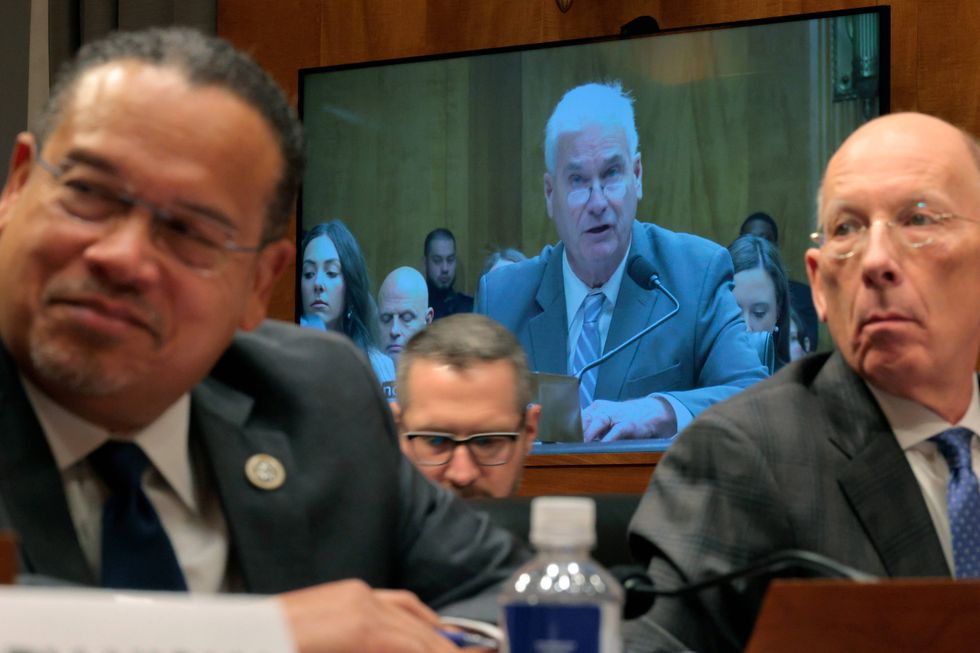 Minnesota Attorney General Keith Ellison (L) and Minnesota Department of Corrections Commissioner Paul Schnell (R) watch as House Majority Whip Tom Emmer (R-MN) testify before the Senate Homeland Security and Governmental Affairs Committee in the Dirksen Senate Office Building on February 12, 2026 in Washington, DC.(Photo by Chip Somodevilla/Getty Images)
Senate Committee looking into immigration actions in Minnesota
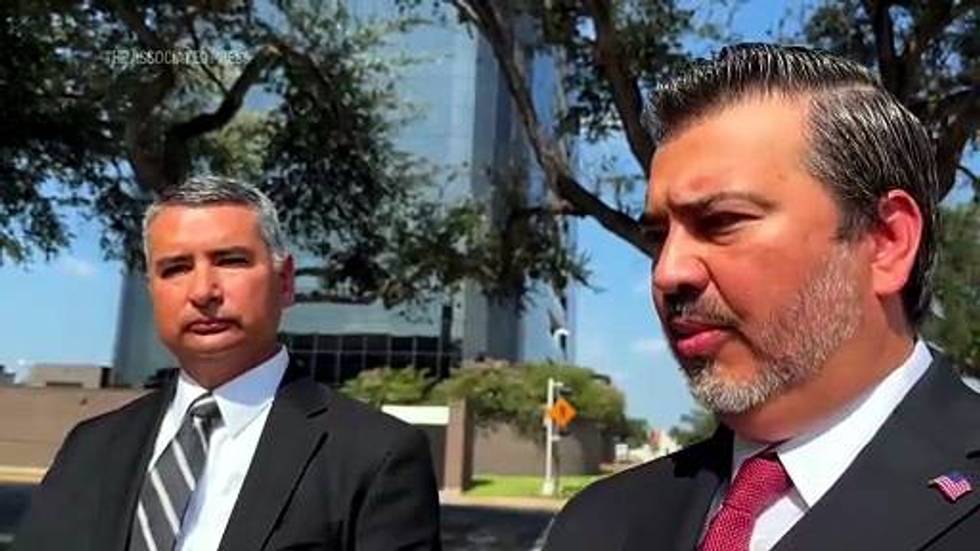
As Homan was making his comments in at the Whipple Federal building at Fort Snelling on Thursday, Attorney General Ellison was in Washington D.C. testifying before a Senate committee looking into ICE and Border Patrol actions in Minnesota.
Ellison told the committee what the federal government said it wanted to accomplish by the surge, was not the reality.
"The government has said that the purpose of the search was to fight violent crime and rid our streets of the worst of the worst, and yet violent crime rates in Minneapolis were falling before the search," Ellison said. "Furthermore, ICE's own data shows that 77% of those it has detained in Minnesota have no criminal record at all."
The hearing comes as Democrats and some Republicans on Capitol Hill are threatening to withold their votes to fund the Department of Homeland Security until substantial reforms are made.
Elllison says that the raids, something the administration claims are catching the so-called "worst of the worst," are farm from the only ones being taken into custody.
"Is 5-year-old Liam Canejo Ramos the worst of the worst, or 10-year-old Elizabeth Zunia Casaguano? The surge is contributing to violent crime, members," Ellison adds. "It's contributing to violent crime. Two of the three homicides committed in Minneapolis in 2026 have come at the hands of federal immigration agents."
Also at the hearing is Minnesota Sixth District Representative, and the GOP's Majority Whip in the House, Tom Emmer, who slammed Ellison and Frey in his opening statement.
"They have turned Minnesota into a safe haven for criminal illegal aliens," Emmer said.
Committee Chair, Kentucky Republican Senator Rand Paul, said more information is needed about the deaths of two Minnesotans, Renee Good and Alex Pretti, since the ICE surge began.
Thursday morning he gaveled the Senate Homeland Security Committee into session saying cooperation between federal, state, and local officials needs to be improved.
"In order for ICE to be successful, they must restore public trust," Paul said. "We must acknowledge when federal agents are placed in chaotic crowd control situations that the risk of tragedy increases. At the same time, state and local decisions that limit cooperation affect how and where federal enforcement is carried out. Escalatory statements from any level of government only make it worse."
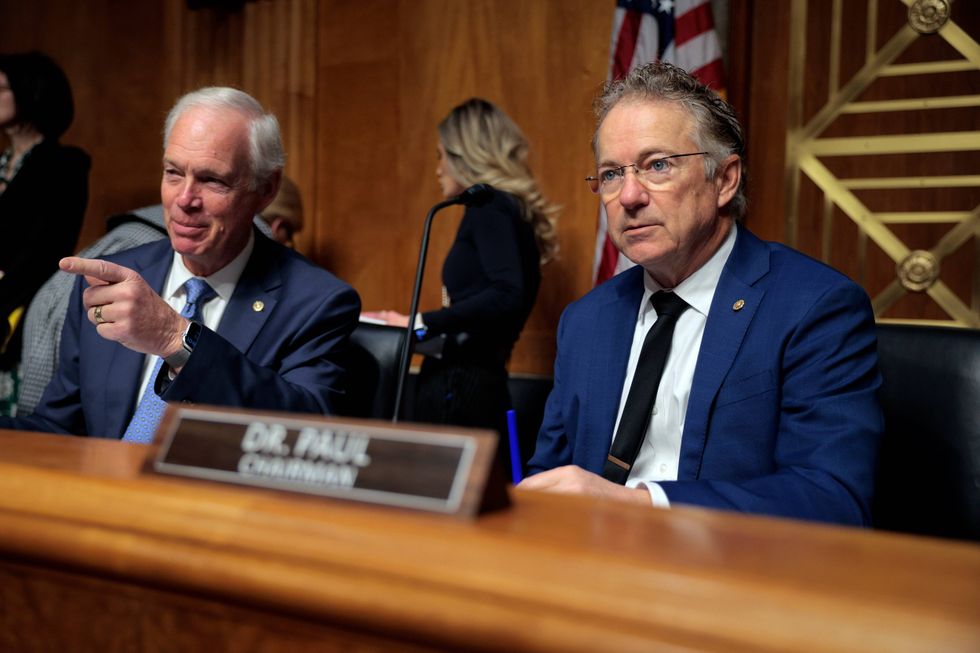 Chairman of the Senate Homeland Security and Governmental Affairs Sen. Rand Paul (R-KY) (R) and Sen. Ron Johnson (R-WI) arrive for a hearing on oversight of the Department of Homeland Security in Dirksen Senate Office Building on February 12, 2026 in Washington, DC.(Photo by Chip Somodevilla/Getty Images)
Paul also asserted no official should rush to judgment about the circumstances of the fatal shootings by federal immigration officers Alex Pretti and Renee Good, something Noem and Bovino did repeatedly following the shootings of both Good and Pretti.
A third, unnamed protestor was also killed during the immigration surge.
"State and local officials tell one story, federal officials tell another story," said Sen. Paul. "Depending on the media source, the public may hear only one side. The hearing today though, is to evaluate the facts and not to defend any one particular narrative."
The operation called the Department of Homeland Security's “ largest immigration enforcement operation ever ” has been a flashpoint in the debate over President Donald Trump’s mass deportation efforts, flaring up after Good and Pretti were killed by federal officers in Minneapolis.
The U.S. Immigration and Customs Enforcement operation focused on the Minneapolis-St. Paul area resulted in more than 4,000 arrests, Homan said, touting it a success.
“The surge is leaving Minnesota safer,” he said. “I’ll say it again, it’s less of a sanctuary state for criminals.”
“They thought they could break us, but a love for our neighbors and a resolve to endure can outlast an occupation,” Mayor Frey said on social media after Homan's news conference. “These patriots of Minneapolis are showing that it’s not just about resistance — standing with our neighbors is deeply American.”