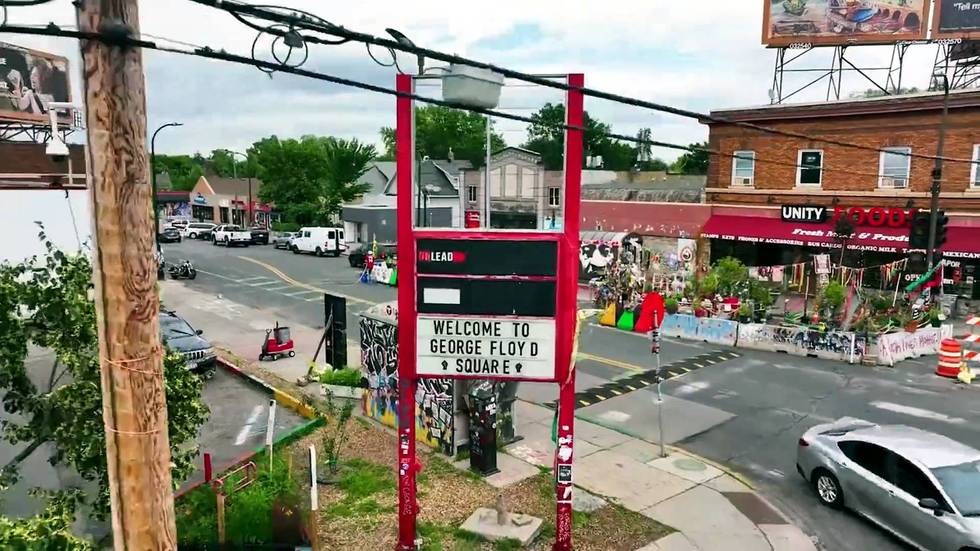


President Donald Trump on Thursday threatened to invoke the Insurrection Act allowing him to deploy troops as protests against Immigration and Customs Enforcement persist in Minneapolis.
It is not the first time the president has threatened a state with the Insurrection Act, something several state governors have pushed back on, but it brings to the forefront in Minnesota several questions about legality, and what a deployment of troops from the federal government might mean.
Professor Jill Hasday teaches and writes about anti-discrimination law, constitutional law, family law, and legal history at the University of Minnesota. She talked to WCCO's Adam and Jordana Thursday about the Insurrection Act, its history, and what this could mean for the State of Minnesota and the Twin Cities.
WCCO: Minnesota U.S. Senator Tina Smith said this is the U.S. going to war against Minnesota. Is Sen. Smith right in describing the insurrection act that way?
Hasday: Let me start with a little background. So to understand the Insurrection Act, you actually have to understand another law, the Posse Comitatus Act of 1878. This law is passed immediately in the wake of the Civil War, and it bans using federal forces, including federalized National Guard forces, to perform core civilian law enforcement functions unless expressly authorized by the Constitution or Congress.
In other words, the Posse Comitatus Act sets a baseline in the United States that if the federal government uses the military to respond to some crisis like a national disaster, a natural disaster, the military can't be performing basic law enforcement functions.
The Insurrection Act, which is the name given to a series of laws passed between 1792 and 1871, creates an exception to the baseline set by the Posse Comitatus Act and allows the president to use the military for law enforcement purposes.
WCCO: Is that's what's happening here and does the president have the authority to act in that way?
Hasday: President Trump, has threatened to invoke the Insurrection Act, which I'll just note he's threatened a number of other occasions and a number of other situations. So there's three situations in which the president is authorized to call on the military again to do basic law enforcement. One, if a state requests it, which historically has been the most common, scenario, obviously. The state is not requesting it in this case. Second, to uphold a federal authority when rebellion, violence, obstruction prevents the enforcement of federal laws or court orders. For instance, the Insurrection Act was used in the South during the civil rights movement when various states were refusing to comply with civil rights orders from the courts. And third, to protect civil rights.
Unfortunately, the text of the Insurrection Act doesn't define terms like rebellion or domestic violence in saying that these are the prerequisites for the president sending the military in. There's an 1827 case that says, 'well, maybe this is all up to the president.' But then some later cases suggest, actually, the courts can evaluate whether the president is acting in bad faith or has made a mistake or is acting just in a way beyond the statute. So that's where we are.
WCCO: If this happens, it's likely lawsuits would be filed to try to stop it. Can we even determine whether or how quickly that could happen? And would that delay any sort of military incursion into the state?
Hasday: There's going to be two kinds of lawsuits. The first kind is, was Trump actually authorized under the Insurrection Act to send to the military? Have the conditions been met, for instance. Clearly, civilian courts are open and operating in in Minnesota. Our police are operating. There's no sense that civil justice has been suspended, so there would be lawsuits about that. And then of course there would also be lawsuits about anything that the lawfulness of anything the military actually did.
How soon those suits proceeded would really be up to the judge. So for instance, a judge is capable of ordering an immediate temporary injunction where nothing happens until there's a decision on the merits, but that's discretionary. And that kind of order, say a district court says we're immediately issuing a temporary injunction where nothing can happen, the Trump administration, I think in all likelihood, would be appealing that all the way up to the Supreme Court and the Supreme Court recently has shown quite a bit of willingness to hear these appeals on an emergency basis.
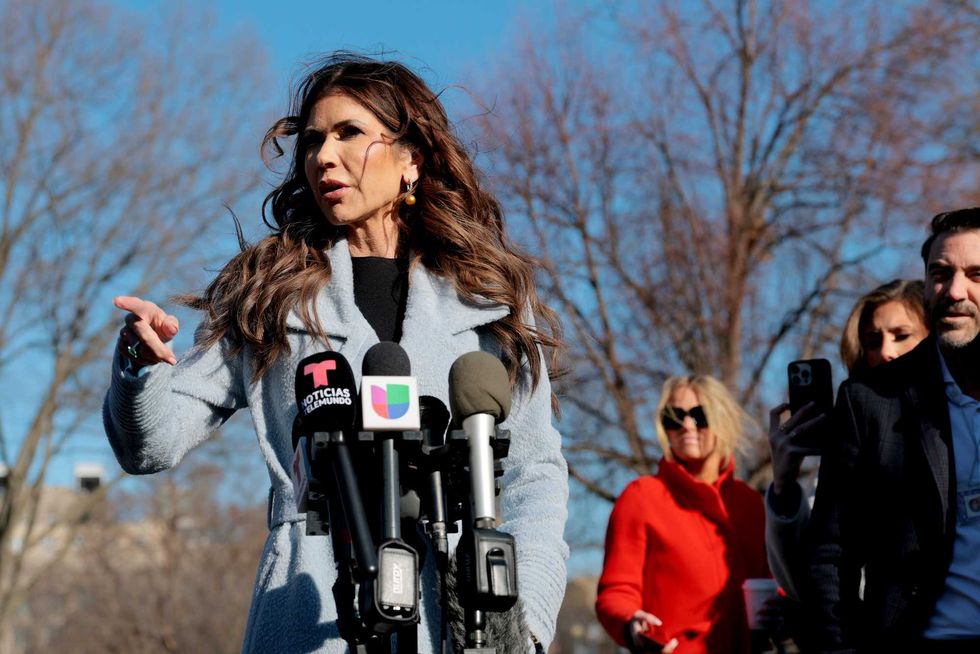 U.S. Secretary of Homeland Security Kristi Noem speaks to reporters after participating in a TV interview outside of the White House on January 15, 2026 in Washington, DC. Earlier this morning on Truth Social, U.S. President Donald Trump posted a warning that he may enact the Insurrection Act in response to rising tensions between protesters and federal agents in Minneapolis.(Photo by Anna Moneymaker/Getty Images)
WCCO: As a constitutional lawyer, do you think the president is well within his rights to Use the Insurrection Act to bring the military here in light of citizens interfering with federal law enforcement operations? Or is that just civil disobedience, the right to protest, and would that be constitutional?
Hasday: I think you hit on exactly one of the points that would be litigated. So, have there been individual efforts to stop federal agents from carrying out immigration enforcement? I think clearly, but does that actually amount to inability to enforce federal law? I think that's much more doubtful. I mean, imagine there's many times where people try to evade law enforcement. This is an individual citizen, but you wouldn't say federal law isn't being enforced in the state of Minnesota, right? I'm covering up my fraudulent tax return or whatever. Am I obstructing enforcement of Minnesota? You know, I'm an individual citizen. So I think that that is one of the things that would be litigated because we're not in a situation where civilian law enforcement isn't operating. I mean, ISE arrested 2,000 people. They're making a lot, from their perspective, a lot of progress. But I think that is what would be litigated.
Something else I want to say is that I think the Posse Comitatus Act sets a very important baseline in the United States, which is part of being a rule of law society, is that in the United States, we are governed by civilian law enforcement rather than the military. And there's a lot of constitutional dangers with the military governing within the United States.
I'll just give an example. So, the last time the Insurrection Act was invoked was by the first President (George) Bush in May 1992, after the civil unrest that erupted in L.A. after the acquittal of the police officers accused of beating Rodney King. In that case, the governor of California actually asked for the military in, and there's this notorious incident where the Marines and the police are called to respond to a domestic disturbance. Remember, under the Insurrection Act, the Marines can do basic law enforcement. When the officers arrive, someone in the house fires a shotgun. The policeman, the ordinary policeman, yells, 'cover me.' In ordinary police talk, cover me means hold your fire, but be prepared to shoot. Well, in Marine talk, cover me means let out a range of fire, an endless range of fire so that I can come in. The soldiers, following their training, the Marines shot more than 200 bullets into the house. Luckily, there are three kids inside, amazingly no one is hit by these bullets.
But it's a great example of how the military isn't trained to operate in the United States. It just has different norms and it's just very, very dangerous.