

Governor Tim Walz took executive action Tuesday to protect the Boundary Waters Canoe Area Wilderness from copper-nickel mining. The executive order will direct state agencies to stop all permitting and review work on mineral mining projects in the Rainy River Headwaters Watershed.
Governor Tim Walz took executive action Tuesday to protect the Boundary Waters Canoe Area Wilderness from copper-nickel mining. The executive order will direct state agencies to stop all permitting and review work on non ferrous mineral mining projects in the Rainy River Headwaters Watershed.
"The Boundary Waters aren't just a beautiful place, they're a sacred place, and not just for my family, but for tribal nations and for so many others," Walz said Tuesday.
Still, Walz says he understands the need for mining. Just not in that area.
"I don't deny we need critical minerals, and I would be the governor who created the first taconite mine, first steel mine, in 50 years that we just opened up," he adds. "So, there's mining activity happening, but not all places should be mined."
Walz took the action four months after Congress and President Donald Trump's administration lifted a federal ban.
The cherished wild area stretches for about 150 miles in the Superior National Forest along Minnesota’s border with Canada. Thousands of canoeists, kayakers and campers explore the wilderness each year.
"It’s our duty as Minnesotans to ensure the sacred place remains wild, pristine and unharmed," Walz, a Democrat, said.
But Walz's executive order apparently won't last long: Under state law, it would expire by next April, 90 days after he leaves office. The next governor could adopt it.
Still, Walz called it case closed Tuesday.
"As far as my administration is concerned, the fight for the future of the Boundary Waters is over," Walz added. "The verdict is in, the decision has been made. We will protect this place forever."
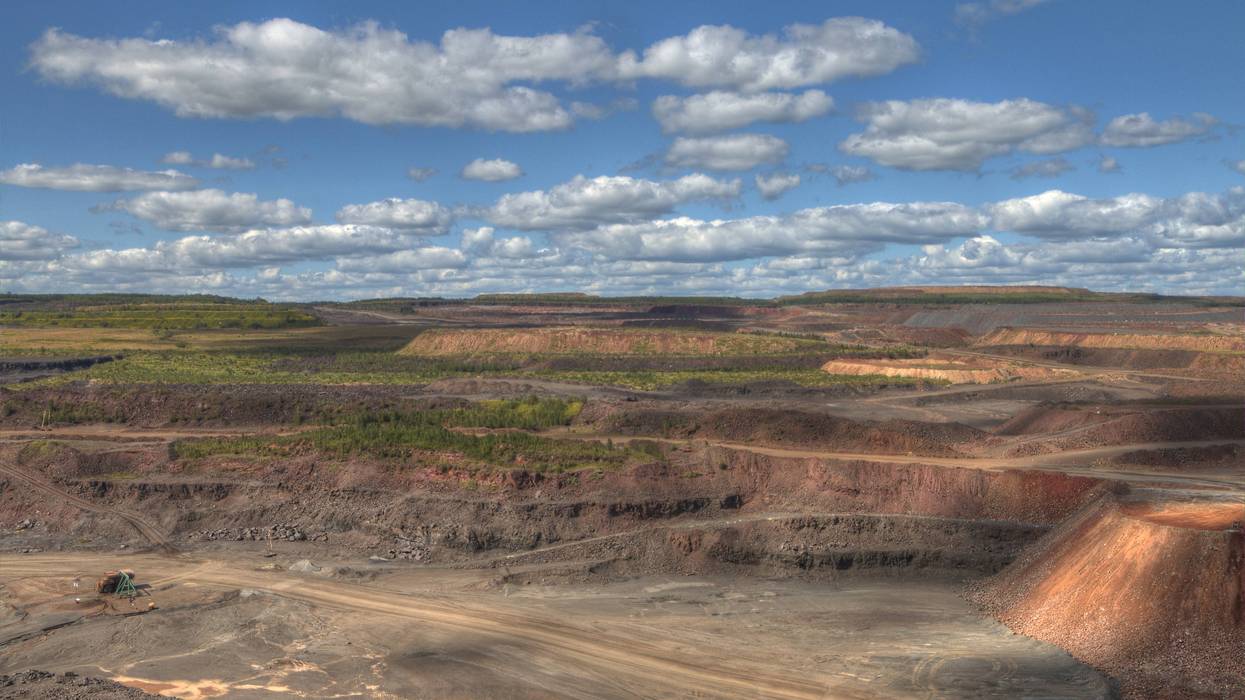
And there's no shovel-ready project, though Twin Metals Minnesota LLC, a subsidiary of Chile-based Antofagasta Minerals, has been seeking to mine for copper, nickel and other precious metals in the national forest since 2019. It insists it can be done so no waste rock is stored above ground, eliminating a potential source of acid.
Former Minnesota Republican Governor Arne Carlson told WCCO's Adam Carter Tuesday that he supported the Walz order, despite disagreeing with him on a number of things during his two terms in office. Carlson says for too long, state lawmakers have avoided examining the dangers of sulfide mining.
"There hasn't even been a single hearing by the legislature, again, Democrat or Republican, on the subject," Carlson explained. "And that has to end right now. And I hope the governor's step opens the door to public discussion and some real improvements in how we permit others to work with our water."
Carlson says the health concerns need to be examined along with any environmental aspects.
"What the Minnesota medical community is deeply concerned about, and this includes the University of Minnesota, the Mayo Clinic, they want a health impact study to make sure that our drinking water is pure and it's healthy," Carlson adds. "There has never ever been a sulfide mining operation that has not caused irreparable environmental damage."
Carlson says it's a tragedy that there hasn't been a single public hearing in the legislature, or any reforms being submitted by the governor on the subject.
The canoe area lies within the national forest just downstream from the mine site, raising concerns that digging could cause pollution.
Proponents of the mine quickly become critical of Walz's order
In April, Trump signed a resolution approved by Congress that lifts a 2023 federal moratorium on mining in the forest. He said it would create jobs and boost the mining industry.
Walz’s order says Minnesota regulators will not participate as a cooperating agency in any federal environmental review of nonferrous mining in the Rainy River watershed, which is linked to Boundary Waters.
The state also will not conduct environmental reviews or permitting work on mining proposals while litigation over state mining regulations is ongoing, the order says.
Walz also wants the Department of Natural Resources to draft legislation prohibiting nonferrous mining in the Rainy River watershed.
U.S. Rep. Pete Stauber criticized Walz, accusing him of “outright war on Northern Minnesota and our way of life.”
“Years of rigorous review, environmental study, and massive private investment have been erased in seconds by a deeply unpopular Governor,” Stauber, a Republican, said in a written statement.
Even some Democrats have come out against the mining ban.
DFL State Senator Grant Hauschild released a statement saying in part:
"Constituents are sick of executive overreach by people who no longer feel accountable to the voters or the legislative process, whether that’s in St. Paul or in Washington. In my four years in the Senate, a mining ban never moved through the legislative process or was considered."
Becky Rom, chairperson of the advocacy group Save the Boundary Waters, praised the governor, who did not seek reelection this year.
“The science is clear: copper mining and the Boundary Waters cannot safely coexist. This action helps safeguard the clean water, world-class wilderness, and outdoor economy that generations of Minnesotans cherish,” Rom said.
James Coleman, a professor at the University of Minnesota law school, said Walz's order, at a minimum, adds uncertainty to any proposed project.
“If you need federal approval, you probably need state approval,” Coleman said. “These projects take many years to complete. Partisan politics may flip at the state or federal level, and it can be hard to get a project to the finish line.”
The executive order will stop all work on mineral mining projects in the Rainy River Headwaters Watershed
The executive order will stop all work on mineral mining projects in the Rainy River Headwaters Watershed