


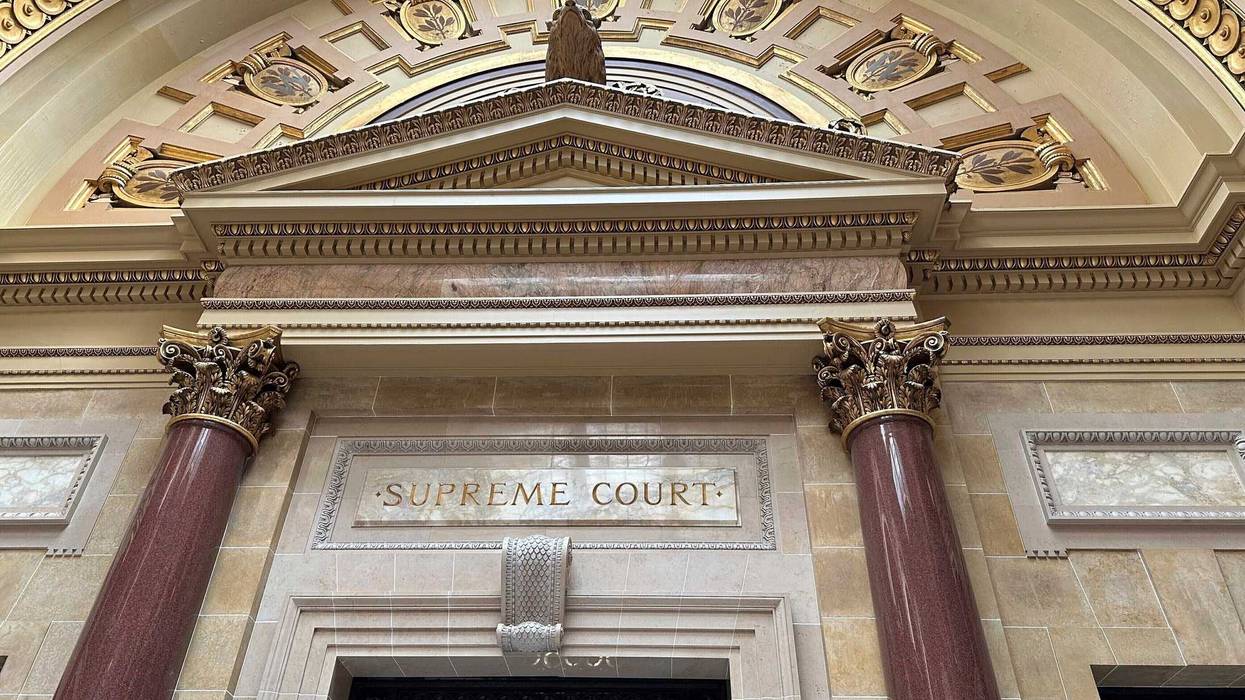

The Wisconsin Supreme Court on Tuesday rejected an attempt by a conservative activist to obtain guardianship records in an effort to find ineligible voters in the presidential battleground state.
The case has been winding its way through the courts for years and stems from attempts by conservatives to overturn President Joe Biden's victory in Wisconsin over President Donald Trump in 2020.
Here’s what to know:
A conservative activist brought the case
The case tested the line between protecting personal privacy rights and ensuring that ineligible people can’t vote.
Former travel executive Ron Heuer and a group he leads, the Wisconsin Voter Alliance, brought the lawsuit in 2022 alleging that the number of ineligible voters doesn’t match the count on Wisconsin’s voter registration list. The lawsuit doesn't specify how many people could be affected.
In Wisconsin, a guardianship order is granted by a court giving a person certain legal rights over another who is determined to be unable to make decisions about their life. A court has the power to remove the right to vote from a person under a guardianship order if the person is determined to be unable to understand “the objective of the election process.”
Heuer asked the state Supreme Court to rule that counties must release records filed when a judge determines that someone isn’t competent to vote so that those names can be compared to the voter registration list.
Heuer’s attorney, Erick Kaardal, argued that privacy concerns could be balanced with the public’s right to access government records by redacting identifying or sensitive information on the forms.
But the attorney for Walworth County said those seeking access to the records wanted to cross-check ineligible voters against the names of those registered. They can’t do that, attorney Sam Hall said during oral arguments, without releasing the person’s name and address.
Hall praised the ruling, saying it “protects the privacy of vulnerable individuals while preserving their dignity.”
Kaardal did not immediately return an email seeking comment.
The Wisconsin Freedom of Information Council, which advocates for public access to documents but did not take a position on this case, said the court’s decision was “narrowly tailored and should not have a huge impact.”
The council praised the court for clarifying the standard for deciding similar cases in the future, but that “it’s always disappointing when access to public information is curtailed.”
Liberal justices who control Wisconsin Supreme Court reject the case
In the 5-2 ruling on Tuesday, the Wisconsin Supreme Court's liberal majority along with conservative Justice Brian Hagedorn ruled that the records are not public as the conservative activist had claimed.
The court took the case after two lower state appeals courts issued divergent rulings. One appeals court, based in Madison, denied access to the records while another appeals court, based in Waukesha, said in 2023 that the records should be made public.
It ordered Walworth County to release them with birth dates and case numbers redacted.
The Supreme Court overturned the appeals court ruling that the records should be made public.
State law is clear that the records being sought are not public and “the Alliance has no right to the records,” Justice Janet Protasiewicz wrote for the majority.
Conservative justices Annette Ziegler and Rebecca Bradley dissented, saying the court adopted “an overbroad and unworkable definition of what records pertain to a finding of incompetency” to include the forms that indicate a person has been found ineligible to vote.
Those forms are not pertinent to the finding of incompetency and are therefore subject to the open records law, Ziegler and Bradley wrote.
The case was one of several targeting the 2020 election
The case was an attempt by those who questioned the outcome of the 2020 presidential race to cast doubt on the integrity of elections in the presidential swing state. Heuer and the WVA filed lawsuits in 13 Wisconsin counties in 2022 seeking guardianship records.
Heuer and the WVA have pushed conspiracy theories about the 2020 election in a failed attempt to overturn Biden’s win in Wisconsin. Heuer was hired as an investigator in the discredited 2020 election probe led by former Wisconsin Supreme Court Justice Michael Gableman. The probe found no evidence of fraud or abuse that would have changed the election results.
The WVA also filed two unsuccessful lawsuits that sought to overturn Biden’s win in Wisconsin.
Trump won Wisconsin in 2024 after losing in 2020
Biden defeated Trump by nearly 21,000 votes in Wisconsin in 2020, a result that has withstood independent and partisan audits and reviews, as well as lawsuits and the recounts Trump requested. Trump won Wisconsin in 2024 by about 29,000 votes.
There are no pending lawsuits challenging the results of the 2024 election or calls to investigate the outcome.