

If you believe analytics are indicators of future success or failure, then there is good reason to believe that the Bruins are better than their 4-3-0 record and minus-2 goal differential would indicate. That's because the Bruins are either first or second in the NHL in expected goal differential depending on which model you look at.
If you're unfamiliar with expected goals, it's pretty much exactly what it sounds like: it's the number of goals a team would be expected to score or give up based on the number of shots they take or allow and the quality of those shots. Essentially, it tries to remove luck from the equation.
So, the Bruins rating so highly in five-on-five expected goals-for percentage is really good. Evolving-Hockey and Money Puck both have them first in their models at just over 58%, while Natural Stat Trick has them second at 56.5%, behind only the Wild. For the sake of consistency, we are going to use numbers from Natural Stat Trick for the rest of this article.
Natural Stat Trick's model would expect the Bruins to have a 13-10 goal advantage at five-on-five so far this season. But when it comes to actual goals, the Bruins have been outscored 14-11 at five-on-five. Plus-3 in expected goals, minus-3 in actual goals.
What gives? Have the Bruins really just been that unlucky? Are they destined to start getting some better puck luck that will have them looking better than their on-ice results thus far?
Maybe. The Bruins have definitely had some tough luck this season. They've hit several posts at the offensive end, and they've had a couple goals go against them off somewhat fluky deflections. But there is more that goes into underperforming expected goals than just luck.
Let's start with the offense, and let's remember that the Bruins weren't exactly a great five-on-five offensive team for pretty much all of last season -- until the addition of Taylor Hall helped turn their fortunes.
While the Bruins ranked fifth in shot attempts (57.4 per 60 minutes) and third in shots on goal (33.1/60) at five-on-five last season, they slid down the rankings the more you drilled down on quality. They were 15th in scoring chances (25.2/60), 28th in high-danger chances (8.8/60), 16th in expected goals (2.17/60) and 15th in actual goals (2.38/60). They shot just 7.21% at five-on-five, 29th in the NHL.
That paints the picture of a team that threw a lot of pucks toward the net, but ultimately ended up as a mediocre five-on-five offense thanks to a combination of not creating a ton of grade-A chances and struggling to finish. If you watched the Bruins last season, that painting probably looks pretty accurate.
So, are the Bruins doing a better job in those areas this season? Well, not really. They're still getting a lot of shots on goal (seventh in the NHL with 33.6 per 60), but the quality doesn't look a whole lot better -- 20th in scoring chances (26.8/60), 21st in high-danger chances (9.8/60), 17th in expected goals (2.29/60), 25th in actual goals (1.92). They're still one of the worst finishing teams, too, shooting 5.73% at five-on-five (30th).
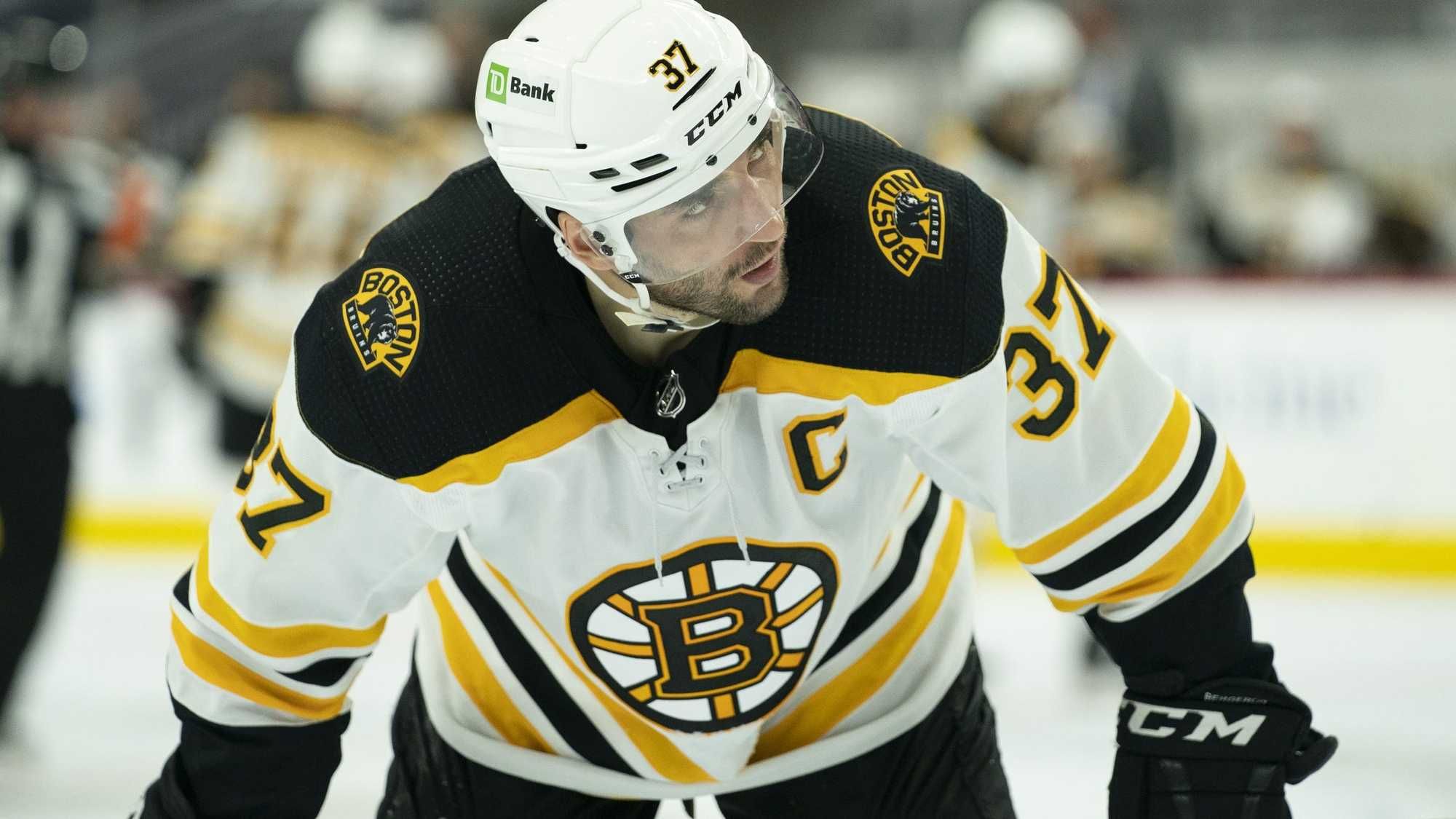
The one more high-danger chance per game is at least something, and the shooting percentage is bound to come up a little -- especially considering Patrice Bergeron, Craig Smith and Erik Haula are shooting a combined 0-for-41 this season. But so far, this year's Bruins offense doesn't look a whole lot different than last year's despite some different faces.
Yet last year's Bruins still ranked 11th in five-on-five goal differential at 53.5%, nowhere close to this year's 27th-place 44.0%. That brings us to the other half of this equation: Defense, and more specifically, goaltending.
In terms of chances allowed, this year's Bruins also look similar to last year's. In this case, that's a good thing. Last year they ranked in the top five in shot attempts allowed, shots on goal allowed, scoring chances allowed, high-danger chances allowed, and expected goals against. This year they still rank in the top five in all those categories so far.
The big difference? That would be actual goals allowed. Last year the Bruins were sixth in the NHL with 2.07 goals against per 60 minutes at five-on-five. This year they're 20th at 2.45. Their five-on-five save percentage has dropped from .920 last season (11th in the NHL) to .911 this year (25th).
We see a similar story on the penalty kill, where all the numbers in terms of chances allowed are still very good, but the PK save percentage has dropped from .889 last year (fourth) to .852 (23rd). That's how you go from the No. 2 PK last season (86.0%) to the 19th-ranked PK so far this year (81.0%).
So, is the Bruins' goaltending really that much worse than last season? Or is there reason to believe it can be better than this?
Really, the difference between last year and this year comes down to Jeremy Swayman. Linus Ullmark's numbers though four starts, including a .927 overall save percentage, are really solid and actually better than both his marks last season and the Bruins' overall team marks last year.
Swayman's first three starts, meanwhile, have not matched his 10 starts last year, with a five-goal performance against the Flyers really bogging everything down. He has gone from a league-leading .951 five-on-five save percentage last season to .893 this year. His PK save percentage has dropped from .900 to .875.
Take out that one bad performance, though, and not only do Swayman's numbers look pretty good, but the Bruins' goaltending overall would rank much higher. Even if Swayman doesn't quite get back to last year's level of excellence -- which was probably unsustainable anyways -- there is a lot of room between those two, and Swayman is certainly talented enough to at least land somewhere in the middle and make it clear that Philadelphia game was an aberration.
So, the Bruins can and probably will make up some ground in net. Another place they can do that is on the power play. The Bruins are clearly still working out some kinks with their top unit, which now features Charlie McAvoy at the point and Taylor Hall at the net-front joining the top line. Despite some hiccups and over-passing, the quantity and quality of chances are still comparable to last year, when the Bruins had the 10th-ranked power play at 21.9%.
The difference -- similar to five-on-five -- is that the shooting percentage on the power play has dropped from 16.59% last year to 13.04% so far this year. The top power-play unit is certainly talented enough to lift that number back up with a little more focus and a little more luck. Hall missing a pair of doorstep tap-ins set up by Brad Marchand comes to mind as an example of one or both of those factors.
There is a clear path to the Bruins being as good as they were last season, both at five-on-five and on special teams, and being as good as last year can still get you pretty far -- like, I don't know, the second round of the playoffs.
The problem is that, at least so far, there does not seem to be a clear path to being a better five-on-five offense than last season, which may ultimately be what's needed to go further than last year. Those improvements will require real work towards creating more quality chances and finishing at a higher rate, and not just relying on their luck to change.