


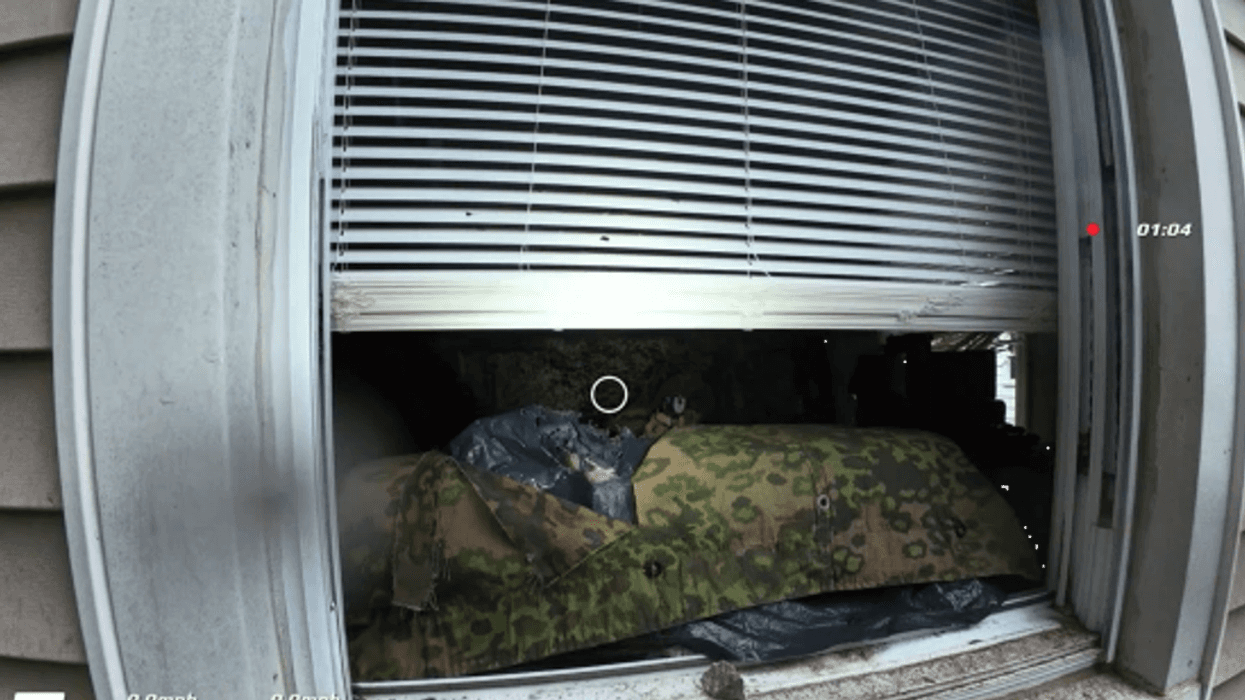

The Connecticut Office of the Inspector General is justifying Stamford police in how they used deadly force during a standoff over a foreclosure notice that was delivered to a resident in the city last December.
Jed Parkington told a marshal who was delivering the foreclosure notice on his Oaklawn Avenue home that the scenario "wasn't going to end well."
The marshal called police who arrived and came under heavy fire from inside the house.
A SWAT response brought out armored cars and other tactical gear, all of which came under fire.
Police attempts to shoot Parkington actually didn't hit him. Despite a discussion with a negotiator, Parkington ultimately took his own life.
The conversation with the negotiator uncovered Parkington's fascination with military history, concerns about government influence on life, depression, and financial problems.
A search of the house uncovered Nazi displays and an arsenal of weapons, artillery, and improvised bombs.
The body of a former tenant, identified as Carmine Boccuzzi, was found in an advanced state of decay. Parkington wrote on the wall of a room that Boccuzzi owed Parkington a lot of money and wouldn't leave. Boccuzzi's body was found bound, gagged, and beaten to the point his skull, shoulders, and jaw were fractured, most ribs were broken, and a knee was dislocated.
The Inspector General's final report, which justified involved officers, determined Parkington planned the attack, fired upon changing targets, and posed an ongoing deadly threat to police and the local community.