


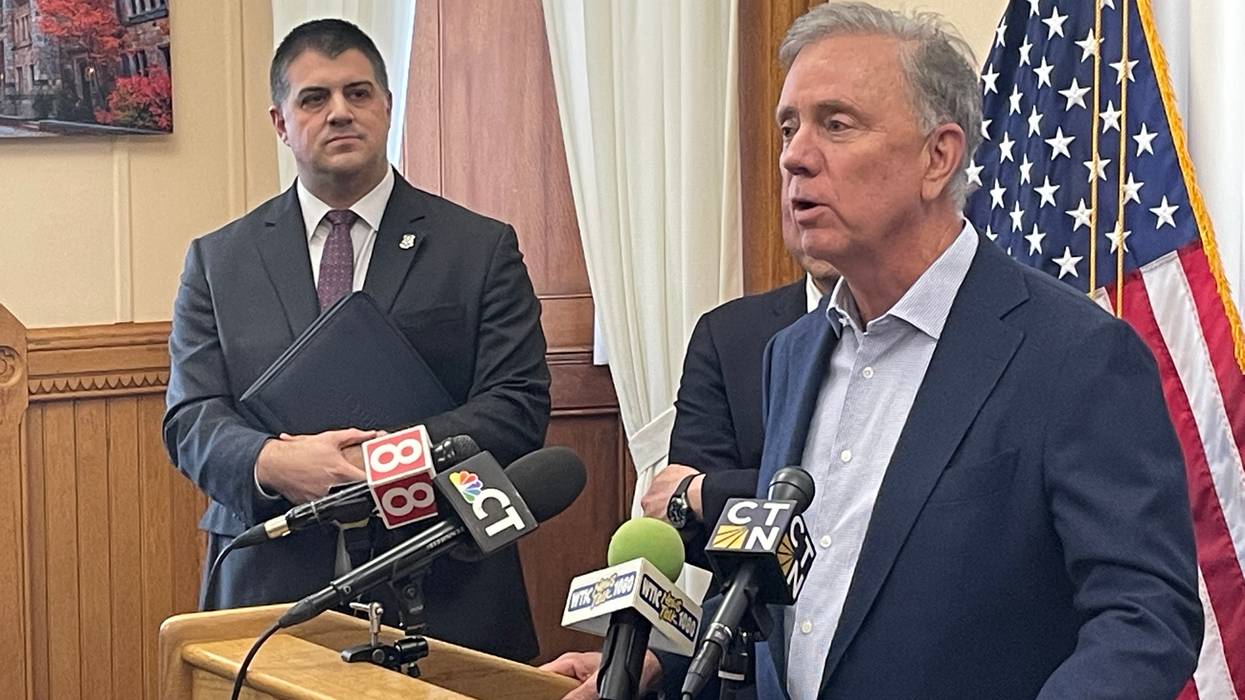

As Gov. Ned Lamont and state Senate Democrats offer plans to increase public school funding for the 2026-27 school year, they’re also looking at long-term changes in how the state supports education.
An executive order signed by Lamont on Thursday establishes the Blue Ribbon Commission on K-12 Education Funding and Accountability. Led by Deputy Chief of Staff Natalie Wagner, the commission will make recommendations on how to change the state’s long-stagnant school funding mechanism.
The governor calls the Education Cost Sharing (ECS) formula “outdated.” The foundation grant has stood at $11,525 since 2013. As a result, critics say, the state’s public schools are vastly underfunded, especially in fiscally vulnerable cities.
“It is about time that we take a bottom-up look at how we fund our schools with a focus on ensuring funding is fair and driving the best results for our students,” says Lamont. “The efficiency and effectiveness of the largest streams of state education funding, such as ECS, have not been evaluated holistically for many years. The state must perform a thorough evaluation of the impact of these grants.”
The recommendations in the commission’s report, due next January, could guide the state’s school funding for years. In the meantime, the governor and majority Democrats are offering options to ease the local school funding crunch for fiscal 2027, which begins on July 1 of this year.
Gov. Lamont wants to add more than $100 million from a proposed $500 million “affordability fund” to the state’s K-12 education budget.
“What we do now, what we do in the future, I’ve gotta make sure it’s sustainable,” says Lamont. “One thing I’ve heard from a lot of the superintendents is, ‘Don’t make promises you can’t keep. Make sure if you’re gonna put money in this year, we can continue it next year and build on it.’ And that’s a promise I’m gonna make.”
Lamont sees the ECS grant level changing, but not this year. “I think that $100 million is just a downpayment on the foundation grant.” But Senate Democrats want to change the grant itself—the one that hasn’t gone up in 13 years-- immediately.
Senate President Martin Looney and Senate Majority Leader Bob Duff are looking to raise the ECS for fiscal 2027 to $12,500 per student.
They support the establishment of the Blue Ribbon Commission, but add, “At the same time, school districts cannot wait for relief, which is why the Senate is committed to acting this session on our priority legislation to raise the ECS foundation grant and increase base funding for every student in Connecticut.”
House Minority Leader Vin Candelora is skeptical of the new commission, writing, “My concern is that this panel's mission is so broad that affordability could get lost behind discussions of 'outcomes' and 'equity,' turning the whole thing into an academic exercise that makes our school funding system even more complex than the failed ECS formula we have now.”
“Towns need help now. House Republicans have a sustainable budget proposal to deliver it: our School Taxpayer Affordability Relief Plan distributes $365 million directly to every town in Connecticut. The Governor's casual, undefined reference to a $100 million slice of his affordability slush fund won't cut it.”