

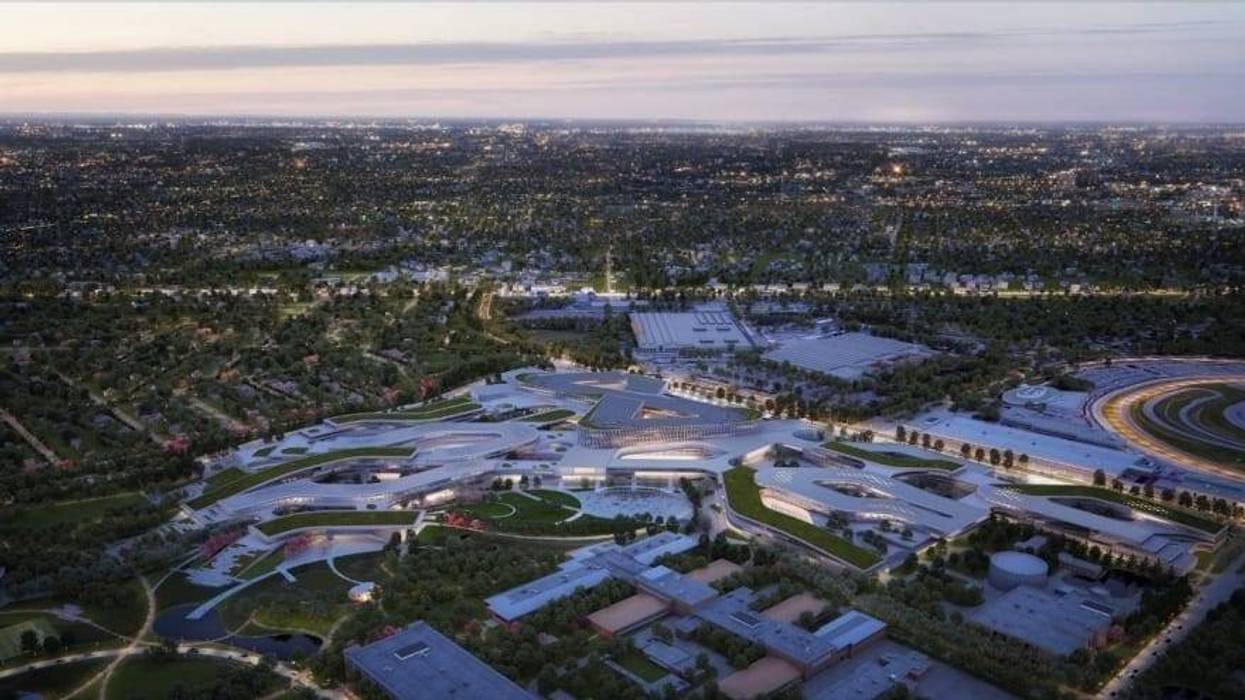

DEARBORN (WWJ) - As Ford works to redo Detroit's historic train station, the automaker is unveiling some pretty ambitious plans for its Dearborn Research and Engineering campus.
The first big renovation in 66-years will have interconnected walkable buildings with a central campus building as the centerpiece.
Sitting along Oakwood Boulevard, the central campus building is expected to be finished in 2025 and co-locate more than 6,000 Ford employees – mainly designers and vehicle development teams – creating an inviting, walkable community entrance to the company's Research and Engineering campus.
Ford CEO Jim Hackett said he envisions autonomous shuttles connecting the Dearborn campus with the Michigan Central Station in Detroit.
"It allows us to have the capacity in a way, but also we get to demonstrate what Ford's role is in the way that people will move between these facilities because of the mobility vision that we have," Hackett said.
Plans include an increase in public spaces and shared pathways that bring employees and local residents together, as well as coffee shops and restaurants that can serve as meeting places and communal spaces.
The plan envisions an intelligent campus built with flexibility so it can adapt to changes in the industry and work practices. With more freedom to decide where and how they want to work, employees can take advantage of adaptable furniture and flexible workspaces outfitted with the latest productivity tools and technology.
Movement within the campus will be pedestrian-focused and transit-rich, connected directly to amenities and networked through a shared transportation loop, limiting personal vehicle access to the perimeter of the site. The campus will showcase new mobility solutions such as electrified bikes, scooters and shuttles, evolving over time as autonomous vehicles and other transportation emerges.
The design of the architecture and landscapes promotes natural light, high ceilings and views of nature, keeping employee health and well-being at the core of the new campus. Amenities will include cafes and restaurants that prioritize sustainable, local products and farm-to-table food sourcing. There will be connected outdoor environments people can use across all seasons, such as pavilions, courtyards and covered walkways.
These broad moves in turn intensify the tree density and wetland landscape across the remainder of the site. Where possible, natural environments will be restored to keep the needs of people, vegetation and wildlife in balance.