

(WWJ) Michigan is once again at the epicenter of U.S. politics as voters head to the polls today: Tuesday, November 3, 2026.
Easily one of the nation’s most hotly contested battlegrounds, the Great Lakes State serves as a dual barometer: The battle for its U.S. Senate and House seats will help dictate control on Capitol Hill, while an open-seat race for governor and key state legislative races will reshape the policy trajectory in Lansing for years to come.
In the U.S. Senate, Democrats need to pick up a minimum of four U.S. Senate seats – and keep the seats they already have – to win control of the chamber. For the U.S. House, eyes across the nation will watching races in dozens of districts that will be key to determining which party will control.
Michigan sits directly at the center of both national equations, featuring an open Senate seat left by retiring Democratic Sen. Gary Peters, several razor-thin congressional battlegrounds, and consequential statewide executive offices.
Key Races to Watch
- U.S. Senate: Democratic nominee Abdul El-Sayed faces Republican nominee Mike Rogers for the open seat left vacant by retiring Democratic Sen. Gary Peters. Also certified on the ballot are Douglas P. Marsh (Green), Lydia Christensen (Libertarian), and Timothy Long (U.S. Taxpayers Party).
- Governor: With term-limited Democratic Gov. Gretchen Whitmer ineligible to run, Democratic Secretary of State Jocelyn Benson and Republican former U.S. Rep. John James square off in one of the cycle's most high-profile open executive contests.
- Secretary of State: Democratic Lt. Gov. Garlin Gilchrist II and Republican Macomb County Clerk Anthony Forlini face off for the open seat overseeing Michigan's election system, alongside Eric Borregard (Green), Christine Sloan (Libertarian), and Scott E. Aughney (U.S. Taxpayers Party)
- 10th Congressional District (Open - Macomb/Oakland): Republican nominee Mike Bouchard Jr. faces Democratic nominee Christina Hines in the open seat vacated by John James, alongside Andrea Kirby (Working Class Party), Kwabena Nkromo (Green), and Mike Saliba (Libertarian).
- 7th Congressional District (Mid-Michigan): Republican freshman Rep. Tom Barrett defends his seat against Democratic progressive organizer William Lawrence and Green Party nominee Shane Dedrick.
- 8th Congressional District (Flint/Tri-Cities): Democratic freshman Rep. Kristen McDonald Rivet defends her seat against Republican challenger Thomas J. Smith, along with Jim Casha (Green), C. Mia Pettus (Libertarian), and Kathy Goodwin (Working Class Party).
- 3rd Congressional District (West Michigan): Democratic incumbent Rep. Hillary Scholten faces Republican challenger Terri DeBoer and Green Party candidate Joe Jock.
Statewide ballot proposals
Beyond candidate races, Michigan voters will decide on two statewide measures:
- Proposal 2026-1 (Constitutional Convention): Placed before voters automatically every 16 years under Article XII of the state constitution, this question asks whether Michigan should convene an elected constitutional convention in 2027 to draft a general revision of the state constitution. Any revised document produced by delegates would require subsequent voter approval before taking effect.
- Proposal 2026-2 (Campaign Finance Reform): An initiated law proposal addressing political spending and disclosures. The measure would prohibit campaign contributions to candidates from certain regulated utilities and state government contractors, while applying state disclosure rules and regulations to internet-based political communications.
Key Metro Detroit regional ballot proposals
In addition to state-level questions, voters across Southeast Michigan will weigh in on major regional cultural and institutional funding measures:
- Detroit Zoo Millage Renewal: Voters across Wayne, Oakland, and Macomb counties will decide whether to renew the 0.10-mill property tax supporting the Detroit Zoo for an additional 10 years, running from 2028 through 2037. First approved in 2008 and renewed in 2016, the rate costs approximately $10 per year on a property with a taxable value of $100,000. Because this renews the existing levy, it does not represent a new tax hike. Revenue is transferred to the Detroit Zoological Society to fund animal care, daily operations, education initiatives, and facility maintenance.
- Southeast Michigan Public Historical Museum Authority Millage: Voters in Wayne and Oakland counties will decide on a proposed 10-year, 0.20-mill property tax (20 cents per $1,000 of taxable value) running from 2026 through 2035. The millage would provide dedicated operational revenue for the Charles H. Wright Museum of African American History, the Detroit Historical Museum, and the Dossin Great Lakes Museum. In return, residents of Wayne and Oakland counties would receive free general admission, expanded educational services, and community programming.
- Local Municipal & School Measures: Depending on the jurisdiction, voters across Wayne, Oakland, and Macomb counties will also find local school operating renewals, infrastructure bonds, and public safety levies on their precinct ballots.
Headed to the polls? Keep this in mind
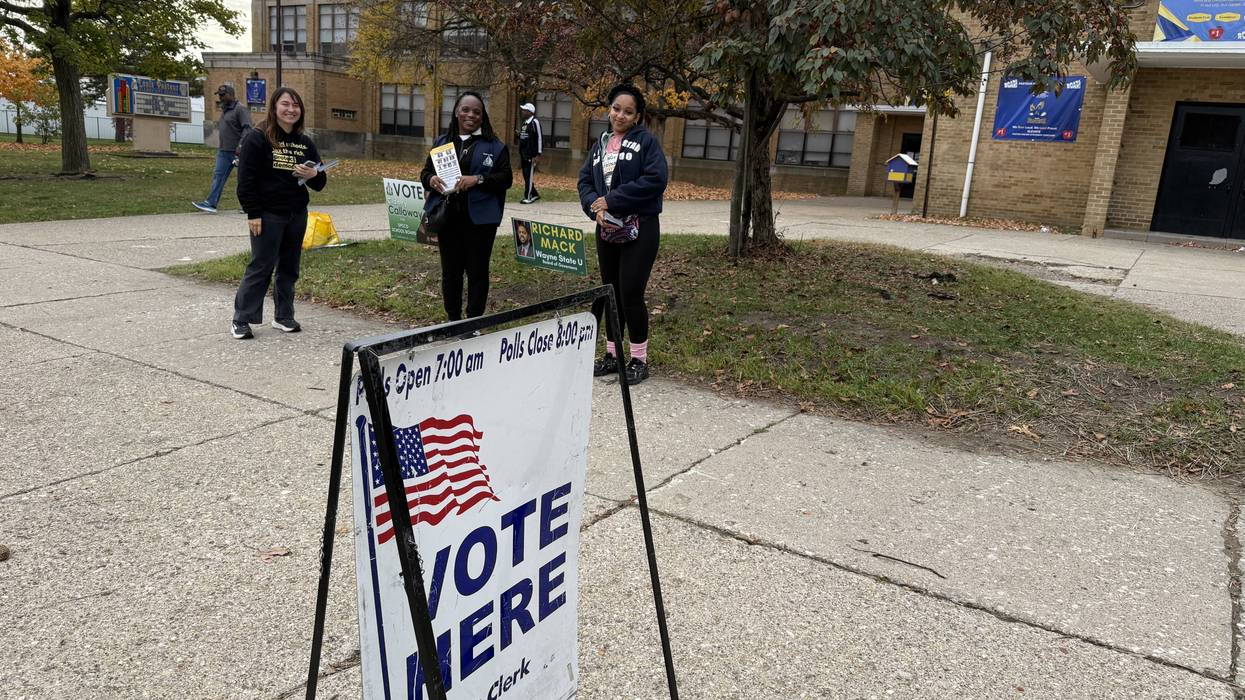
- Polls are open statewide on Tuesday, November 3, from 7 a.m. to 8 p.m. local time. Don't forget to bring your ID!
- Under Michigan law, any eligible resident not yet registered may register and vote in person on Election Day at their city or township clerk’s office with proof of residency.
- Voters can verify their registration status and locate their polling site through the official Michigan Voter Information Center.
- Need a lift? SMART is offering FREE rides to the polls throughout Oakland, Macomb and Wayne Counties on Election Day. The Detroit Department of Transportation, DDOT, will also be offering free fares for the day,