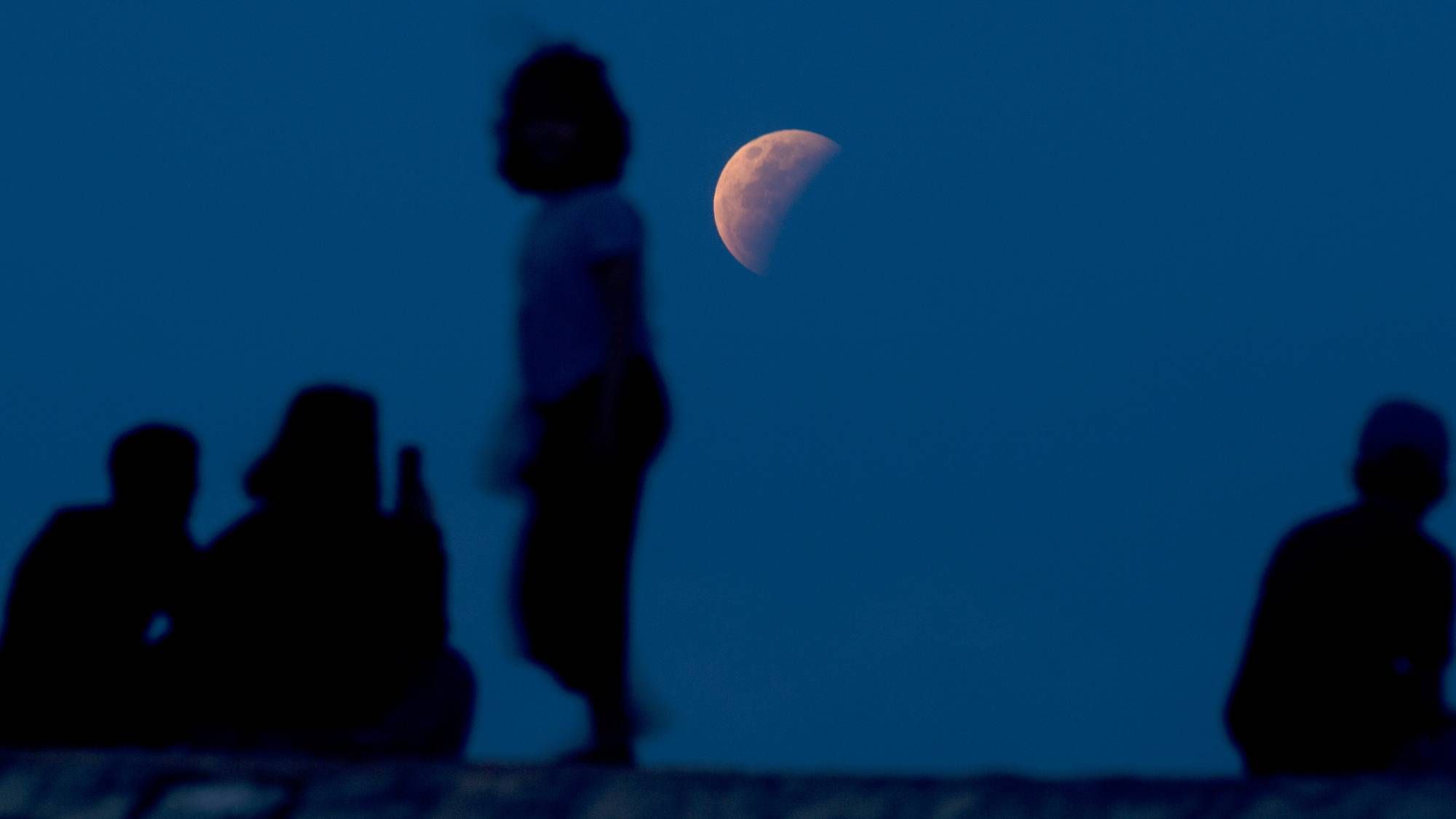


(WWJ) -- Early risers will be treated to a show in the sky Thursday morning as metro Detroiters will be able to see a "Ring of Fire" solar eclipse.
The annular solar eclipse will be partially visible to most of Michigan, provided the weather cooperates. While AccuWeather is calling for some cloud cover on June 10, the eclipse should be visible for Michiganders around sunrise, at 5:50 a.m.
Further north in parts of Canada, the eclipse can be viewed in its entirety, but astronomers say the eclipse will be visible in Michigan until about 9:10 a.m., while the peak of the ring of fire will come around 6:42 a.m.
Unlike a total solar eclipse, during an annular eclipse, the moon doesn't fully cover the sun, but instead creates a ring of sunlight as the moon crosses between the sun and earth.
The best way to view the eclipse is finding a place with an unobstructed view of the horizon, such as an open park or the top of a tall building.
Speaking on WWJ last month ahead of the "Super Blood Moon" lunar eclipse, Cranbrook astronomer Mike Narlock said the sun will appear as if it has a big bite taken out of it.
But Narlock says it's important for eclipse-viewers to never look at the sun directly, as it can cause damage to the eyes.
"One thing it can give us is permanent blindness if we look straight at it, so you do need to use a properly filtered telescope or binoculars with proper solar filters on it," Narlock told WWJ. "You can get a certain welder's glass, or some people may still have their solar eclipse glasses."
Many Americans looked up to the skies on Aug. 21, 2017, after weeks of anticipation and hype led to many getting their hands on special solar eclipse glasses in preparation.
Narlock says he learned at an early age you should never look directly at the sun, as a classmate did exactly that.
"It scarred his eye to the point where he had like a permanent blind spot and it scared me. To this day I don't like looking at the sun, even though my actual field of expertise is solar physics," Narlock said.
The next solar eclipse that will be visible from North America won't take place until October, 2023, according to NASA.