

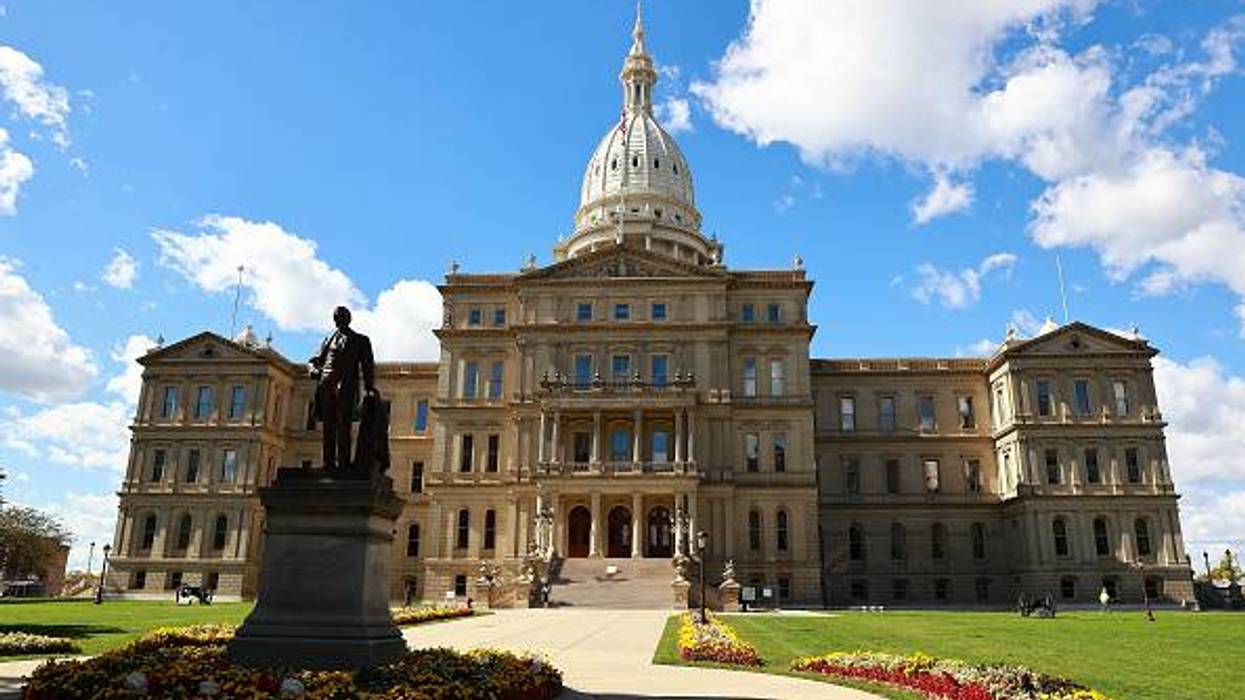

Michigan state Representatives and Senators approved a new $75.2 billion budget early Friday morning during sessions that lasted all night.
Many Republican lawmakers praised the deal for "delivering real reforms to state government’s out-of-control spending," strengthening accountability throughout state government, and protecting Michigan taxpayers.
Representative Mike Harris of Waterford said an important aspect of the school aid budget was continuing free meal for all Michigan students.
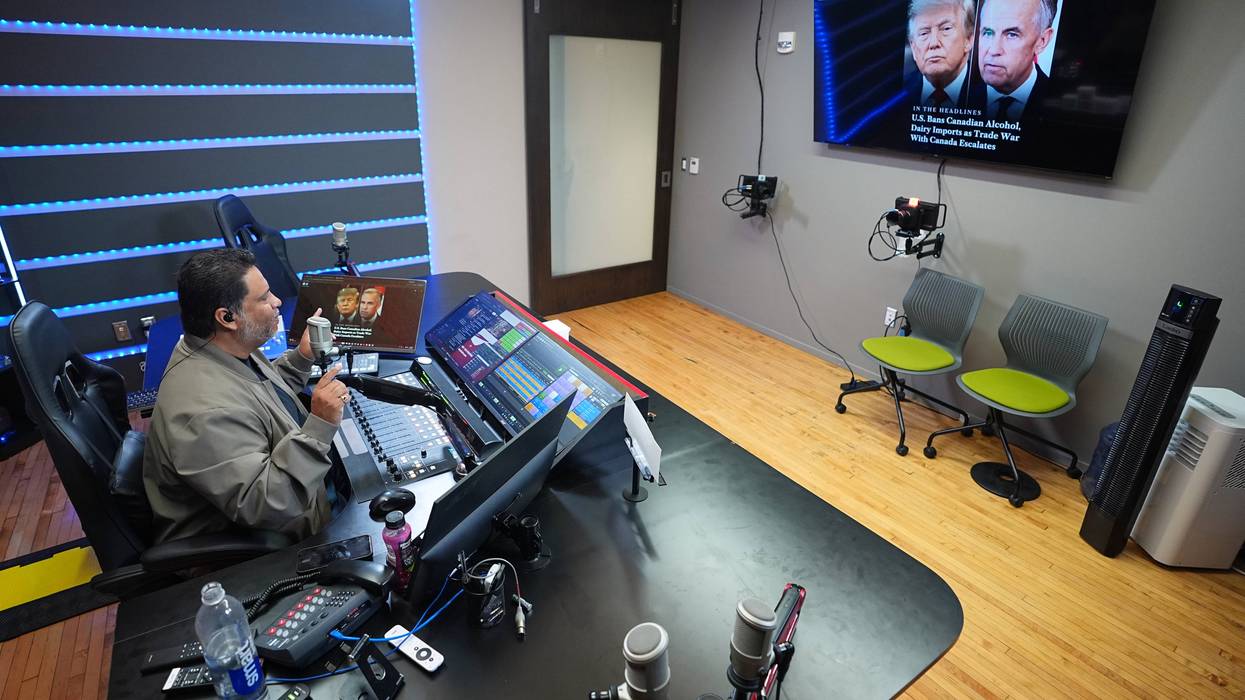
"We actually set this up now so the school meals remain available to students in public and private school," Harris told WWJ's Greg Bowman during a live interview just minutes after the budget was approved in the House.
Democrats say the budget delivers real, meaningful relief for families, small businesses, and local communities.
"We invested in child care, including MI Tri Share and free Pre K for all because we understtand opportunity in Michigan begins with parents being able to work while knowing their children are safe, supported and cared for," Rep Joe Tate from Detroit said on the House floor shortly before the vote.
The Governor's office says the the budget includes $19.8 billion for schools.
“Today’s balanced, bipartisan budget delivers for every Michigander," said Governor Whitmer in a statement. "Over the past seven and a half years, we’ve fixed more roads, supported more students, secured more investments, and expanded more rights than any other administration in state history. This budget builds on our progress by strengthening student literacy, opening doors for more housing opportunity, protecting health care, fixing our damn roads, and lowering costs for all Michiganders."
The Governor praised Senate Majority Leader Winnie Brinks, House Speaker Matt Hall, and lawmakers on both sides of the aisle for approving the budget.
The Governor's office outlined some of the budget details:
--$200 million to continue free school meals for all 1.4 million public school students, saving families around $1,000 per year, per child, and valuable time every morning.
--Continuing the Working Families Tax Credit, sending an average of nearly $3,900 in tax relief to 665,000 families.
--Rolling back the retirement tax completely, saving 500,000 seniors an average of $1,000 a year.
--Continuing tax exemptions on: Tips (saving 300,000 workers $400 a year), Overtime (saving 500,000 workers $500 a year), Social Security (saving 40,000 seniors $500 a year)
--$5 million for water affordability, helping families pay their bills and avoiding water shut offs.
--$5 million for weatherization to help families lower their utility bills.
In regards to literacy programs, the Governor said the budget includes:
--$502 million to support student literacy and achievement:
--$96.1 million to make free pre-K for all available to an estimated 68,000 children through the Great Start Readiness program, saving families $14,000 per year.
--$135 million to support students and parents with expanded before- and after-school programming.
--$50 million for high-impact tutoring to provide students with individualized, structured, evidence-based interventions, helping them catch up and get back on track.
--$50 million to provide grants to school districts, helping them purchase and implement high-quality literacy programs.
--$75 million to continue implementing LETRS training, which trains educators in the “science of reading”—including strategies like phonics— as an instructional method for use in classrooms statewide.
--$33 million to fund regional support for families of young children and expand the Michigan Learning Channel.
--$10.5 million to hire additional regional literacy coaches who assist teachers in developing and implementing instructional strategies for pupils in grades pre-K to 5. With this increase, total funding for literacy coaches is $52.5 million which supports 420 coaches across the state, an increase of 327 coaches since the Governor took office.
--$7.6 million to support Literacy Essentials and comprehensive professional learning about the science of reading for educators at all grade levels.
--$9.6 million to support adult education and help more Michiganders get good-paying jobs.
As it pertains to K-12 Education, the Governors office said the budget includes:
--$325 million to support school operations through a 2.5% increase in base per-pupil funding
—an additional $250 per student, for a total of $10,300 per pupil. The per-pupil funding represents a 31% increase since the Governor took office. These funds are invested into every student, in every school, to lower class sizes, buy new textbooks, and install the latest equipment in classrooms and science labs.
--$123 million to continue expanded support for special education students
– a 7.3% increase in the state allocation.
--$278 million, to provide a 20% increase in funding to support academically at-risk students and English language learners, and a 10% increase in funding to support career and technical education students, and students in rural school districts. This budget moves to a true weighted foundation allowance formula that recognizes that higher-needs students require more resources.
--Up to $321 million to support student wellness through continuation of mental health and safety grants to districts. This represents a twelvefold increase in mental health and safety funding since the Governor took office.
--$125 million to reimburse districts with exorbitant transportation costs, allowing them to devote more resources to the classroom.
--$30 million to support early learning partnerships, ensuring students and families access to high-quality early learning and updated GSRP programs statewide.
--$40 million to reimburse eligible districts for dual enrollment costs, incentivizing districts to encourage more students to pursue college credit while still in high school.
--$2.4 million increase for Early On services, bringing total funding to $26.1 million. Early On is Michigan’s system that connects families of infants and toddlers from birth to age three who have, or are at risk for, developmental delays or disabilities with coordinated social, health, and educational services to support early development.
For colleges and universities:
--$2.2 billion to sustain university and community college operations—advancing Michigan’s Sixty by 30 goal of having 60% of working adults with a degree or skills certificate by 2030.
--$532 million, and more than $1.7 billion to date, for the Michigan Achievement Scholarship, which provides a tuition free pathway for full-time community college students through the community college guarantee, and up to $27,500 for full-time students at public or private 4-year universities. More than 106,300 students have been awarded the Michigan Achievement Scholarship since its inception in 2024, and 128,000 students are expected to benefit each year once the program is fully implemented.
--$25 million to support expanding Michigan Reconnect to adult learners ages 21 and older, giving adult learners a tuition-free pathway to earn an associate degree or skilled trades certificate. More than 66,500 students have enrolled in community college with Michigan Reconnect since it was created in 2021.
--$1.3 billion in total capital outlay project authorizations for 27 of the state’s higher education institutions, with a state cost participation of $524.3 million.
The Governor's office also said the budget funds initiatives to protect access to health care and ensure the future sustainability of Medicaid, including:
--$185 million to stabilize Medicaid funding, protecting access to health care for eligible Michiganders through efficiency savings identified in collaboration with stakeholders to address costs, increase accountability and align resource effectiveness while maintaining sustainability of services. Other parts of the budget include:
--$184.3 million general fund to prepare our state to meet new, burdensome federal requirements that make it harder to access food and health care:
--$94.3 million in increased SNAP administrative cost-sharing, which increased from 50% to 75%.
--$40 million for staffing, administration, and implementation oversight efforts.
--$31.5 million in workforce investments to help Michiganders maintain access to health care and SNAP, including funding for workforce training and expansion of registered apprenticeship opportunities.
--$20 million, in a supplemental, for community health navigators to help individuals who are subject to new eligibility requirements demonstrate compliance and maintain coverage.
--$351.9 million to maintain direct care worker wages, consistent with the Jan. 1, 2027, and prior year statewide minimum wage increases and provide paid sick leave.
--$31 million general fund--$25 million ongoing and $6 million one-time--to expand behavioral health care and capacity through the new state psychiatric hospital, which is anticipated to open in October 2026.
--$116.2 million in funding to continue the Healthy Moms, Healthy Babies program which helps new and expectant mothers receive the care they need and reduce racial disparities in infant and maternal mortality. The program has supported more than 313,100 families since 2020.
--$10 million to support nursing home staffing and improve care for nursing home residents.
--$1.3 million investment in the autism navigator program to help individuals with autism and their families.
--$52.7M additional for roads and bridges, to save drivers time behind the wheel and money on repairs, while also supporting an estimated 30,500 good-paying construction jobs annually.
--$123.8 million increase in state and federal support for transit and rail programs, including a $33.4 million increase in Local Bus Operating assistance for local transit agencies. This adds to the $44.9 million FY26 increase for Local Bus Operating approved last fall, for a total of $305 million – a combined 34% increase.
--$16.5 million to support a critical highway rail grade crossing project in Trenton to improve travel time and ensure safer commutes for first responders and vehicle traffic.
--$7.5 in rural jobs and capital investment to provide critical investment support for rural businesses throughout the state.