


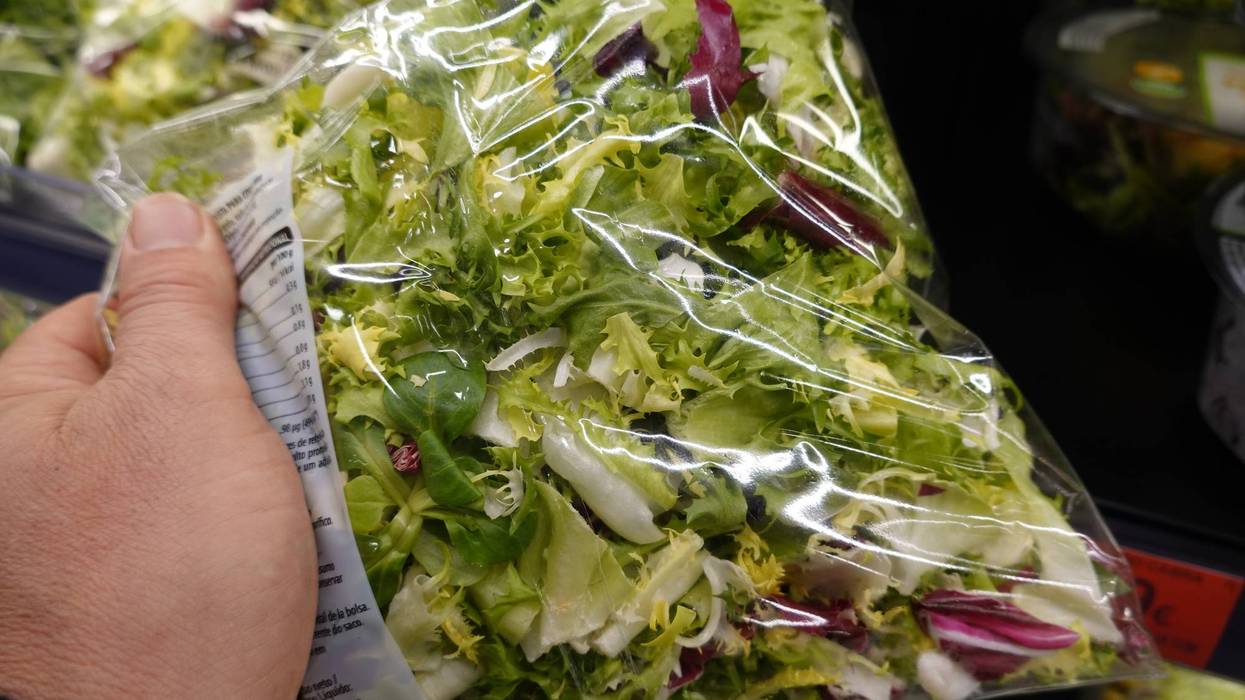

(WWJ) While the investigation is ongoing, current results point to lettuce or salad greens as a potential source for an outbreak of a parasitic illness that can cause explosive diarrhea.
That's the update from Michigan health officials on Monday, as they report 3,300 cases of cyclosporiasis reported in the state as of Tuesday, July 14. Of those, 44 reported they had been hospitalized.
In releasing this latest information, the Michigan Department of Health and Human Services (MDHHS) stressed that other food items still cannot be completely ruled out.
“Although we do not have a definite product identified as the source of the outbreak, we want to let Michiganders know what we have learned so far so they can take steps to protect their families,” said Dr. Natasha Bagdasarian, chief medical executive. “Early information has shown lettuce as a common product that regularly comes up during the investigation. We will continue to provide updates as we learn more.”
A majority the cases are in Southeast Michigan, with Monroe, Wayne and Washtenaw counties being the most concentrated area.
Thus far, no specific type of produce, grower or supplier has been identified as the source of the outbreak.
MDHHS said it continues to work closely with local health departments to conduct in-depth interviews of people testing positive for cyclosporiasis, as well as with other state and federal partners to conduct traceback investigations. More than 1,000 interviews have than have been completed to date.
Given the extent of the outbreak, the incubation period of up to two weeks for symptoms to develop after exposure and complex food distribution networks across the state and country, it will take some time for agencies to complete their investigation, MDHHS said.
What about the beaches?
While there's been some talk and concern around Metro Detroit about local beaches, MDHHS says recreational water exposure, such as swimming in lakes, is not a recognized risk factor for cyclosporiasis. As of Monday, the health department said, currently there is no evidence linking recreational water activities to this outbreak. While people should always avoid swallowing recreational water, foodborne exposure – particularly exposure to contaminated produce – remains the primary focus of this outbreak investigation.
What should I do to stay safe?
With all this in mind, MDHHS recommends the following safe practices for all individuals serving, preparing, or consuming lettuce and salad greens in impacted counties, this includes restaurants and commercial kitchens. It's important to note that because this is an active and evolving situation, these recommendations may change as more information becomes available.
Focus on lettuce and salad greens
Given early information and the historical link between cyclospora and pre-packaged salad greens, MDHHS recommends adopting the following lettuce-specific safety measures:
- Purchase whole heads: Buy whole heads of lettuce rather than pre-washed, bagged lettuce or pre-mixed salad kits.
- Discard outer layers: Before preparation, throw away the outer two to three layers of leaves.
- Wash inner leaves: Thoroughly wash the remaining inner leaves under clean running water.
- Prioritize cooking: For any greens that can be cooked, cooking to a temperature of at least 158 F (70 C) is the safest option, as the parasite is resistant to routine chemical disinfection and washing alone cannot guarantee its removal.
Previous outbreaks
The following foods have been specifically linked to previous cyclospora outbreaks in the United States and Canada:
- Bagged salad mixes and kits.
- Fresh cilantro (coriander leaves).
- Fresh basil.
- Rasberries.
- Snow peas.
- Green onions (scallions).
General rules to reduce risk
- Cook when possible. Heating food to 158 F (70 C) or higher kills cyclospora.
- Peel produce. Peeling is highly effective for food items with removable skin as the parasite sits on the outer surface.
- Wash all fresh produce. Wash under clean running water, even if you plan to peel it. “Pre-washed” does not guarantee safety and rewashing bagged lettuce is unlikely to remove cyclospora. While washing alone may not fully eliminate cyclospora, it enhances protection when combined with cooking or peeling.
These recommendations are particularly important for people who have a higher risk of dehydration or weakened immune systems such as patients on chemotherapy, organ transplant recipients, infants and young children and elderly people.
If you do become ill
People experiencing frequent, watery diarrhea are encouraged to contact their health care provider and specifically request testing for cyclospora as routine stool tests may miss the parasite. Cyclosporiasis is treated with antibiotics along with rest and drinking plenty of fluids to maintain hydration.
For more information, visit the MDHHS Infectious Disease Outbreaks web page.
Additional information is also available at About Cyclosporiasis | Cyclosporiasis | CDC.
2,640 cases have been reported in the state as of Monday, MDHH says
2,640 cases have been reported in the state as of Monday, MDHH says