




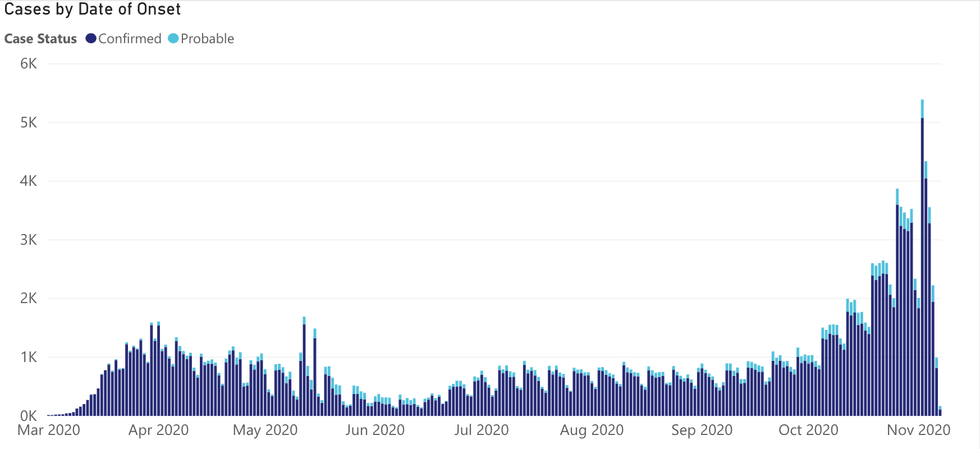
(WWJ) Michigan is reporting a daily record of confirmed coronavirus cases.
The Michigan Department of Health and Human Services (MDHHS) reported 6,225 new confirmed COVID-19 cases on Saturday.
The state also reported 23 deaths that day, as well 42 additional deaths from weeks or months ago identified through a vital records review process.
 Michigan Department of Health and Human Services
Prior to this, the record was over 5,700 cases reported on Thursday.
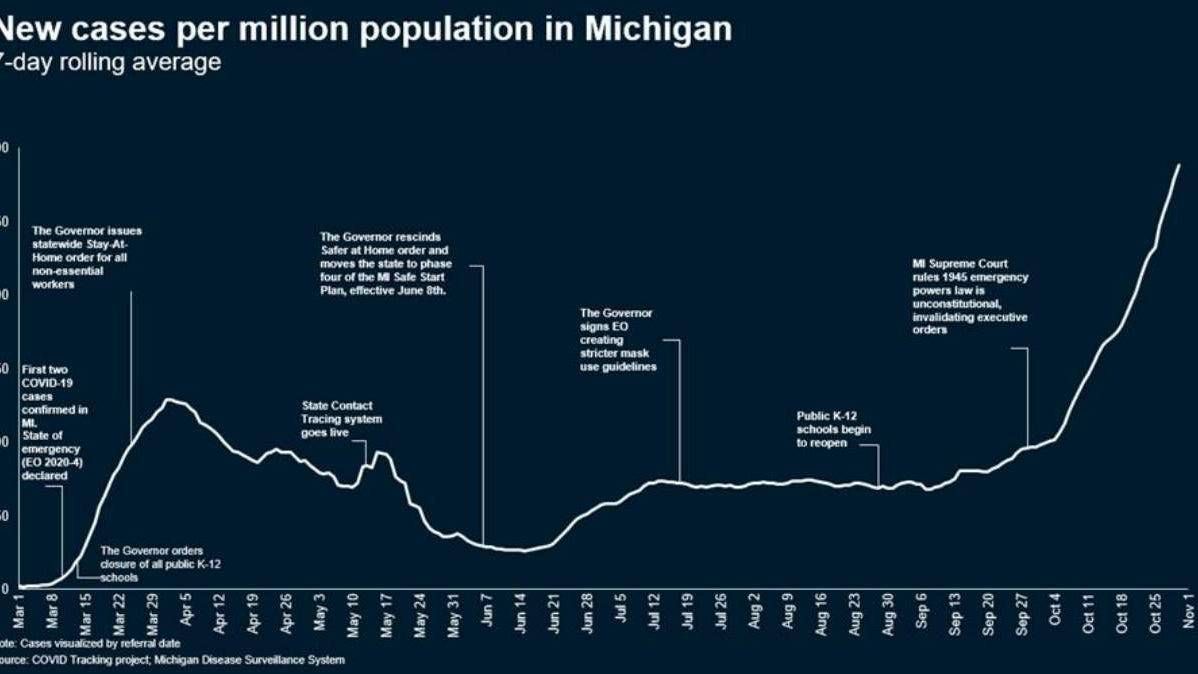

Hospitalizations are also trending upward in Michigan. Nearly 2,100 people are hospitalized statewide with a confirmed case of the virus.
In late September, the number of hospitalizations was around 500.
Of the people currently inpatient, 455 are in the Intensive Care Unit (ICU) and 202 are on ventilators.
While hospitalizations are climbing; about 2.9% of Michiganders who are currently fighting the virus are in the hospital, and .6% are in the ICU.
Hospital capacity overall, including all patients, remains steady around 75.5%.
As of Friday, Beaumont is at 75.8% capacity with 324 COVID-19 patients (48 in ICU).
Ascension: 79.9% capacity with 260 COVID-19 patients (50 in ICU).
Detroit Medical Center: 81.7% capacity with 69 COVID-19 patients (19 in ICU).
Henry Ford Health System: 79.5% capacity with 279 COVID-19 patients (57 in ICU).
See more information on hospitalizations here.
Still, the state's top health experts are concerned.
"If we don't mask up and keep our distance," Chief Medical Executive Dr. Joneigh Khaldun said in a tweet, "it's possible we could see 100 deaths a day in our state by the end of the year."
We are at a critical point in Michigan. If we don't #MaskUp and keep our distance it's possible to see 100 deaths a day in our state by the end of the year. https://t.co/y4Gx86hAhX
— Joneigh Khaldun MD MPH (@DrKhaldun) November 5, 2020
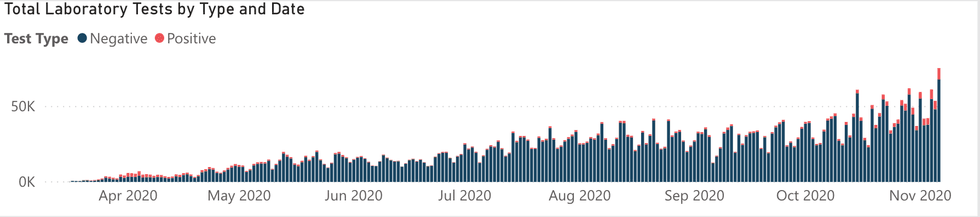
The state's test positivity rate stands at nearly 10%. Two weeks ago, it was about 6%.
To find a testing site near you, click here.
 Michigan Department of Health and Human Services
Nearly 129,000 or 62% of Michiganders who have contracted COVID-19 are considered recovered. The state fatality rate stands at 3.7%, a dramatic drop from 10% in the early days of the pandemic. 7,578 residents who have tested positive for the virus have died.
MDHHS issued state health orders last month requiring Michigan residents to wear a mask whenever in public. Gov. Gretchen Whitmer said the Michigan Occupational Safety and Health Administration (MIOSHA) will force companies to allow an employee to work from home, if his/her job can be accomplished remotely, under a new order. Those companies who do not comply could face fines upwards of thousands of dollars.
Residents are also urged to wash their hands thoroughly for at least 20 seconds, maintain distance of at least six feet with people outside their household; and avoiding gatherings and unnecessary outings.
The Centers For Disease Control and Prevention (CDC) identifies the following as COVID-19 symptoms:
Fever or chills
Cough
Shortness of breath or difficulty breathing
Fatigue
Muscle or body aches
Headache
New loss of taste or smell
Sore throat
Congestion or runny nose
Nausea or vomiting
Diarrhea
The symptoms typically appear 2 to 14 days after exposure to the virus.
If you have the following symptoms, the CDC urges you to seek emergency medical help immediately:
Trouble breathing
Persistent pain or pressure in the chest
New confusion
Inability to wake or stay awake
Bluish lips or face
*This list is not all possible symptoms. Please call your medical provider for any other symptoms that are severe or concerning to you.
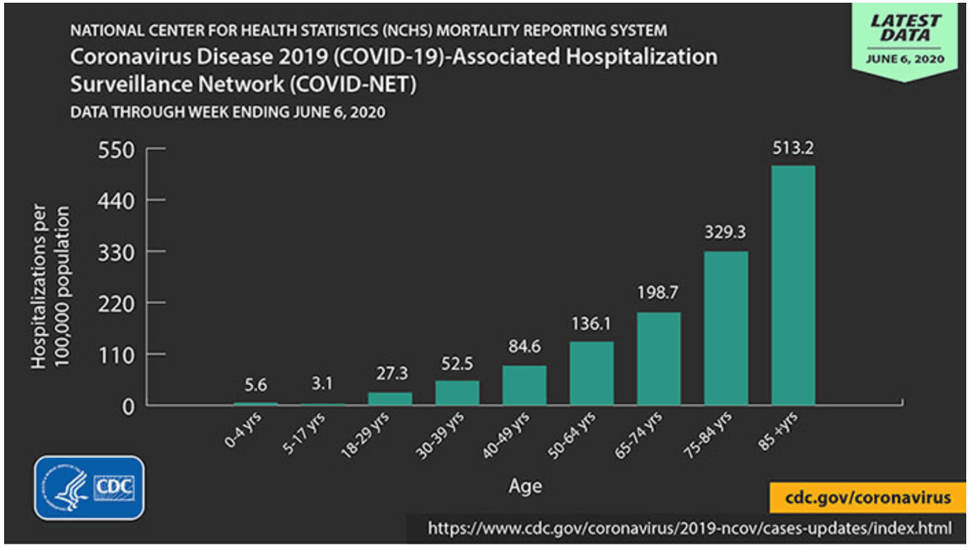
The risk for complications from COVID-19 increases with age, with the greatest risk for severe illness among people 85 or older; according to the CDC.
 Nationwide hospitalizations by ageCenters for Disease Prevention and Control
The CDC says people with the following conditions are also at higher risk:
COPD (chronic obstructive pulmonary disease)
Heart conditions, such as heart failure, coronary artery disease, or cardiomyopathies
Immunocompromised state (weakened immune system) from solid organ transplant
Obesity (body mass index [BMI] of 30 kg/m2 or higher but < 40 kg/m2)
Severe Obesity (BMI ≥ 40 kg/m2)
See a complete list here of conditions that might put a person at higher risk, but the data is not conclusive.
The CDC is also recommending changing the way you celebrate Thanksgiving this year.
Their suggestions include hosting a small dinner with only people in your household, having a virtual dinner with family and/or friends and sharing recipes; or preparing food for family and neighbors and delivering it to them by avoiding contact. See the full list here.