

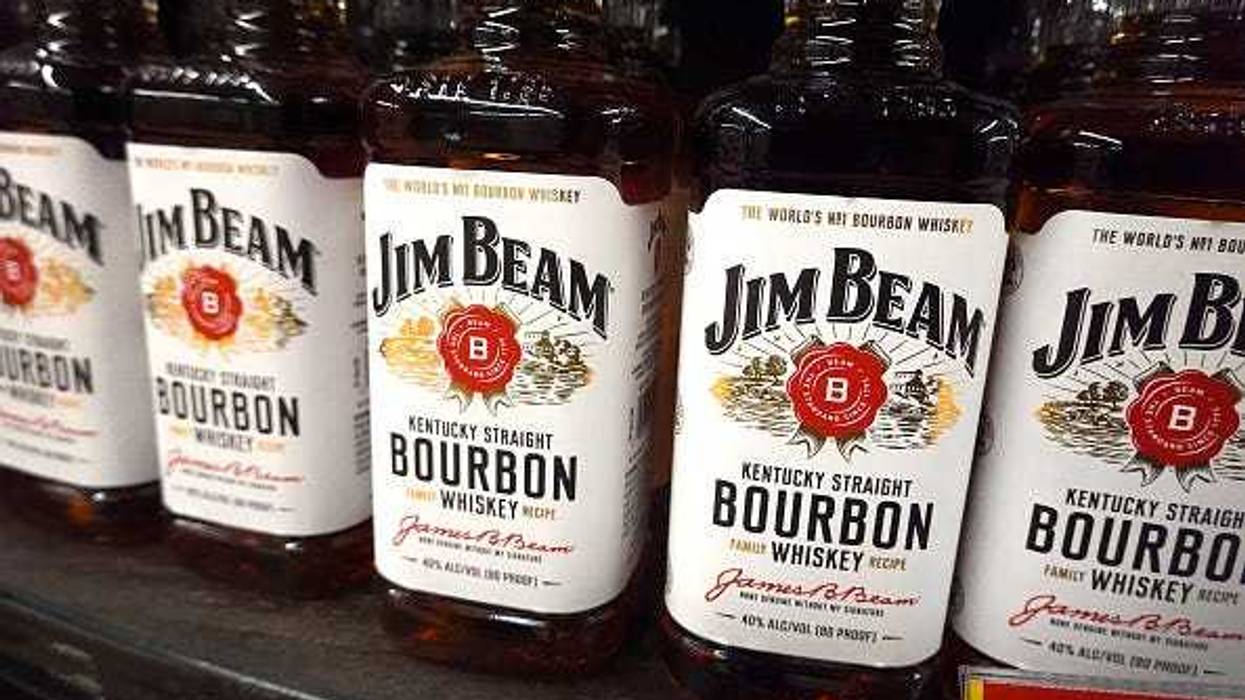

If Disneyland is the happiest place on Earth for kids, the Jim Beam manufacturing site in Kentucky may be the dream playground for bourbon drinkers because it's filled to the brim and closing the doors.
That's right, Jim Beam, one of the largest bourbon producers, is pausing whiskey production at its main distillery starting Jan. 1, 2026, due to a significant drop in sales following Canada's boycott of American products, including spirits. They say it will remain closed at least all year.
The New York Times called the closure "a stunning move that underlines the immense challenges facing the American whiskey industry after more than two decades of rapid growth." The facility they're closing produces about a third of the company’s annual output of approximately 26.5 million gallons, the Times added.
Jim Beam is not alone in the tariff struggle. Data shows the U.S. whiskey industry has reduced production by over 55 million proof-gallons, or more than 28%, largely because of the strained trade relationship between the U.S. and Canada, where winters are long and drinkers are plenty. In January, Brown-Forman, maker of Jack Daniel’s and Old Forester, announced the lay off about 650 employees, or 12 percent of its work force.
Canada's Prime Minister Mark Carney has gone so far as to say the economic relationship between Canada and the United States has ended.
Jim Beam has not announced layoffs yet, but the employees' union is working to determine the best use of the workforce during the production pause.
Other whiskey manufacturers like Jack Daniel's Tennessee Whiskey are also experiencing losses, with $59 million reported this year, partly due to Canada's boycott and economic uncertainty in the U.S. market.
Tariffs alone aren't to blame, experts added, because as Gen Z comes of age they drink less than previous generations and when they do buy whiskey, they prefer high-end, small batches like Pappy Van Winkle, which continues to grow and thrive.
“The data show that people don’t want 80 proof whiskey like Jim Beam White Label,” Fred Minnick, a whiskey expert and the author of the forthcoming book “Bottom Shelf: How a Forgotten Brand of Bourbon Saved One Man’s Life" told the New York Times. “What they continue to buy are elevated brands.”