

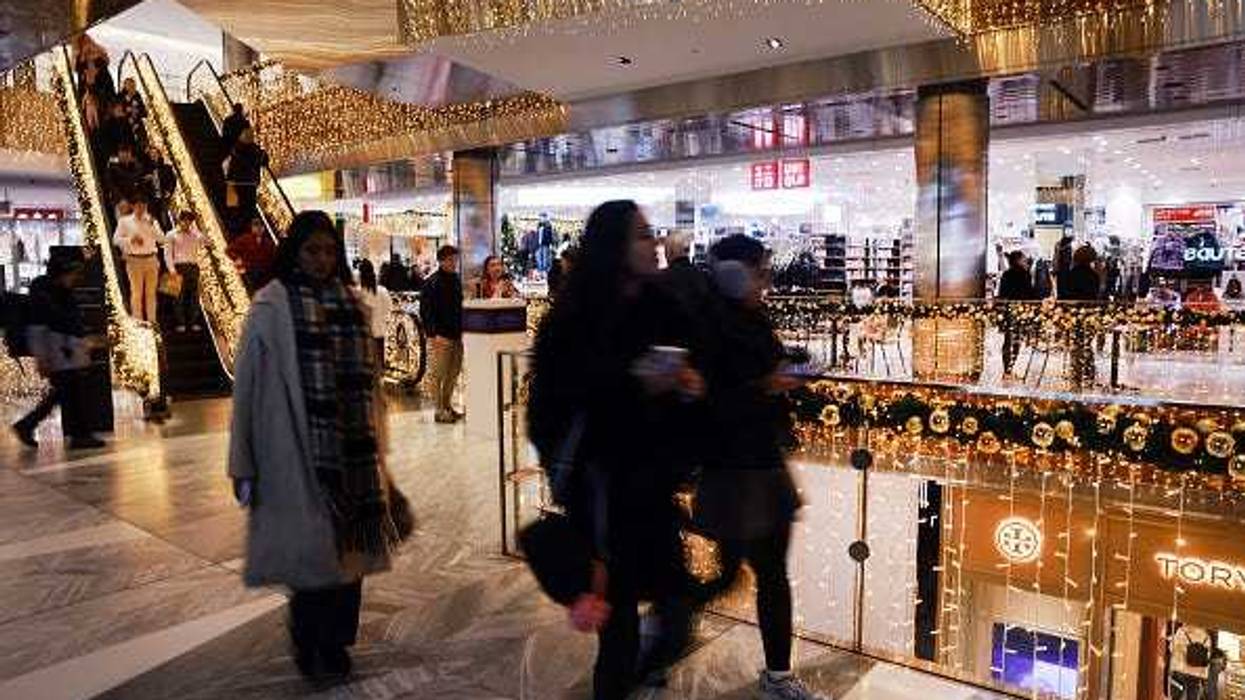

Let’s go to the mall.
Love keeping up with business news? Download the Audacy app and follow WBBM Newsradio to get WBBM’s Weekend Wallet newsletter!
While these retail meccas across the U.S. were the epicenter of youth culture from the 1980s through the early 2000s, they have been on the decline in recent years. That doesn’t mean mall culture is gone, though.
According to Bob Phibbs, CEO of The Retail Doctor, it’s just evolving. He joined WBBM Newsradio’s Rob Hart on the Noon Business Hour this week.
“There’s always been a need for the cool kids to go,” Phibbs said.
According to research published by Capitol One earlier this month, there are an estimated 1,200 malls in the U.S., and some are disappearing. By 2028, there will only be an estimated 900 and in the next 10 years, 87% of large shopping malls might fade into memory. Online shopping and a shifting economy have impacted the once busy malls.
“The Galleria in Southern California, that was the epicenter of mall culture when it opened 45 years ago,” Hart explained. “When we think of 80s mall culture and kids just hanging out at the shopping mall it began there in Southern California,” though it also includes other staples like the Mall of America in Minnesota and Woodfield Mall in the Chicago suburbs.
Phibbs said Southern California is one of the places where there are signs of a new mall revolution.
“A lot of them are taking a page from the Glendale Americana Mall, which was conceived as a mixed-use, you know hotel, residential, high-end shopping, and everyone took a look around and said, Hey, that might be the ticket,” he told Hart.
That Capitol One data also showed that nearly half (46%) of mall redevelopments are mixed-use and feature some share of retail space. It also said that 16% of empty of “dead’ malls reopened as mixed-use centers.
Other places getting inventive with malls include Alaska and Seattle, Wash. There, Phibbs said they’ve been putting libraries and other services, such as medical offices and grocery stores in malls, essentially becoming “a new Main Street.”
“You drive past them, you see the outline of Sears on an abandoned building, and you know that’s a mall that’s still looking for someone to come along and give it some new life,” said Hart of dead malls. He also noted that our love for a day at the mall still seems to be there, even if it’s different than it was before.
Indeed, Phibbs agreed that “what has not changed is we are human beings, people go to a mall because we have a human need to connect and the retailers who are doing it right have spent a lot of money on stores.” He added that high end malls have been reporting higher traffic and that 80% of retail sales in the U.S. are still done at brick-and-mortar stores. Other research has shown that Gen Z shoppers are also hitting the mall.
“We didn’t go anywhere it’s just the P.R. never quite caught up till this year,” Phibbs added.