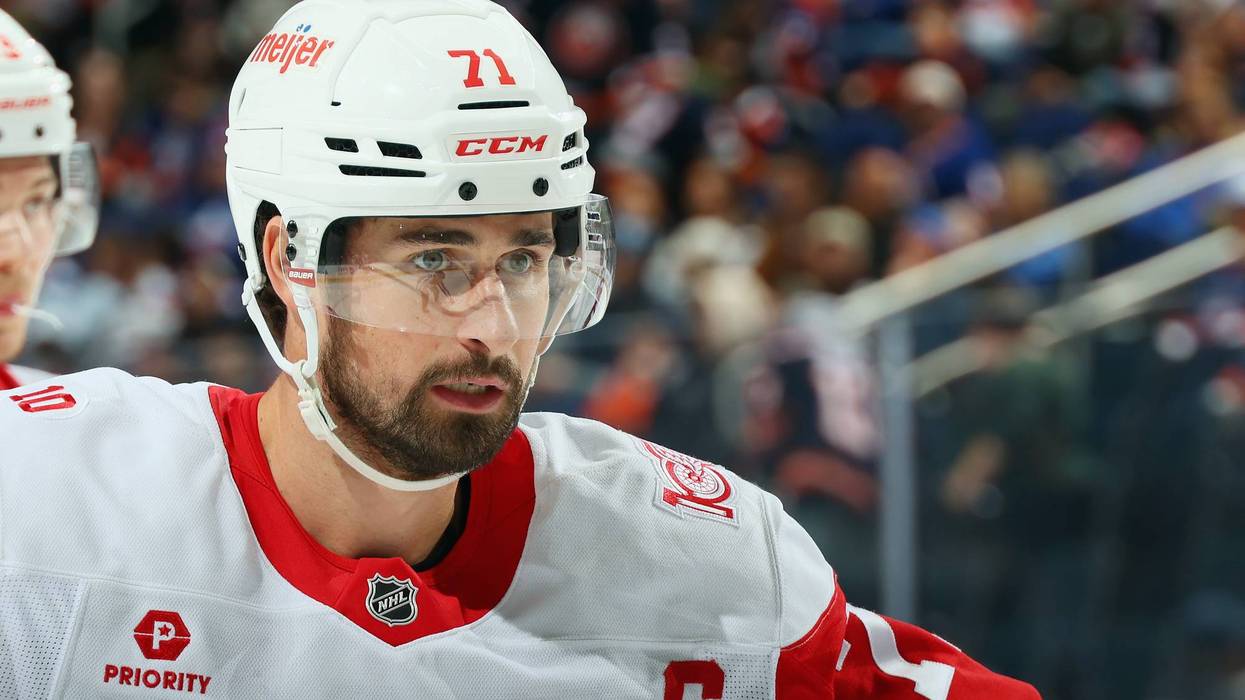


In his 500th plate appearance in the majors, in the ninth inning of the Tigers' 5-1 loss to the Orioles on Saturday, Riley Greene took two swings and misses and then a called third strike. It was a snapshot of his very young career. For all his talent at the plate, Greene has struck out more frequently than almost every hitter in the bigs since he arrived last June.
And he has struck out more frequently than all but one hitter in the bigs this season. Combine that with an uncomfortably high ground-ball rate, and you have a potential cornerstone player batting .235 with an OPS+ of 85 (where the big-league average is 100) in his second MLB season. OK, deep breaths.
It remains Greene's first MLB season in terms of experience. At 22 years old, he is one of the youngest players in the majors and the youngest player on the Tigers. The only cut-and-dried conclusion we can draw at this point in his career is that he has so much room to grow. After Greene struck out three times in a 3-2 loss to the Indians last Wednesday, his clubhouse neighbor Spencer Torkelson was asked if he's noticed a difference in the hitter who looked so locked-in during spring training.
"I mean, he did go 4-9 yesterday with a homer, so I wouldn't count him out yet," Torkelson said with a laugh. "He's up there trying to do damage, and I respect that."
Good perspective from the fellow first-round pick, who's trying to get settled in the majors himself. The day prior, Greene had helped the Tigers sweep the Indians in a double-header. That included launching a go-ahead, opposite-field homer in the sixth inning of game two that stood up as the difference and that "I don't even think he hit that great," said A.J. Hinch. It was gone all the same "and we go home a winner."
"He can contribute at any time, whether it's spraying the ball all over the field or hitting for power," said Hinch. "He's a really good player. He's learning a ton, he's not fully developed. We'll keep pushing him and trying to remind him how good he is during his low times so that he can come out of it and have days like today."
Greene hardly needs the reminder. The former fifth overall pick knows exactly how good he can be. He proved it at every level of the minors on his way to Detroit, including Triple-A Toledo where he raked at the end of 2021. He even proved it earlier this season against the reigning World champs when he smacked six hits, including another opposite-field bomb, and scored five runs to help the Tigers take two of three from the Astros.
If Greene gets frustrated after empty at-bats -- and fed-up with losing -- he does not get down on himself. He was chipper after his 0-4 last Wednesday, signing along to Billy Currington's 'Good Directions' at his locker as Torkelson fielded questions next door: She had Hollywood written on her license plate, lost and looking for the Interstate. Needing directions, and I was the man for the job. Growth in the big leagues rarely follows a straight path.
"I am great mentally," Greene said. "I will always be great mentally. I feel like that's half of it. There's going to be days where you get four hits and then the next day, you're gonna go 0-4 with three punches like I did today. It's going to happen, it's the game of baseball, a game of failure. You just gotta figure out how to ride that high and keep it up there and try not to get so low."
Greene's at-bats that day were rather ugly. He struck out swinging in the first, grounded out softly in the fourth, and struck out swinging again in the sixth, all against Cal Quantrill. Against James Karinchak in the eighth, he fell behind 1-2 after "I looked like an idiot swinging at a curveball in the dirt," then took a heater right down the pipe for strike three. He was one pitch behind -- sitting on the curve -- when he thought he was one pitch ahead.
"Growing pains," said Hinch.
Since that series in Houston, Greene is 11-58 (.190) with strikeouts in nearly 40 percent of his plate appearances. He struck out six more times over the weekend as the Tigers were swept by the Orioles and now has the second highest strikeout rate (36.8 percent) in the majors to Miami's Jazz Chisholm Jr. Over his first two seasons, Greene has the seventh highest strikeout rate (30 percent) and, maybe more worryingly, the second highest ground ball rate (56.2 percent) in the bigs.
"He's gotta get a good pitch to hit and not be as anxious to be a swing-first guy," said Hinch. "The strikeouts are a result of generally getting deep into counts, and you can get there in a couple different ways. Sometimes they're good pitches and you just get caught in a deep count and sometimes you chase and swing below the zone, which is something he's done and they've crowded him a little bit. The selectivity will come, the walks will increase. With better pitches to hit, you push the ball away from you a little bit and he's got the power to the opposite field."
The power is a big piece of Greene's upside as a hitter. And it's something the Tigers are still waiting on, especially to the pull side. The first time he swung a bat at Comerica Park after being introduced in 2019, Greene, then 18, blasted a ball over the right field bleachers and onto the Pepsi Porch. Those watching were stunned into silence. Even in batting practice, balls don't land there.
There will always be an element of swing-and-miss in Greene's offensive profile. There always has been, even in the minors. It will be much easier to excuse if and when he taps into all that power. The other bottom 10 hitters in strikeout rate over the last two seasons, which include names like Giancarlo Stanton and Kyle Schwarber, all have at least 14 home runs and an average of about 26. Greene, albeit in fewer at-bats, has seven.
"Obviously the numbers take a long time to correct when it comes to your walk-to-strikeout ratio or your home runs or your power display," said Hinch. "What we don't talk about are necessarily result goals. We're not going to tell Tork or Riley, 'You need to hit for more power.' That is the fastest way to put them in a rut where they are emptying their tank to chase a result.
"We are very process-oriented. It starts with getting a good pitch. When he does get a good pitch, regardless of what time it is in the count, he does a pretty good job of getting the barrel to it. That in itself is pretty good success."
To Hinch's point, Greene is in the top 30 percentile of big-league hitters this season in both barrel rate and hard-hit rate. That's highly encouraging. Less encouraging: he's in the bottom 30 percentile in whiff rate and chase rate. If the Tigers' ethos under Hinch and new president of baseball ops Scott Harris starts with controlling the strike zone, Greene is too often yielding it. He'd be the first to admit it.
"When Riley comes back to the dugout after an error (at the plate), he'll look at me, like, 'I know, know, it wasn't a good pitch,'" said Hinch. "They know that's going to be the primary focus."
Meanwhile, Greene needs to be a primary force for the Tigers in the months and years ahead. Perhaps it's too much pressure to put on the shoulders of a 22-year-old who likes to sing country music in the clubhouse, but this rebuild is going nowhere without Riley Greene. He has what it takes, all the tools, all the talent. He's 500 plate appearances into his career. As country star Riley Green sings, Greene still has a Hell Of A Way To Go.
Listen live to 97.1 The Ticket via:
Audacy App | Online Stream | Smart Speaker