


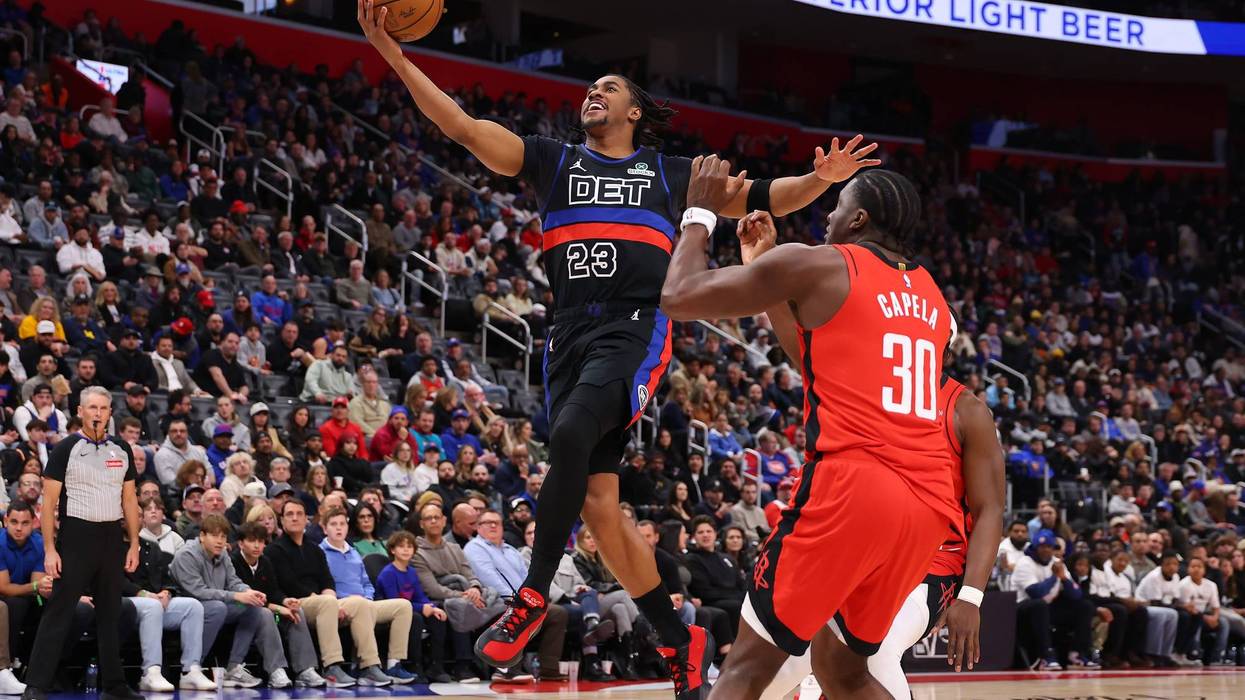

There's a chance that Jaden Ivey will return to form in Chicago, or elsewhere, and become a good player in the NBA. The Pistons just weren't in a position to see that through.
With a chance to make a deep playoff run this spring and with Ivey set to be a restricted free agent this summer, the Pistons offloaded Ivey at the trade deadline in a deal for veteran wing Kevin Huerter. Huerter's size and shooting should give the Pistons more spacing the rest of this season, and his expiring contract should give them more flexibility this summer.
A year ago, Ivey looked like a central piece of the Pistons' plans under Trajan Langdon and J.B. Bickertstaff. But the former fifth overall pick broke his leg in the middle of a breakout season, then suffered a separate knee injury ahead of this season that required another surgery and cost him the first month of action.
By the time Ivey got back on the floor, the Pistons were off and running. He didn't look like the same player, and no longer had the same role. His playing time and production from last season were basically sliced in half. The rise of Dannis Jenkins as a reliable, sometimes explosive No. 2 point guard for the Pistons also ate into Ivey's value.
Asked why it didn't work out for Ivey in Detroit, Pistons president of basketball operations Trajan Langdon told 97.1 The Ticket, "The most difficult thing is the timing of the injury that he had."
"He was playing great last year, but that was an injury coupled with a second surgery that ended up putting him out for almost a year, so the end of one season and the beginning of the next," Langdon said. "Trying to transition back to NBA basketball, or any professional sport, during the season when you haven't played for 11 months, is going to be very, very difficult.
"I hope he figures it out, I think he will figure it out. Sometimes it just takes time. A great human being, I thought he was great for the city of Detroit, for our organization, and we wish him the best."
In other words, Langdon was asked, the Pistons didn't have the time to allow Ivey to find his game.
"Yes," he said. "For us, the move that we made, we felt we got better making that move."
The unspoken part here is that as a former first-round pick coming off his rookie contract, Ivey will carry a salary cap hold of up to $30 million this offseason that would have been cumbersome for the Pistons in free agency. They rid themselves of that burden and put it on the Bulls, who can justify taking a swing on Ivey's upside as a rebuilding team. Meanwhile, Huerter's $18 million cap hit will immediately come off the Pistons' books.
Langdon also believes that the 6'6 Huerter fits with the Pistons in a way that will give them an immediate boost that Ivey couldn't. Huerter's three-point shooting numbers are down drastically the past two seasons at 32.6 percent -- Ivey over the same stretch is at 39.2 percent -- but the Pistons are banking on Huerter's track record as a 37 percent shooter over his career.
"I think the fit with Kevin, we like the IQ and understanding of the game," said Langdon. "He doesn't just run plays, he allows guys to play with him because he can do things, whether it's spotting up, whether it's ghost screens, back-cutting, finishing, creating spacing. He holds pretty good gravity on the floor with defenses. Obviously the shot, whether it's just spotting up in transition or off actions, I think he just he does a lot of things to continue to open up opportunities for his teammates as well as create opportunities for himself to score the ball."
Huerter has yet to make his impact felt for the Pistons, going just 1-for-9 from three in four games since the trade. But as Langdon noted, "It always takes time" to get integrated into a new system, "especially in winning situations."
"Good things are going, we've got a group of players that are playing well together and I think J.B. is going to be cognizant of that and get him in at the right times," Langdon said. "Hopefully coming out of this All-Star break, we'll get him implemented and get him helping our team."