


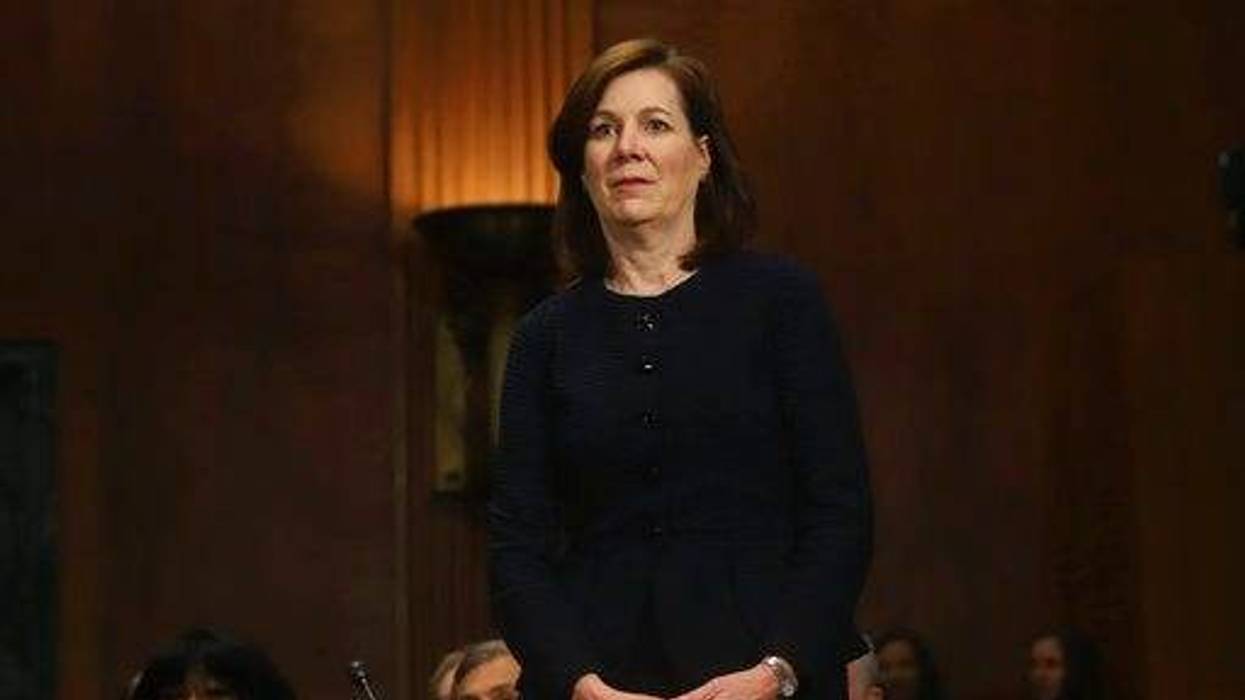

Louisiana lawyer Wendy Vitter was confirmed by the Senate as a federal judge Thursday.
The decision came despite opposition from Democrats who criticized Vitter for her anti-abortion stance and accused her of trying to hide her record on the issue.
The only Republican to oppose her nomination was Maine Sen. Susan Collins, and Vitter was confirmed by a vote of 52-45.
Vitter, a former prosecutor, is general counsel for the Roman Catholic Archdiocese of New Orleans and an outspoken opponent of abortion.
However, Democrats said Vitter had failed to disclose hundreds of past statements opposing abortion, including a claim that Planned Parenthood was responsible for killing 150,000 women a year. Sen. Patty Murray, D-Wash., called the remark careless, reckless and wrong, and said it showed "incredibly poor judgment for somebody who is being considered for a lifetime judicial appointment."
Murray said Vitter's remarks, and other comments criticizing abortion, amounted to "the fearmongering of an activist who is entirely unfit for the federal bench."
Murray and other Democrats said the views of Vitter and other judicial nominees on abortion were increasingly important because of a strict abortion ban signed into law this week in Alabama.
"That legislation is nothing short of an attack on women," said Murray. "And it is part of a larger effort we are seeing today around the country to take away the constitutional right of women to safe, legal abortion and allowing politicians to make decisions for women about their bodies, their health and their lives."
Vitter was defended by Senate Majority Leader Mitch McConnell, who said her "impressive legal career includes experience in private practice and a decade in the Orleans Parish District Attorney's office, where she handled more than 100 felony jury trials."
Last year, Vitter, the wife of former Sen. David Vitter, R-La., drew widespread opposition from Democrats when she refused to say whether she believed the U.S. Supreme Court's landmark 1954 desegregation ruling in Brown v. Board of Education was correctly decided.
Sen. Richard Blumenthal, D-Conn., who asked Vitter about the Brown case, said "Anyone who fails to endorse such a sacrosanct decision is clearly out of the legal and societal mainstream and unworthy of confirmation."
In a statement issued Thursday, Sen. Collins said Vitter's remarks on the Brown case and comments "advancing discredited assertions about the impact of contraception and abortion on the incidence of cancer and domestic violence" led her to conclude that Vitter is "not well-suited to serve on the federal bench."
Collins said her decision was not based on Vitter's personal views on abortion, but on whether she could put aside her personal views, especially since Vitter has encouraged doctors to circulate a pamphlet that linked contraception and abortion to cancer and an increased risk of domestic violence. Those claims have been widely discredited.
Collins is viewed as a top target for Democrats next year and has drawn fierce criticism over her vote last year in favor of Supreme Court Justice Brett Kavanaugh. Collins, who supports abortion rights, said Kavanaugh assured her during a private meeting that Roe v. Wade, the ruling that established abortion rights, is settled law.
Kavanaugh and Justice Neil Gorsuch, another President Donald Trump appointee, could make the court more willing to cut back on the right to abortion, if not take it away altogether.
Three Democrats who ar running for president -- Sens. Cory Booker of New Jersey, Kamala Harris of California and Kirsten Gillibrand skipped Thursday's vote.