



Louisiana's law requiring teachers to post the Ten Commandments in their classrooms is facing another challenge.
Christopher Dier, Louisiana's Teacher of the Year in 2020, filed a federal lawsuit Tuesday challenging the constitutionality of the law. The lawsuit names Louisiana Governor Jeff Landry as the defendant.
The petition asks the court to determine if the House Bill 71, passed by the Louisiana Legislature in 2025, "violates the Establishment Clause" of the First Amendment, which prohibits governments in the United States from "respecting an establishment of religion." The petition also asks the court to determine if Dier's challenge is ripe. That question stems from a February ruling by the United States Fifth Circuit Court of Appeals in New Orleans allowing the Louisiana law to stand because a previous challenge to the law was "premature" and could not be ruled upon until the law took effect.
"(Dier) strongly objects to the message these state-mandated displays convey—that the State officially endorses a particular religion’s authority and moral teachings—and has sworn that he cannot comply with the law, even at the risk of losing his job," the petition states. "Applying recent, binding en banc circuit precedent, the courts below held his challenge unripe and meritless."
Dier, an Advanced Placement U. S. History teacher in New Orleans, says he wants to take his case to the United States Supreme Court.
"I have spent over sixteen years teaching my students that the Constitution protects every one of them — every faith, and no faith," Dier said in a statement. "I respect the Ten Commandments and the place religion holds in millions of Americans' lives, undoubtedly. But the State cannot turn my classroom into a place to deliver its own religious message, or make me the messenger who delivers it. I won't do that."
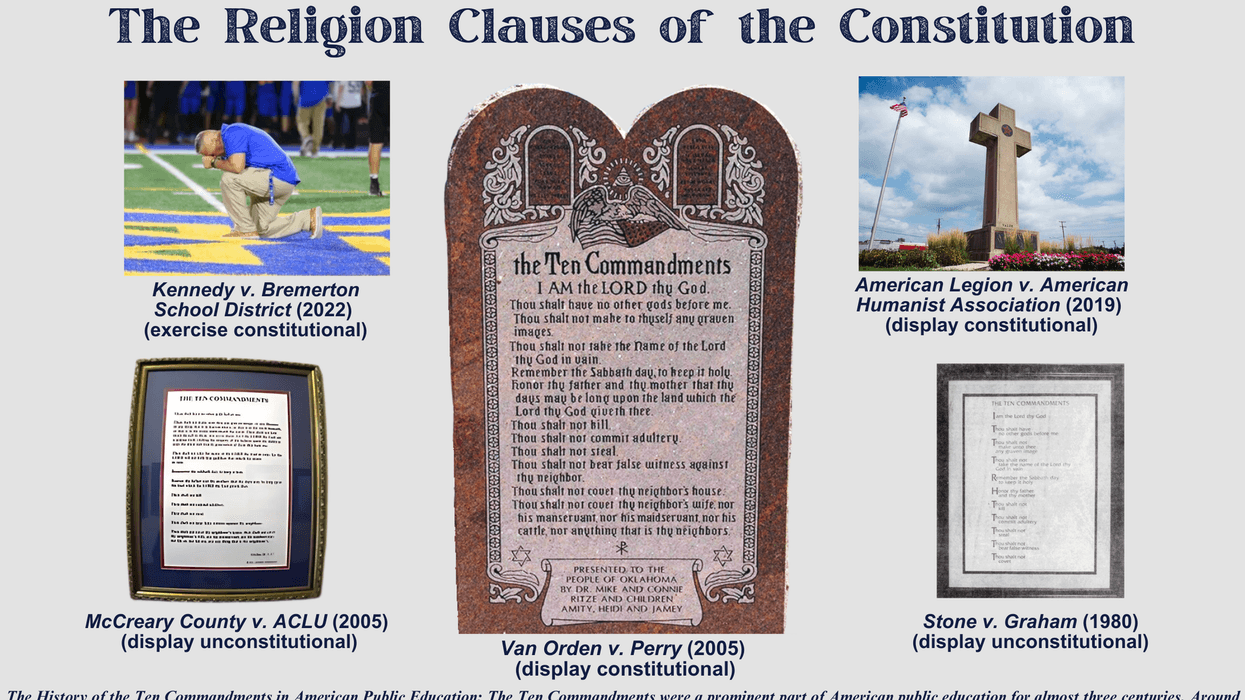
Prior to the Fifth Circuit's February ruling, a lower court ruled the law is "unconstitutional on its face." Supreme Court precedent, specifically Stone. v. Graham (1980) holds that laws such as HB 71 are unconstitutional because they lack a "secular legislative purpose."