


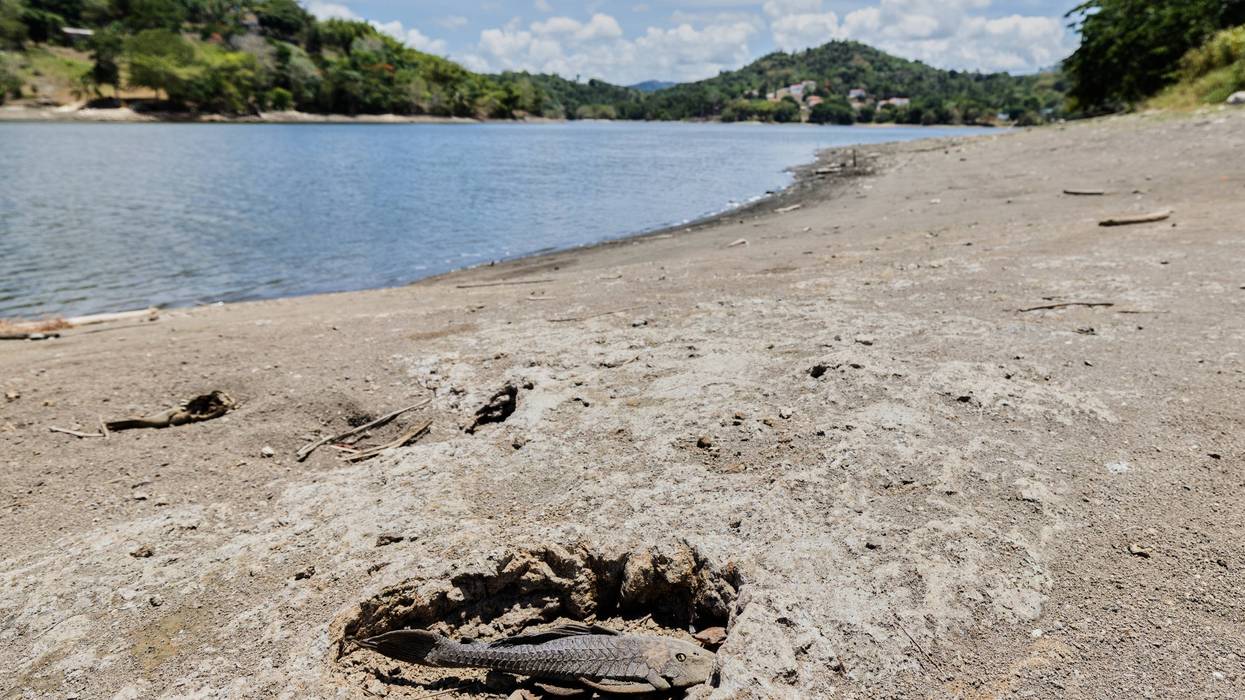

SAN JUAN, Puerto Rico (AP) — The U.S. government announced a drought disaster on Wednesday for more than two dozen cities and towns in Puerto Rico as water woes deepen across the U.S. Caribbean territory, with no relief in sight.
More than 33% of Puerto Rico is under extreme drought, and another 30% under a severe drought. July was the driest month on record for San Juan in more than 120 years and the second hottest for the island's capital.
Gov. Jenniffer González said she had formally requested the declaration from the U.S. Department of Agriculture more than two weeks ago.
“From the very beginning, we made clear the needs of our farmers,” she said.
The declaration covers 26 of Puerto Rico’s 78 municipalities, including Cabo Rojo, Ponce, Yauco, Aibonito and Lares.
The disaster declaration allows farmers and agricultural producers in those regions to access emergency loans.
“This is an important step,” Puerto Rico Agriculture Secretary Irving Rodríguez said. “We urge all producers affected by the drought to document their losses.”
Naia Seda is among the farmers anxious to apply for financial help. She has a 15-acre (six-hectare) farm on which she cultivates avocados, plantains, lemons, cassava and other crops.
It hasn’t rained since April. Her farm, which she has cultivated since 2009, is crisscrossed with cracks several feet deep.
“I’ve never seen something like this on my farm,” she said.
Seda lamented how her crops are shriveling and fruits are dropping to the ground before they’ve ripened because of the unrelenting heat.
The irrigation canal that her farm and 300 others in the southwestern municipality of Lajas depend on used to supply water as requested. Seda received that supply three times a week. In June, officials limited the amount to once a week.
The persistent dry conditions have forced many farmers to halt production as early as May, said Fello Pérez, a Puerto Rico-based technical assistance provider for RAFI, a North Carolina-based nonprofit that serves small- to midscale farmers in the U.S. Southeast, Puerto Rico and the U.S. Virgin Islands.
Pérez said in a phone interview that Puerto Rican farmers who work in hydroponics and grow vegetables in soil are among the most affected.
Those who cultivate fruits, including coffee, cacao, plantains, and bananas, have seen them fall green from the tree because of a lack of water.
“The harvest was ahead of schedule,” he said.
Those who breed animals are also affected because they haven’t been able to feed livestock. In a bid to make money, they were selling young bulls at rock-bottom prices, but no one was buying them because of the ongoing drought, Pérez said.
Farmers have been losing money since May. One was forced to resume work as a mechanic to make ends meet, he said.
Puerto Rico’s governor had declared a state of emergency in late July because of the persistent dry conditions and activated the National Guard to transport, distribute, and purify water.
In early August, she announced water rationing measures in certain neighborhoods of San Juan and six other cities. More than 180,000 customers are without water for 48 hours at a time as part of a rotating schedule.
Large trucks are distributing water in those areas, with priority given to hospitals and residences for older people.
Meteorologists say the ongoing drought is the result of a natural warming cycle known as El Niño, which has also affected the neighboring U.S. Virgin Islands. The U.S. government declared a drought disaster earlier this month for St. Thomas, St. John and St. Croix, which are under an extreme drought.
Dry conditions aside, Puerto Rico is also struggling with a lack of water blamed on crumbling infrastructure.
Thousands of Puerto Ricans were already experiencing water shortages and changes in pressure for up to a year.
The lack of water unrelated to the drought prompted San Juan Mayor Miguel Romero to sue the island’s Water and Sewer Authority in late May, with the governor acknowledging the agency’s infrastructure has lacked investment and maintenance for decades.
Puerto Rico previously implemented water rationing measures in 2020 and in 2015, when about 400,000 utility customers received water only every third day.


