

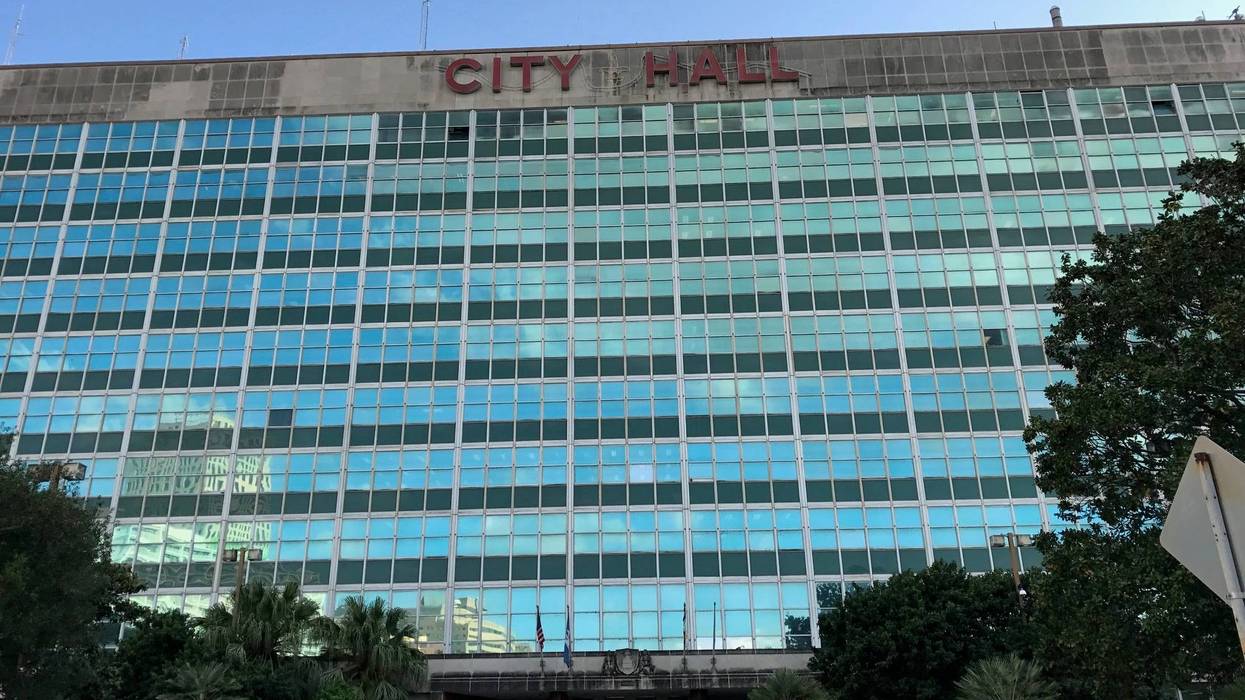

The New Orleans City Council today interrogated a member of Mayor Cantrell's administration about how the mayor's office went about selecting a contractor for the "Smart Cities" technology program.
Jonathan Rhodes, the director of the Mayor's Office of Utilities, helped develop the city's solicitation for bids. He is also co-founder of a company called "Verge Internet," which worked with the one of the companies in the consortium that won the bid, Qualcomm.
Rhodes says his company that consulted with Qualcomm did the work pro bono, and it involved a proposal for the city of Los Angeles, but even that raised concerns for council president Helena Moreno.
"After working at City Hall for years, surely you agree that the appearance of impropriety can be just as damaging as actual impropriety," Moreno posed to Rhodes.
"No," Rhodes replied "I think appearance is not as bad as actual impropriety, but it can be damaging."
Council vice president J.P. Morrell took issue with Rhodes' use of the term pro bono. Morrell says that is a term with a very specific meaning:
"According to the American Bar Association, 'pro bono' is short for pro bono publico, and this designation is given to free legal work done by an attorney for an indigent client and religious, charitable and other non-profit entities," said Morrell, asking "does the entities that you represented, or you provided information to, do they fall within any of those categories?"
"No," acknowledged Rhodes.
Mayor LaToya Cantrell, meanwhile, delivered a letter to the council accusing them of creating governmental gridlock and called the council's investigation into the Smart Cities matter a "spectacle."
"This kind of attack, and the spectacle of hearings it brings with it, is sending the wrong message to the people we are trying to attract," Cantrell said in her letter.
"If you live in District A, about 90% of your neighbors have internet access. If you live in District E, that number is barely 50%," Cantrell wrote. "The story here is that disadvantaged kids in the east are losing out."
Moreno took issue with that statement. She said it appears that the Smart Cities project wouldn't even provide internet service to people in New Orleans who don't have it.
"By the way, that was never really part of your plan," she said to Rhodes. "This was all a big 'Smart Cities' plan on kiosks and lights and all these different things but we forgot the biggest piece. From everything you've sent us, we forgot the biggest piece, and that was having free, fast, accessible internet for those who don't have it now. That piece was 100 percent lost in your proposal."
Rhodes said the goal of the project was to provide the physical infrastructure, then use a Biden administration program to help individuals connect to it:
"Yes, there's a federal program to provide $30 a month for people who can get an internet subscription," Rhodes said "But the same communities that are historically red-lined out of housing are the same communities that are unable to access even Cox or AT&T."
Qualcomm and the rest of the consortium has since withdrawn from the Smart Cities New Orleans project.