

President Trump announced early Monday that the United States would not, in fact, be carrying out airstrikes against Iranian power plants and other assorted energy infrastructure, which he had threatened to do on Saturday if Iran didn’t open the Strait of Hormuz right away.
President Trump made that announcement on Truth Social at 6:04am New Orleans time and when the markets opened a few hours later, the stock markets predictably saw big spikes and oil futures came down significantly on the news that President Trump is negotiating with Iranian leaders to end the war.
Lots of people made lots of smart bets after the President’s announcement. But what you may not know is that some people also made lots of smart bets before the President’s announcement.
Financial organizations and trade publications around the world flagged some suspicious trade activity happening just minutes before Trump took to his social media platform to reassure the world that serious talks to end the war are happening and that oil, fertilizer, liquefied natural gas and all the rest of the precursor ingredients to the world economy will once again be flowing freely through the Strait of Hormuz.
Trump’s post, again, came at 6:04am New Orleans time. But fifteen minutes before that, between 5:49 and 5:51am, there was a sudden burst of big trades in oil and S&P 500 futures.
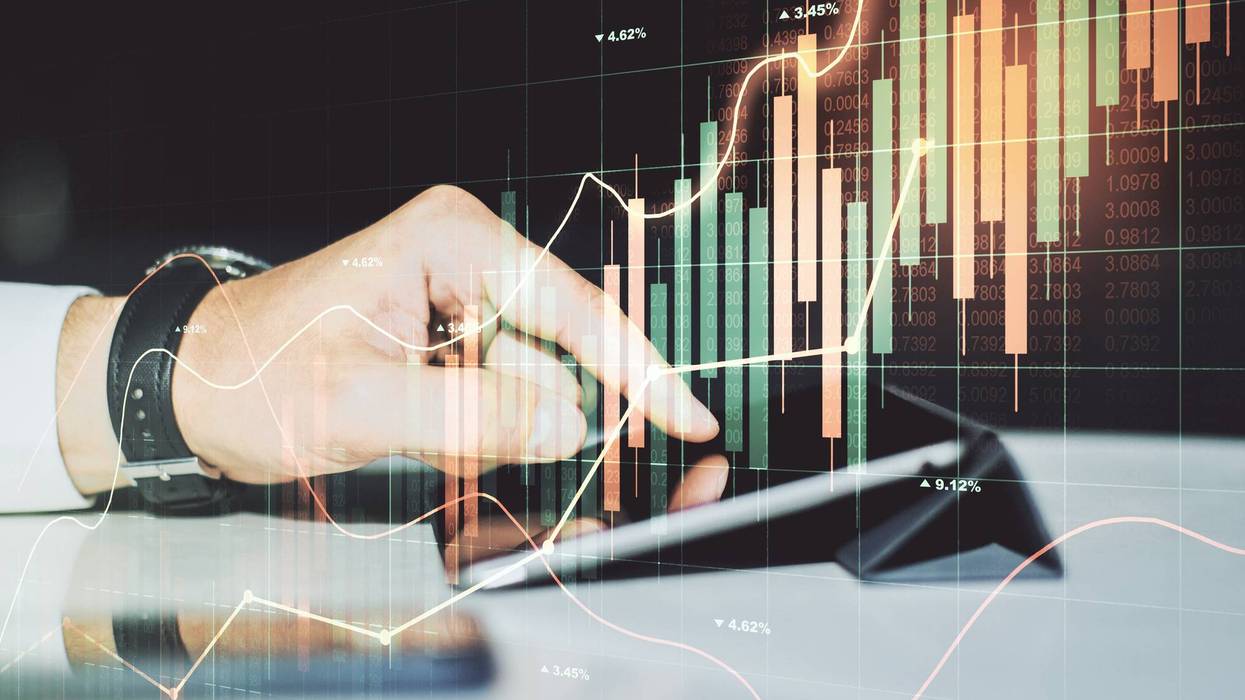
At 5:49am traders placed 734 bets on WTI crude oil contracts on the New York Mercantile Exchange. Just one minute later, that number had exploded to 2,168. That's equivalent to about $170 million dollars. The same thing happened with traders buying contracts for Brent crude oil. In the course of two minutes, the volume of trades rose from 20 to more than 1,650. That's another $150m in contracts. In one move, $1.5 billion in S&P 500 futures was bought while $192 million in oil futures was sold.
Thousands and thousands of contracts worth hundreds of millions, billions of dollars changing hands for no apparent reason. Then, just fifteen minutes later, Donald Trump posts on social media that the U.S. will delay planned strikes on Iran due to “productive” talks. The market reaction is immediate: oil prices plunge, stock futures surge, and by the time regular investors are logging in and the market opens, the move is already underway, with major indexes going on to gain more than 1% that day.
Here we are again, seeing well-timed stock trades happening right before major government decisions; trades that seem to line up very closely with policy moves that weren’t public yet.
It’s not a coincidence when well-connected players are buying or selling shares in industries directly affected by government action just minutes before that action is announced.
There’s no simple headline that says “this person broke the law.” Maybe that’s coming. A White House spokesman told the Financial Times that it did not "tolerate any administration official illegally profiteering off of insider knowledge.”
But there is a pattern that raises a very obvious question: How do they keep getting it right?
We’ve seen this exact pattern before. Go back to January 24th, 2020. There’s a closed-door Senate briefing about COVID and what it’s about to do to the United States economy. What those Senators were told privately in that briefing was very different from what the public was hearing.
And shortly after that briefing:
Richard Burr, the Republican chairman of the Senate Intelligence Committee, sold between $600,000 and $1.7 million in stock right before the stock market collapsed.
Kelly Loeffler, also a Republican senator at the time, and her husband sold millions in stock across dozens of transactions while also buying into companies positioned to benefit from a pandemic economy.
Senator David Perdue made over a hundred trades, including buying into a company tied to protective equipment on the exact same day as that Senate briefing.
On the Democratic side, Dianne Feinstein’s husband sold major holdings before the downturn.
Investigations were opened. Pearls were clutched. Hands were wrung. And in the end? No charges. And no change to the way government officials use information that you and I do not have to make investments that you and I cannot.
Zooming out beyond COVID, the concern doesn’t stop there. Look at Nancy Pelosi; she wasn’t tied to that COVID briefing, but over the years, there’s been constant scrutiny of stock trades made by her husband Paul Pelosi, particularly in industries affected by legislation moving through Congress.
Again, no charges, no proof of wrongdoing. But it feeds the same public perception that the people closest to power somehow keep ending up on the right side of these trades and hoping we don’t notice.
This isn’t just about legality. It’s about fairness. Markets only work if people believe the game isn’t rigged. People believing that the American financial system is not rigged is a huge part of what makes the American financial system special. It's one more thing that we have in this country that makes us great that a lot of other countries do not have. Fairness. Transparency. Accountability.
If I lose money because I made a bad call, that’s on me. If you make money because you’re smarter than me, bully for you.
But if someone is making money because they are literally inside the room where the big decisions are being made? That’s not investing. That’s cheating. And once people believe they have to cheat to succeed, they stop trusting the entire system.
If you or I somehow managed to consistently trade ahead of major government announcements and make huge profits, regulators wouldn’t just shrug that off. They’d ask: What did you know and when did you know it?
This is not a Republican problem. This is not a Democratic problem. The names tell you that. Look at who is accused of this stuff, look at who is trying to fix it. In both camps, you’ll find significant numbers from both Republicans and Democrats.
So the solution should be simple and bipartisan:
If you are a member of Congress or you work in the White House, you don’t get to trade individual stocks. Period. Keep your millions in blind trusts. Index funds. Remove the temptation entirely.
Because right now, we’ve built a system where the people writing the rules can profit from knowing what the rules are going to be ahead of everyone else.
If the only people who consistently beat the market are the ones writing the rules, that’s not a free market. That’s a club. And you and I are not in it.
Hundreds of millions poured into futures markets moments before Trump signaled a shift on Iran, fueling concerns about access, timing, and a rigged system
Hundreds of millions poured into futures markets moments before Trump signaled a shift on Iran, fueling concerns about access, timing, and a rigged system

