


In a one-point overtime loss, a handful of critical plays can determine the outcome. That was certainly the case Saturday night, when LSU suffered a gut-wrenching 35-34 loss to Kentucky.
 LSU coverage brought to you by Rouses Markets www.audacy.com
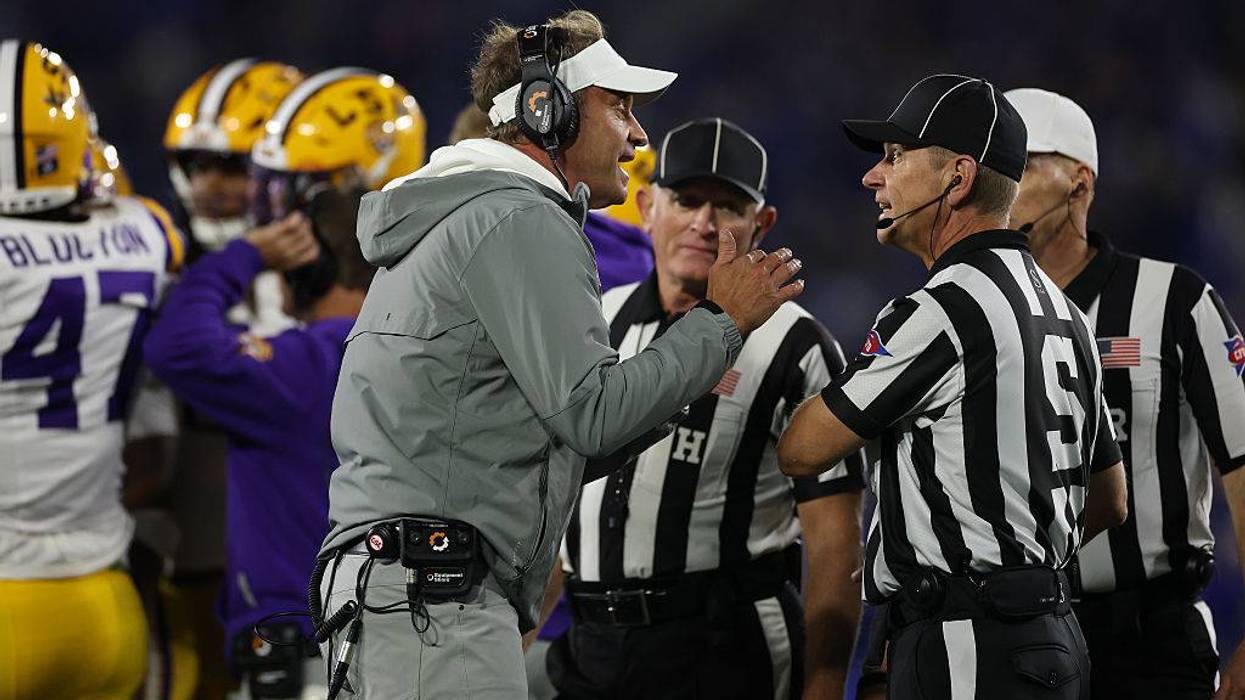
LSU coach Lane Kiffin met with reporters Sunday afternoon and broke down four pivotal moments that helped decide the game, including Kentucky’s game-winning two-point conversion, a controversial call by the officials and his decision not to go for it on fourth down late in regulation.
1. Kentucky’s game-winning two-point conversion
Kiffin said he told LSU defensive coordinator Blake Baker to have a good two-point conversion call ready because he expected Kentucky to go for the win if the Wildcats tied the game in overtime.
Kentucky coach Will Stein didn’t hesitate. After running back CJ Baxter scored a touchdown to tie the game, the Wildcats went for two.
Kentucky spread the field with five receivers and no running back. Quarterback Kenny Minchey took the snap from the shotgun and ran straight up the middle for the game-winning score.
There was no LSU linebacker in position to stop Minchey from reaching the end zone.
Kiffin acknowledged that Baker’s play call wasn’t ideal, but he defended his defensive coordinator’s overall performance.
Kiffin also said LSU’s players needed to adjust to Kentucky’s empty formation, but a communication breakdown prevented the defense from making the necessary change.
“There is a thing that’s supposed to happen when they go to empty with our rush, where we communicate and the rush changes,” Kiffin explained. “Someone got the call, and one didn’t get the call. So, there was more to it than just the base call. There was an adjustment that didn’t get done that changes how they rush because of the ability for the quarterback to run vertically.”
2. Should Kentucky have been called for a false start?
Before Kentucky lined up for the game-winning two-point conversion, the Wildcats initially showed a heavy offensive formation that appeared designed to draw LSU offsides rather than run a play.
But Kentucky’s Max Anderson appeared to rock backward, potentially drawing a false-start penalty. Instead, officials determined that Kentucky had called timeout before the infraction.
Kiffin said the ruling was a significant moment and acknowledged that communication with the officiating crew had been difficult throughout the game.
“It was a really big call there,” Kiffin said. “It was new for me, it was a first-time SEC referee that I never communicated with, doesn’t mean I am right, I struggled with him in communication of things, of how I’m used to them being done, including the pumping of the clock on a two-point play, but hey it what is.”
The sequence gave Kentucky the opportunity to reset before the decisive play.
3. Why Kiffin didn’t go for it on fourth-and-one
One of the biggest decisions Kiffin faced came late in regulation.
With 1:46 remaining and LSU facing fourth-and-one at its own 43-yard line, Kiffin elected to punt rather than try to pick up the first down and potentially seal the victory.
The decision drew criticism after Kentucky rallied to force overtime.
Kiffin explained that several factors went into his decision. Kentucky had no timeouts remaining, the Wildcats would have to throw into the wind, and their kicker had missed two relatively manageable field goals earlier in the quarter.
Kiffin believed the worst-case scenario after the punt was that Kentucky would drive into field-goal range and tie the game.
In hindsight, he acknowledged that he would make a different decision.
“All that went in that decision, obviously now I wish I would have went for it, because it was 4th and 1 to end it,” Kiffin said. “But remember if you don’t make it, it’s not the same thing of kicking the ball down to the 20, you don’t make it right there, there’s a good chance they score a touchdown and you just lose in regulation.”
4. Kentucky’s controversial touchdown before halftime
Kentucky also benefited from a controversial play on the final snap of the first half.
Minchey appeared to be stopped short of the goal line on a one-yard touchdown run, but his teammates continued pushing the quarterback forward until the ball crossed the plane for a score.
Kiffin said the line judge acknowledged the difficulty of making the call in such a consequential moment, explaining that he would have faced significant criticism if he had blown the play dead.
The LSU coach disagreed with the idea that the stakes should influence how officials enforce the rules.
Kiffin argued that if a runner’s forward progress is stopped early in a game, officials should make the same ruling at the end of a half, regardless of the circumstances.
“Don’t not blow it because it was such a big play,” Kiffin said.
LSU looks to rebound against Mississippi State
Kiffin acknowledged that the four plays were not the only factors in LSU’s defeat.
A missed tackle on Kentucky’s punt-return touchdown, a minus-two turnover margin and settling for short field goals in the first and third quarters also contributed to the loss.
LSU will try to put the defeat behind it Saturday when No. 16 Mississippi State visits Tiger Stadium for an 11 a.m. kickoff.