



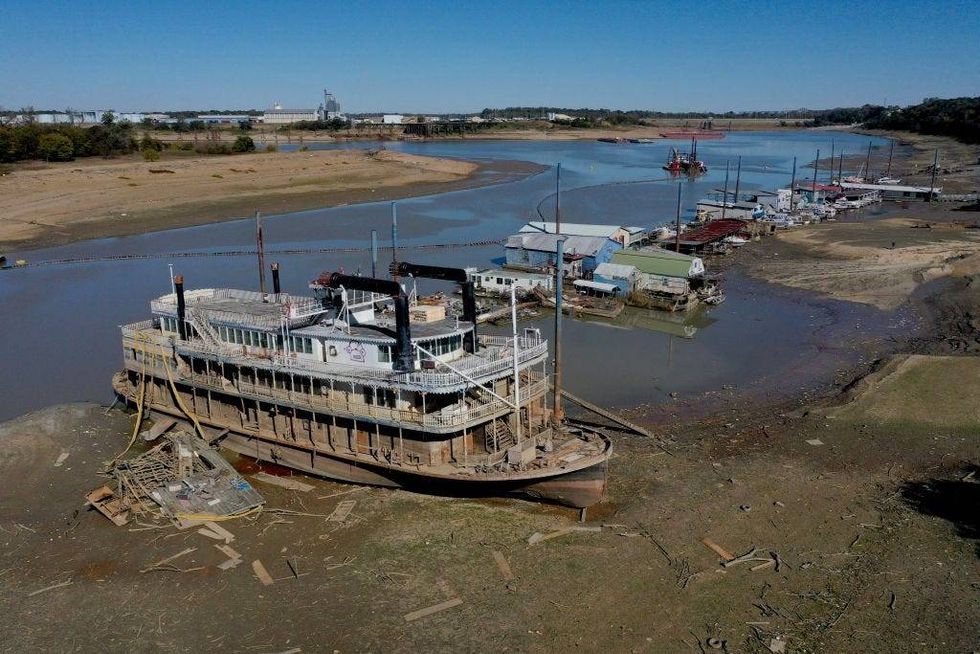
The Mississippi River is in an extreme low water state, just two feet above sea level. Should salt water push its way up the river it could have a drastic effect on New Orleans source of drinking water.
“The potential for salt water intrusion, the salt water from the Gulf of Mexico, moving up the bottom of the Mississippi River and potentially contaminating some of the fresh water intakes for industry or the City of New Orleans or any other community to use that river water,” says Dr. Clint Willson with the LSU Department of Civil and Environmental Engineering.
Willson says the Army Corps of Engineers has built a 35-foot underwater sand bar to keep salt water from moving up the river near Myrtle Grove to keep the contamination from occurring.
 Getty Images
Even though the river looks about the same, in fact, it's so low barge traffic is so curtailed causing an economic slowdown.
“If the barges can’t move up and down the upper part of the Mississippi River or they can’t be loaded with as much product or they can’t tie as many of those barges together, you’re going to see less of that product move down here.”
Willson says the problem for ports South of Baton Rouge is bulk transfers of goods like corn, wheat, soybeans and sugar can't be completed causing delays and backups for arriving ships.
How is it the Mississippi is in such a low water state?
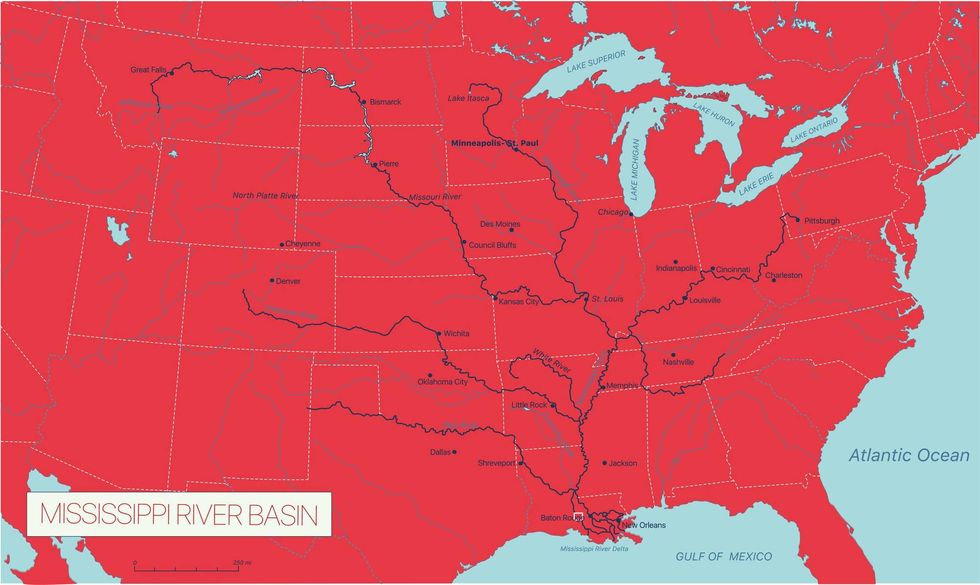
Willson explains the entire Mississippi River system is in an extreme state.
“What we’re seeing here is that most of the area, most of the Mississippi River watershed is in drought or is in extremely dry conditions. And so all of them at once are in low flows.”
The problem with low water on Mississippi will likely continue as a drier than usual winter is predicted for this year.
 Getty Images
Unfortunately, it looks like the low river flows are going to be staying with us for a while.
“They’re predicting another La Nina year for this winter, December through the early Spring. What that means for us is the potential for drier than average winter months. So yes, bottom line is we should be looking for more rain.”
All of the River's main tributaries and feeder rivers are in drought with most of the watershed running in drier than normal conditions. This is causing untold amounts of slowdowns on the river as shipping is cut back or curtailed due to low water levels requiring cutbacks to bulk shipping.