


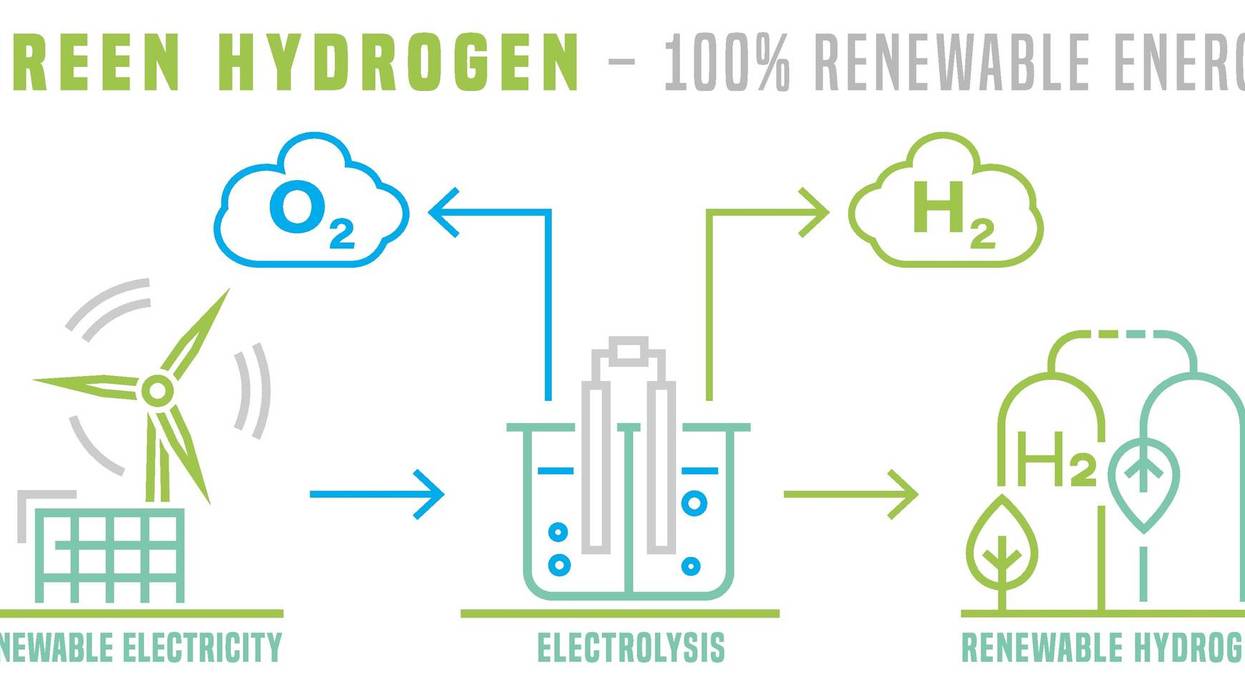

Making hydrogen is a dirty job. Producing industrial hydrogen is often energy intensive, environmentally unfriendly and unsustainable. The Biden Administration is challenging American universities to create a new, environmentally friendly way to make Hydrogen. Tulane is among them.
“It’s a substance we can’t live without. We have mostly talked about its use as a clean fuel, but even if you never wanted to use it as a clean fuel, it’s still indispensable. Because it’s at the heart of some many other processes.”
Dr. James Donahue a chemist and scientist with Tulane University’s School of Science and Engineering. He’s heading up a team aiming to find a new way to make hydrogen for industrial use.
“We were in the right place at the right time,” Donahue explains. “Because The Biden Administration has committed a lot of support to renewable energy. And so we were well situated to write about what we were doing and what we wanted to do. And so that was reviewed favorably and here we are.”
Over the next three years, Tulane chemists will use a $1.3 million grant from the U.S. Department of Energy to develop a process for producing clean hydrogen from water and renewable energy.
“One of the big issues with hydrogen is scalability and cost. There’s a lot of things that have the ability to generate hydrogen, but what you’re really concerned about is being able to do it on a scale that makes a difference,” according to Donahue.
Tulane will develop a catalyst, a substance that speeds up a chemical reaction that can be put to the test in systems that use solar energy to make hydrogen from water. The most ambitious goal of the project is to develop a fully integrated photochemical water-splitting system using sunlight to convert water to both hydrogen and oxygen.
It would be much better if we could use renewable energy to provide to provide the input to breaking water apart. That’s the most abundant form of hydrogen in the world. So, it would really great to split water and produce hydrogen.”


