

Former Minnesota sheriff doesn’t think ‘normalcy’ is on the horizon for Minneapolis anytime soon

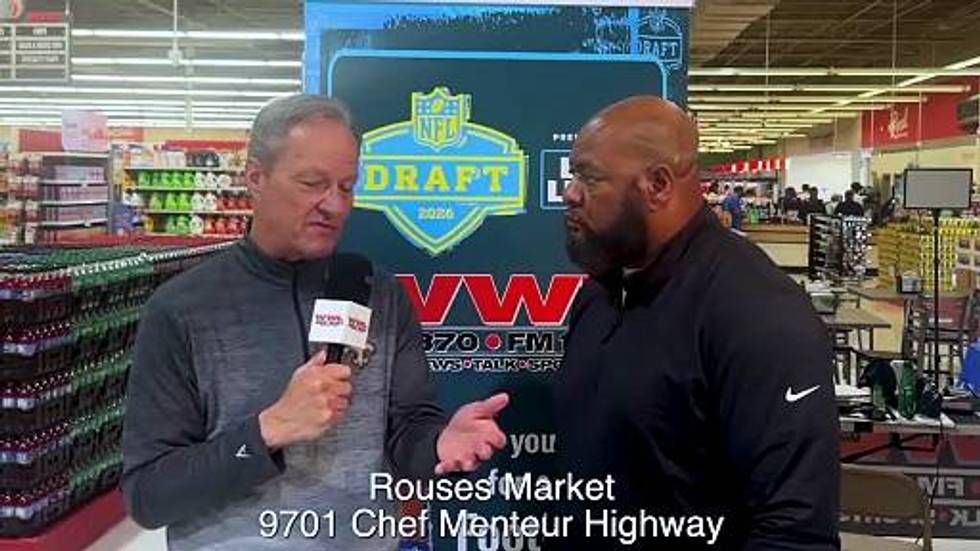
“I don’t know how we’re going to get back to a place of normalcy anytime soon,” said retired sheriff of Hennepin County sheriff Richard W. Stanek of Minnesota this week in an interview with WWL’s Newell Normand.
Stanek, a Republican, served as the sheriff of Hennepin County, where Minneapolis is located, from 2007 through 2019 and in that time worked with Normand, who is also a Republican and served as sheriff of Jefferson County, La. He still lives in Minneapolis, which has been nearly constantly in the headlines over recent weeks.
First there were fraud allegations, then Democratic Gov. Tim Walz announced he would resign amid those allegations. Just days after that announcement, Renee Good was shot and killed by Immigration and Customs Enforcement officer Jonathan Ross.
Before the shooting, Democratic Minneapolis Mayor Jacob Frey ordered the city’s police not to work with ICE. Polling from this summer found that a majority of Minnesotans oppose President Donald Trump’s immigration policies, according to the Star Tribune, and ICE’s arrival in the city has been met with protests, concerns, complications and, in the case of Renee Good, tragedy.
“We’ve dreaded this moment since the early stages of this ICE presence in Minneapolis,” said Frey. “This was a federal agent recklessly using power that resulted in somebody dying.”
Following the shooting, Minnesota Attorney General Keith Ellison filed a federal lawsuit against the Department of Homeland Security and related agencies and officials, asking the court to end the surge of federal agents into the state. This Tuesday, the DHS blamed Frey’s sanctuary city policies for contributing to the tense situation in Minneapolis.
Here’s where Stanek’s expertise comes in. From his view (and Normand’s) it is unusual for local police not to work with federal law enforcement.
“I mean, we’re all elected sheriffs at the end of the day, and we work with other law enforcement,” said Stanek. He also added that the local force has faced challenges since the death of George Floyd – a Black man who was killed by a white former Minneapolis police officer – in 2020.
“You know you and I and others in both major county and national sheriff’s associations, we’ve had many heated comments with our federal law enforcement partners over any number of issues but at the end of the day we were all adults in the room and we walked out and we knew that there was a greater good that we needed to accomplish, right?” Normand added.
Stanek agreed. He also said the tension has resulted in more confusion on the city streets, with protestors allegedly throwing rocks and bricks at both ICE and regular police in the wake of Good’s death. Overall, he said the problem boils down to “politics, politics, politics,” and that it isn’t helping Minneapolis residents.
A recent Quinnipiac University poll does show that Minneapolis isn’t alone in its concerns about ICE, however. That poll found that 57% of Americans disapprove of the way ICE is conducting enforcement efforts. Support is much more likely among Republicans than Democrats.
Still, Stanek said he thinks the situation in his city could improve if Frey works with ICE.
“As for the mayor of Minneapolis, you know, he just continues to ramp up the rhetoric to the point where it's really hard to listen to him. And it gets the citizens riled up,” Stanek told Normand.