


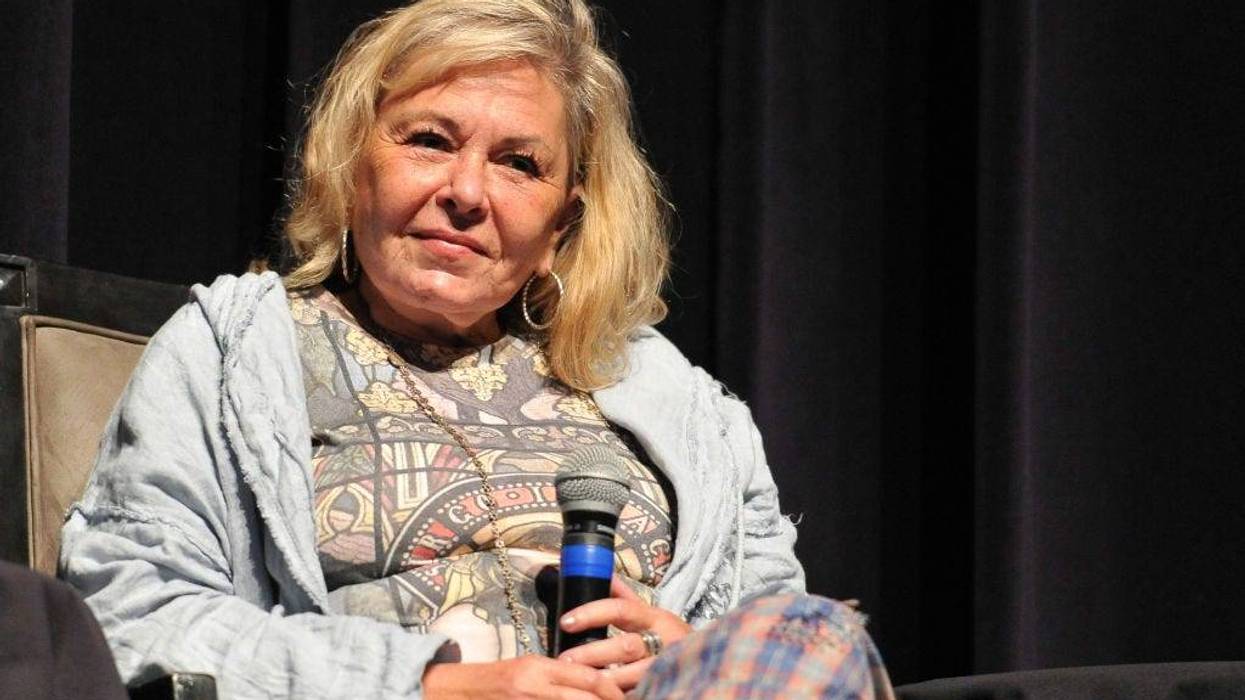

On the podcast "This Past Weekend" hosted by comedian Theo Von, Roseanne said, "Nobody died in the Holocaust," and "That's the truth." She went on to say that "it should have happened. Six million Jews should die right now because they cause all the problems in the world."
The backlash was immediate and strong, and then came a defense from Von, who said the comments were taken out of context and that Roseanne was just being sarcastic. Was she?
Jonathan Greenblatt, CEO of the Anti-Defamation League, issued a statement: "Sarcasm or not, Roseanne Barr's comments about Jews and the Holocaust are reprehensible and irresponsible. This is not funny. And shame on Theo Von for letting it go unchallenged and instead diving into conspiracy theories about Jews and Hollywood."
It is difficult to imagine some people actually still deny the Holocaust, and it is even more difficult to defend their inane point of view. Von tried to seemingly add credibility to her statement that the Holocaust never happened and six million Jews need to die right now by pointing out Roseanne is part Jewish - Roseanne said she is 100% Jewish.
As we are left to decide for ourselves whether she was being sarcastic or not, we remember that Roseanne is known for getting attention by saying and doing outrageous things. The reboot of her classic TV show "Roseanne" was pulled, along with all reruns of the original, after Roseanne tweeted that adviser to President Biden Valerie Jarrett was a product of the Muslim Brotherhood and "Planet of the Apes" mating. After fierce criticism, she deleted the tweet and apologized, calling it “stupid” and “political but not racist."
Even before that, Roseanne's disgraceful and unpatriotic rendition of the National Anthem at a San Diego Padres baseball game was an early look into her character. Roseanne's recent comments about Jews and the Holocaust might be labeled as sarcastic to protect her from further condemnation - but based on what we’ve heard her say elsewhere, there is no reason to believe that Roseanne didn’t mean what she said.
Often, the messenger defines the message.


