


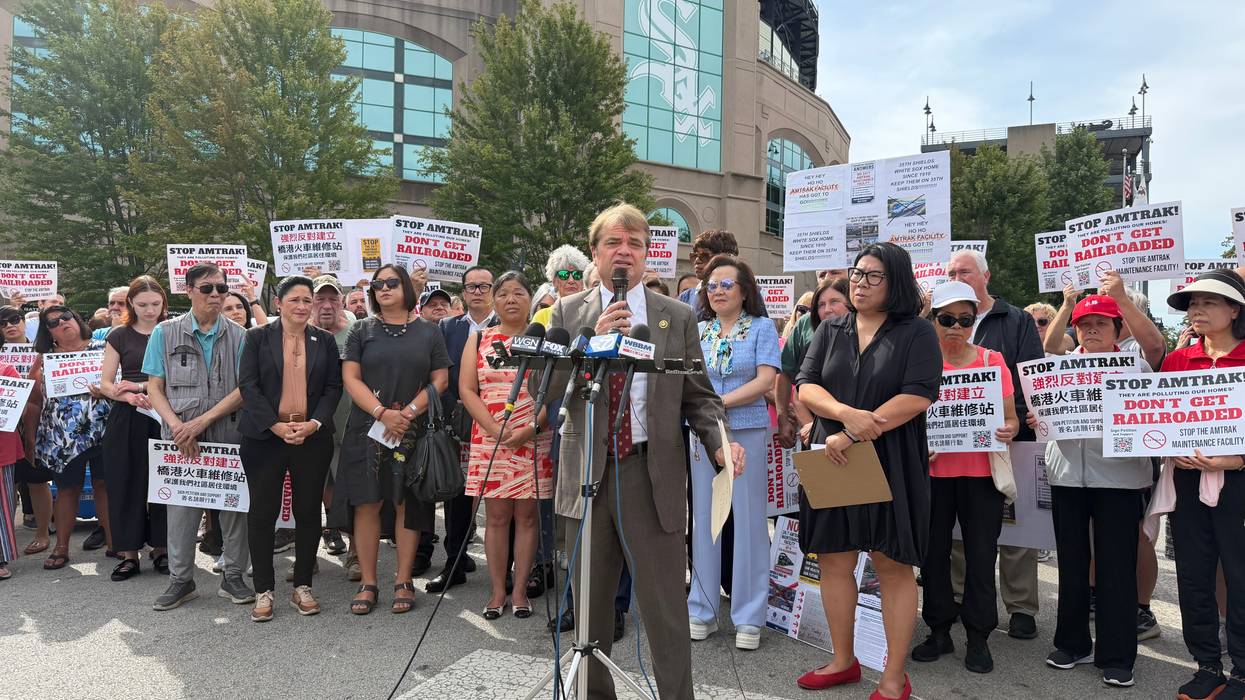

The proposed White Sox stadium would be built on an existing Amtrak rail facility in the South Loop. As a result, Amtrak would relocate its maintenance yard to Bridgeport.
"Our community feels pretty disrespected right now on all fronts," said Ald. Nicole Lee (11th) at a press conference outside Rate Field Tuesday morning.
"If approved, both of these would drive a knife through the heart of this community," she said. "White Sox have called Bridgeport home for 116 years ... We're a working class and heavily immigrant community where generations have lived and generations still to come."
The plans for the stadium and rail yard development were released Saturday by prospective White Sox owner Justin Ishbia. Renderings of the project include a new ball park that would be built as part of “The Railyards," a megadevelopment on the Amtrak train yard south of Roosevelt Road along the Chicago River.
In a joint statement, Lee and Cook County Commissioner John P. Daley called the plan a "betrayal" to Bridgeport and Chinatown residents.
"We just don't want their 24/7 rail shed that's four stories tall, five tracks wide, right next to a densely populated residential area, next to a historic park, to senior buildings, to schools," Lee said.
Carolina Garibay
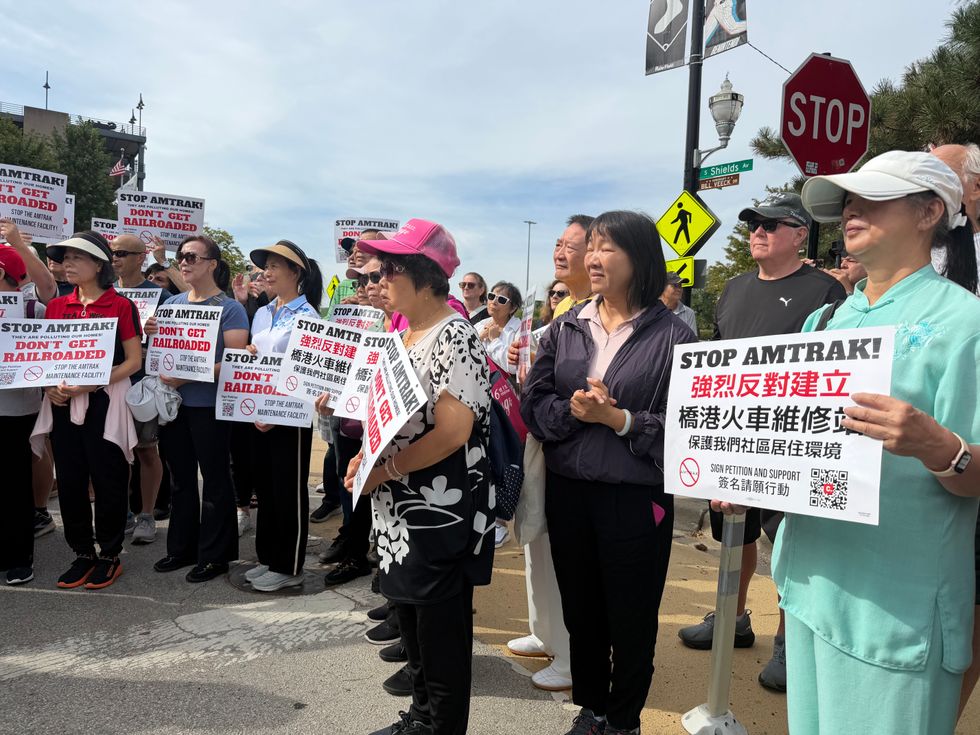
Environmental impacts are among the greatest concerns residents say they have with the proposed project.
Maria Legiglio with the Armor Bridgeport Residents Coalition said Ishbia has moved forward with the project without an environmental impact study, leaving the community in the dark.
"At Amtrak's current facility, soot and grime are visible from publicly accessible areas," she said. "Fires, spills and other incidents are in the public record. Amtrak's own inspector general also documented more than 500 repeated idling incidents at their Chicago facility in one month. Yet, Amtrak expects our communities to accept risks it has not fully studied."
Hannah Domboski with Bridgeport Environmentalists called the proposed railyard a "24/7 polluting facility that has no place in a residential neighborhood."
"This is a facility that brings risks of air pollution, toxic runoff, spills, noise pollution and more," she said. "We demand a full environmental impact statement, true community input and an end to the shady backroom processes that have sped this project forward thus far."
The White Sox’s lease at Rate Field is up in 2029.


