

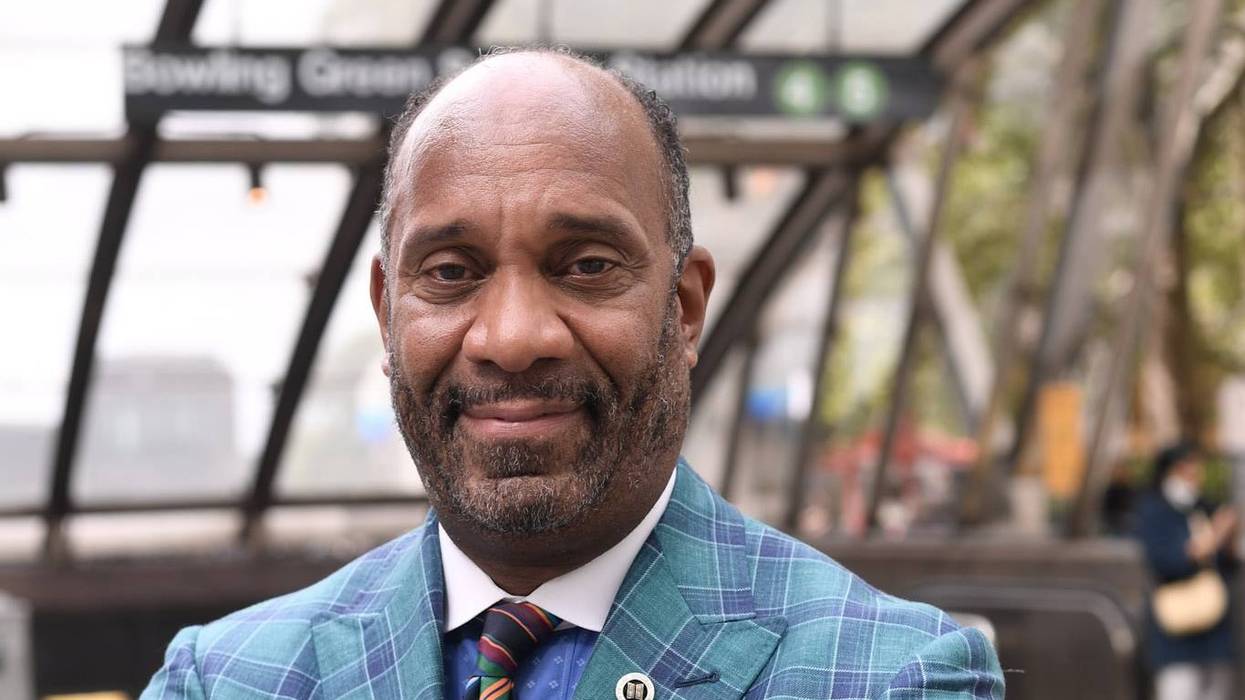

The CEO Spotlight series features Michael J. Garner, who was appointed NYC’s first Chief Business Diversity Officer (CBDO) in 2023 after a career spanning 30 years at the NYC Housing Authority (NYCHA), the NYC School Construction Authority (SCA), and the Metropolitan Transportation Authority (MTA).
Garner will be responsible for driving the Mayor’s aggressive vision of awarding $25 billion in contracts to NYC-certified Minority and Women-owned Business Enterprises by the end of the city’s 2026 Fiscal Year (FY) and $60 billion by the end of the 2030 FY.
Under Garner, NYC has realized the FY 2026 goal of awarding $25 billion in M/WBE contracts months ahead of schedule, achieved three back-to-back FYs of over $6 billion in M/WBE contract awards, and has successfully achieved - and maintained – citywide 30% M/WBE contract utilization rate among the city agencies bound to comply with the NYC local law that directs the city’s M/WBE Program, the latter being another Mayoral goal.
During his tenure at the MTA, they were ranked first in payments made to NYS- certified MWBEs, representing 30% of all payments by the State during that time period. NY State Fiscal Years 2020/21 - 2022/23 saw the MTA pay over $1.7 billion to NYS-certified MWBEs, and $891 million to certified Disadvantaged Business Enterprises, (DBEs) on USDOT-funded contracts. Notably, 37% of those dollars were paid to Black and Hispanic-owned businesses.
In July 2021, Garner was selected by Crain’s New York Business, as “Top Diversity and Inclusion Officer of the Year. He serves as an advisor on MWDBE matters to various Cities/States, including the Cities of Buffalo, Chicago, Chicago Transit Authority (CTA), and the State of New Jersey.
Garner’s innovative programming has ensured access to government contracts for various communities of color. As a result, those communities have access to better job creation and educational opportunities, home ownership, and expanded health care options.