

NEW YORK (1010 WINS/WCBS 880) –Protesters at Columbia University defied the Ivy League college's Monday afternoon deadline to leave their encampment protesting the Gaza war after the school's embattled president made clear it "will not divest from Israel," despite demands from the protesters, who have set off similar demonstrations across the U.S. The university has now begun suspending students, the administration confirmed nearly three hours after issuing the statement.
The school confirmed it sent a letter Monday to protesters titled "Notice to Encampment," saying they had until 2 p.m. to voluntarily disperse. If they did by that time and signed a form identifying themselves and committing to following a list of university policies, they'd be "eligible to complete the semester in good standing," according to the letter, which emphasized the upcoming graduation and protesters' impact on graduating students. Those who stay face suspension, the letter warned.
Columbia began suspending students after activists defied a 2 p.m. deadline to respond to the ultimatum, according to school spokesperson Ben Chang.
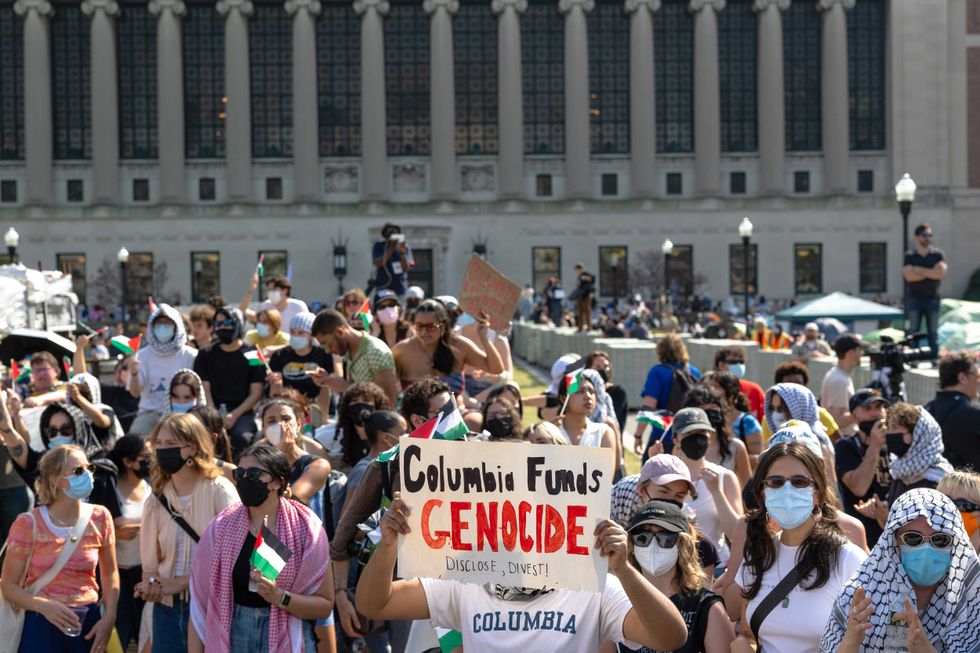 Pro-Palestinian demonstrators hold a short rally after marching around the "Gaza Solidarity Encampment" in the West Lawn of Columbia University on April 29, 2024 in New York City.Michael M. Santiago/Getty Images
Mahmoud Khalil, the lead negotiator on behalf of protesters, said university representatives began passing out the notices at the encampment shortly after 10 a.m. Monday. He said discussions were ongoing about how to proceed, but the 2 p.m. deadline passed with members remaining at the encampment.
NYPD officers were gathering outside the main gate, but it was unclear what could happen next, as the university said last week it wouldn't call the NYPD back in "at this time," following uproar over its decision to break with tradition on April 18 and have the NYPD arrest more than 100 protesters on the private campus.
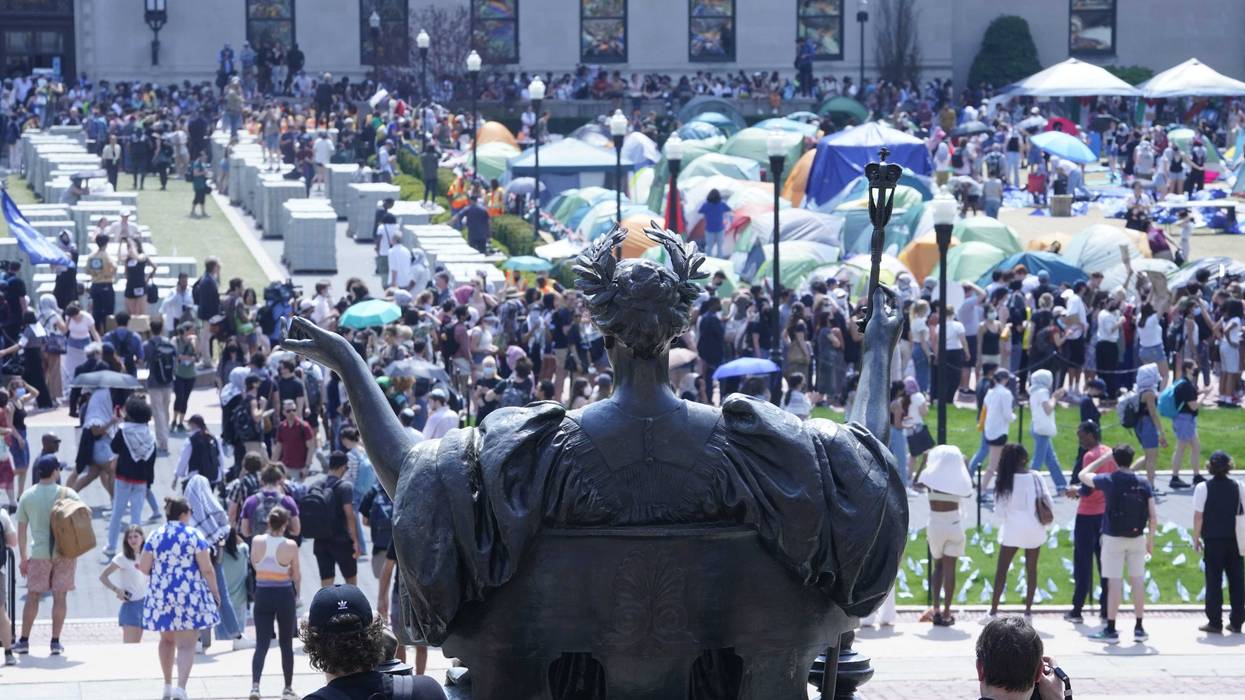
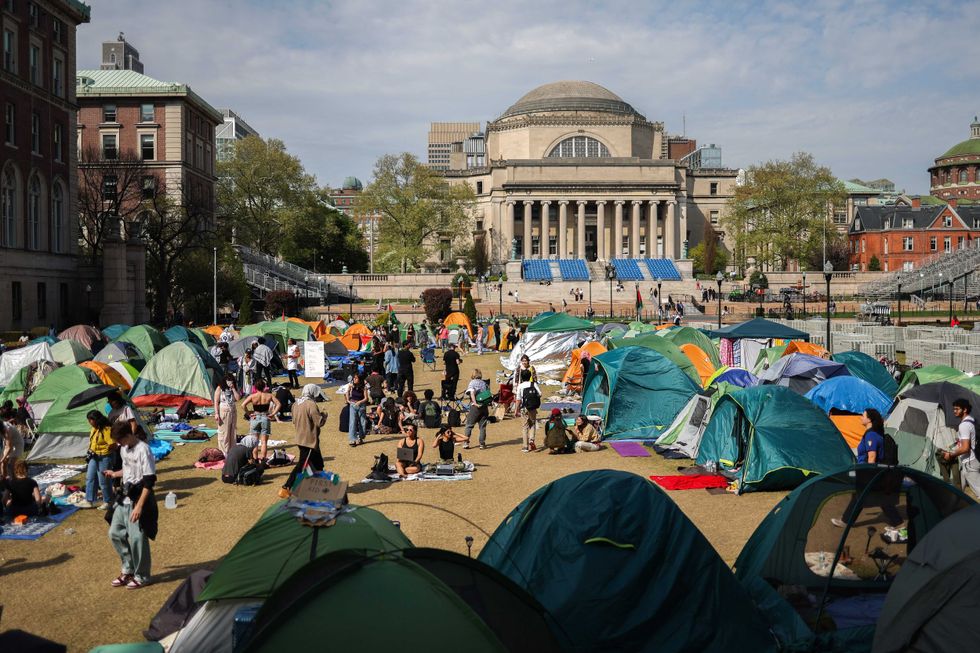 Pro-Palestinian encampment at the Columbia University on April 28, 2024.CHARLY TRIBALLEAU/AFP via Getty Images
In a statement early Monday saying the two sides "were not able to come to an agreement" after weekend negotiations, Columbia President Minouche Shafik wrote: "Both sides in these discussions put forward robust and thoughtful offers and worked in good faith to reach common ground." The statement was sent out as a tent city remained erected on the main lawn on the last day of classes.
Now that the talks have fallen apart, Shafik said the school is "consulting with a broader group in our community to explore alternative internal options to end this crisis as soon as possible."
There's increasing pressure on Shafik and the university as the encampment continues ahead of the May 15 commencement ceremonies, and as students deal with the crush of exams following a switch to hybrid classes because of the protests.
On Monday, 21 House Democrats added to that pressure with a two-page letter to the university's board of trustees. The lawmakers—who include local Reps. Josh Gottheimer, Dan Goldman, Ritchie Torres, Tom Suozzi, and Rob Menendez—expressed "disappointment that, despite promises to do so, Columbia University has not yet disbanded the unauthorized and impermissible encampment of anti-Israel, anti-Jewish activists on campus."
Jewish students have expressed feeling unsafe on campus because of antisemitic rhetoric and acts since Hamas' Oct. 7 terrorist attack on Israel. In their letter, the lawmakers wrote that the Columbia encampment has "been the breeding ground for antisemitic attacks on Jewish students, including hate speech, harassment, intimidation, and even threats of violence."
"The time for negotiation is over; the time for action is now," they wrote. "It is ultimately the responsibility of the Board of Trustees to act. If any Trustees are unwilling to do this, they should resign so that they can be replaced by individuals who will uphold the University's legal obligations under Title VI."
The letter comes even as other Democrats, like Reps. Alexandria Ocasio-Cortez and Jamaal Bowman, both of New York, have visited the campus and expressed their support for the protests and outrage over Palestinian deaths. "The provocative images painted by Republicans and antisemitic white supremacist platforms could not be further from the truth," Bowman said.
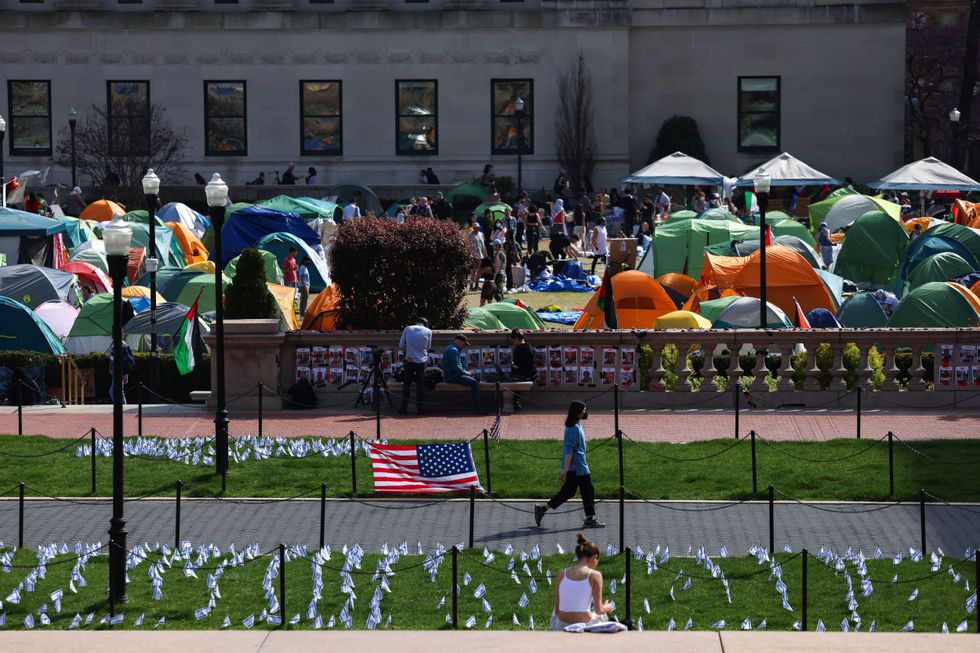 A woman walks past Israeli and US flags alongside portraits of Israelis taken hostage by Hamas in front of the pro-Palestinian encampment at Columbia University on April 28, 2024.CHARLY TRIBALLEAU/AFP via Getty Images
Last week, a number of Republican representatives, including House Speaker Mike Johnson, visited Columbia's campus and spoke with Jewish students. Johnson called on Shafik to resign.
In her statement Monday, Shafik laid out "four core principles, which underpin all of our work and our shared values as a community."
Those principles, she said, include making sure all of the Columbia community feels safe on campus; committing to academic freedom and the speech of students; ensuring protests comply with "time, place, and manner restrictions"; and condemning hate while protecting "every member of our community from harassment and discrimination," including antisemitism.
While Shafik said Columbia "will not divest from Israel," as protesters had demanded, the university will "develop an expedited timeline for review of new proposals from the students" by the body that considers divestment matters.
The university, Shafik said, will also make it easier for students to access a list of Columbia's direct investment holdings and increase the frequency of updates to that list.
During negotiations, the university also "offered to make investments in health and education in Gaza," which Shafik called "important ideas" that the university will "explore pursuing" in the future.
The school has said it doesn't plan to call the NYPD back onto campus, as it did on April 18, when the encampment was beginning to make headlines following Shafik's congressional testimony on antisemitism. About 108 people were arrested that day, leading to criticism from many at the school, which has a long history of student-led protest dating back to the Vietnam War era.
Columbia's handling of the protests has prompted federal complaints.
A class-action lawsuit on behalf of Jewish students alleges a breach of contract by Columbia, claiming the university failed to maintain a safe learning environment, despite policies and promises. It also challenges the move away from in-person classes and seeks quick court action requiring Columbia to provide security for the students.
Meanwhile, a legal group representing pro-Palestinian students is urging the U.S. Department of Education's civil rights office to investigate Columbia's compliance with the Civil Rights Act of 1964 for how they have been treated.
A university spokesperson declined to comment on the complaints.
The protest has gained national attention, with more than 900 arrests made at demonstrations on campuses across the U.S. in the days since the arrests at Columbia, including more than 100 at NYU in Greenwich Village last Monday.
The Associated Press contributed to this report.