


NEW YORK (1010 WINS) – Drivers will likely be paying the congestion pricing fee for the foreseeable future as a protracted legal battle plays out between the federal government and New York, according to a legal expert.
Michael Gerrard, a Columbia law professor who supports congestion pricing, said the legality of the Trump administration's move to end the tolling program is questionable.
"I don't think Trump can unilaterally kill the program," he said. "The Federal Highway Administration approved it. The agreement that they signed said the MTA can stop it, but it doesn't say the federal government can stop it."
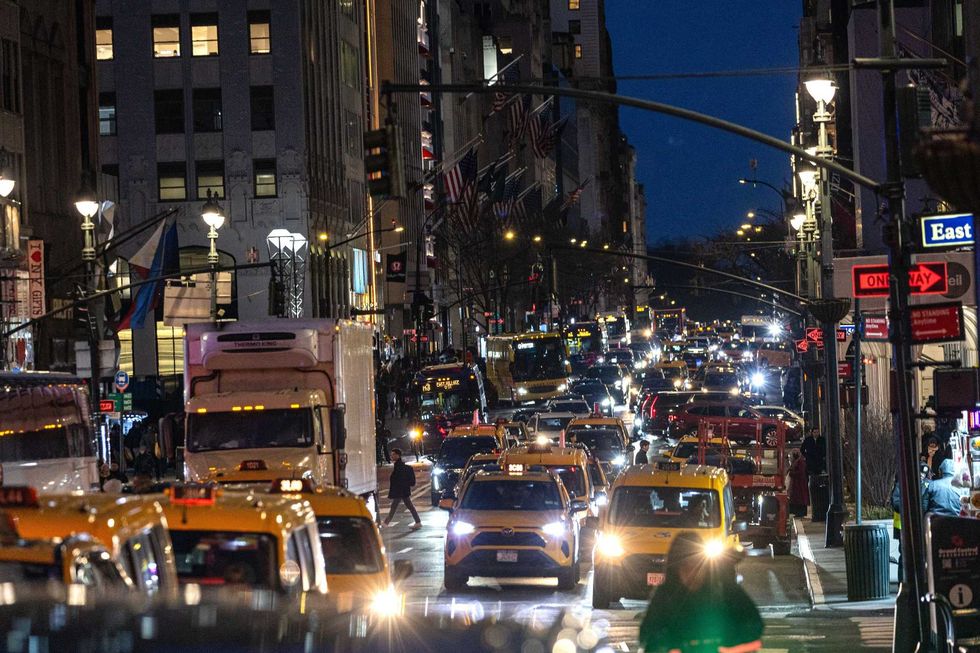 Traffic moves along Midtown Manhattan on February 19, 2025.Alex Kent/Getty Images
The Biden administration signed off on congestion pricing late last year, and the MTA started collecting $9 tolls from most drivers entering Manhattan below 60th Street on Jan. 5.
But on Wednesday, President Donald Trump declared congestion pricing was "DEAD." His transportation secretary, Sean Duffy, said the federal government was rescinding its approval of the program and would work with New York State on an "orderly termination of the tolls."
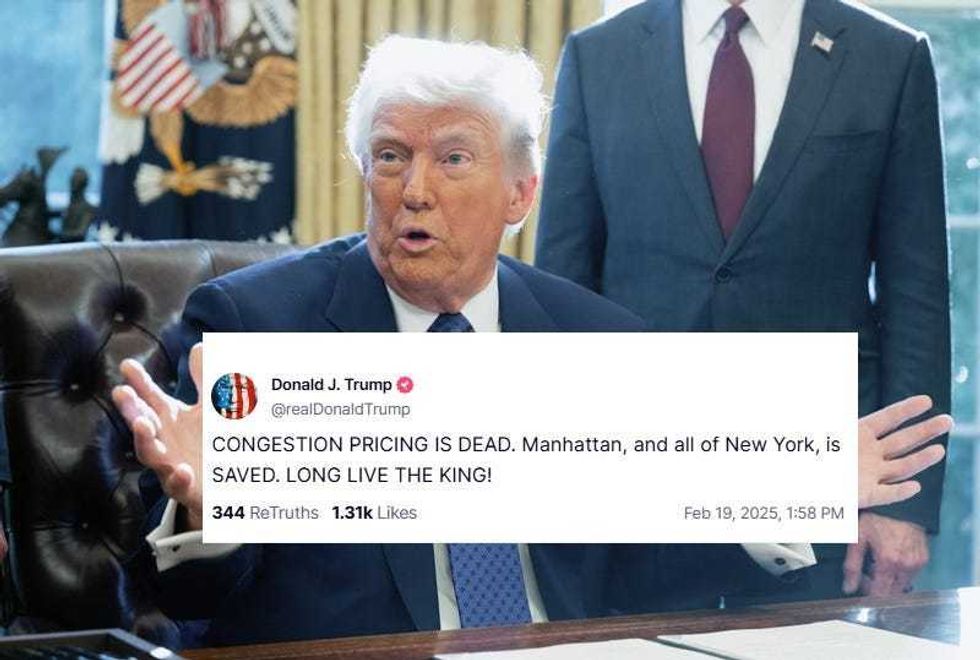 President Donald Trump declared congestion pricing "IS DEAD" in a social media post.President Donald Trump declared congestion pricing "IS DEAD" in a social media post.
The MTA immediately filed a lawsuit after receiving Duffy's letter.
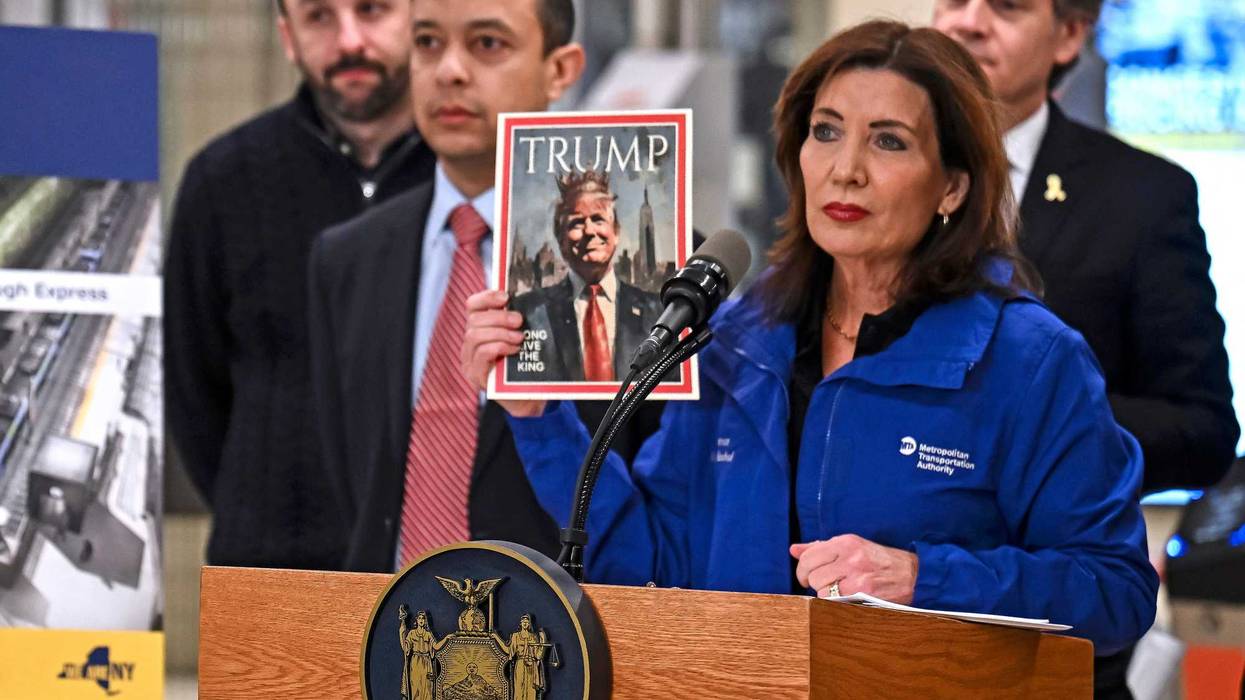
Appearing at a Grand Central press conference with the head of the MTA, Gov. Kathy Hochul said New York had entered "fight mode within seconds of us getting this notification."
"The cameras are staying on," Hochul said, referring to the overhead license plate readers used for toll collection. "We are keeping the cameras on. Lights, cameras, action. They're staying."
The revocation of a major transportation project by federal officials is without precedent, and Gerrard believes the MTA has serious arguments about the legality of the Trump administration's efforts to put the brakes on it.
"The letter from the Federal Highway Administration does not give a strong legal basis for being able to reverse the prior decision, nor does it make clear that the government really has the power," he said.
Gerrard said the MTA can point to the program's initial benefits. Among other things, the agency has said traffic was down 9% in January in the congestion zone and that 1.2 million fewer vehicles entered it, leading to faster travel times in the zone and at river crossings.
"It has started up, by most accounts it's working well, and it's not at all clear they have the legal authority to shut it down," Gerrard said.
He expects a protracted legal fight to keep the tolls in place for the time being.
"The cameras are not going off," he said. "They won't go off unless a judge says they have to."