

NEW YORK (1010 WINS) – The MTA board approved a plan Monday to restart congestion pricing with a scaled-back $9 toll beginning in January.
The resolution starts the toll at $9 on Jan. 5, then increases it to $12 in 2028 and the original amount of $15 in 2031, according to MTA documents reviewed Monday.
Gov. Kathy Hochul paused the initial rollout of the $15 toll in late June over concerns about its financial impact on cash-strapped New Yorkers. She then unveiled the new plan with the $9 toll last week.
The daily toll will be imposed on most vehicles driving into Manhattan south of 60th Street and collected via license plate readers.
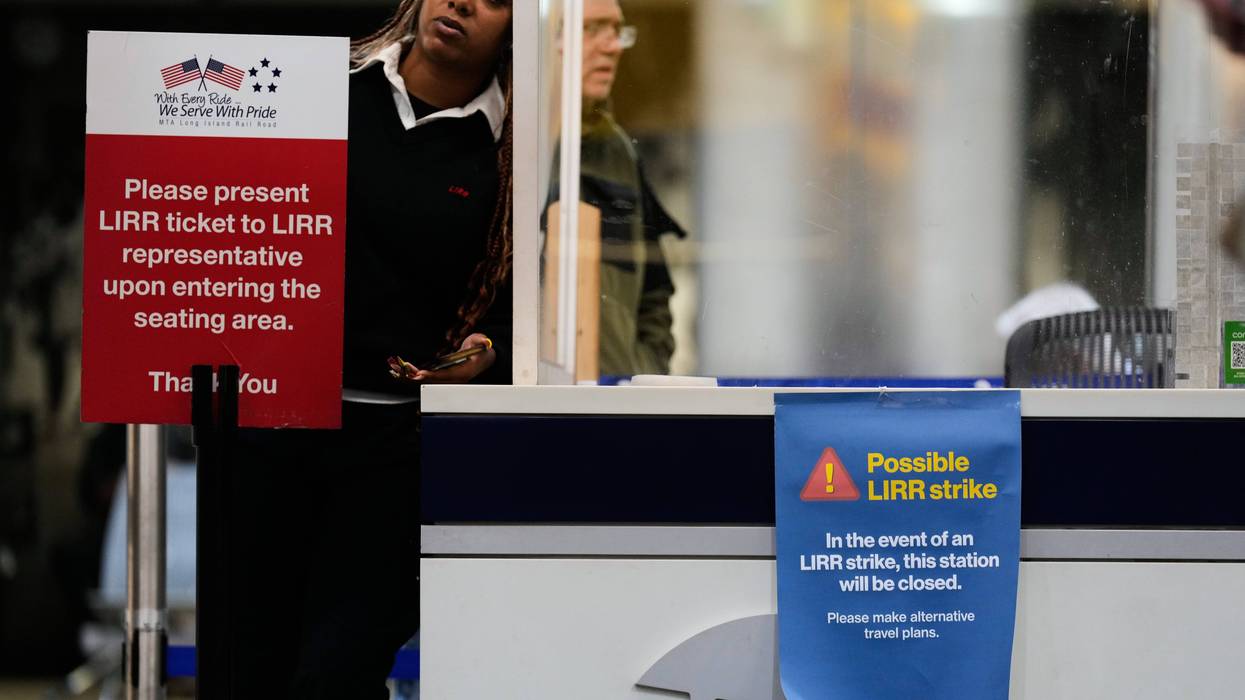
The governor said the billions of dollars raised will be used to fund various transit projects, including electric buses, the second phase of the Second Avenue subway, and upgrades to the LIRR and Metro-North.
"Transit has to be preserved and expanded and improved or New York ain't going to be New York," MTA Chair and CEO Janno Lieber said, while stating that the expansion of roadways for cars and trucks is impractical.
"We have a limited amount of room in the central business district, which is the most congested area in terms of traffic in the United States," Lieber said.
Congestion pricing has proved highly controversial, especially with suburban commuters. There are at least nine ongoing lawsuits against the tolling plan, including from the state of New Jersey.
Robert Mitchell, a caregiver for his father who lives in Manhattan, was one of the people who opposed congestion pricing.
"I just really urge the MTA to really consider, and of course, Governor Hocus Pocus. to reconsider this congestion pricing plan," Mitchell told 1010 WINS.
Town supervisors on Long Island planned a Monday press conference to urge President-elect Donald Trump to "eliminate the plan permanently," calling it "Hochul's egregious tax on Long Island commuters."
Trump's win in the presidential race this month added new urgency to revive the plan. The president-elect has said he opposes the toll, and he could take executive action to stop it for good.
Public transit and environmental advocates, who had ripped Hochul in June for halting the plan, have hailed its return, saying it's better to have it with a lower price tag than not have it at all.
Danny Pearlstein, a spokesperson for the Riders Alliance, said the program—which has faced repeated delays and setbacks over the years—can't come soon enough. He said New Yorkers by and large support it.
"Congestion pricing opponents need to look in the mirror and ask how hard they'll try to stop 23 station accessibility projects, including in the Bronx, Harlem, and Jamaica, Queens, and reliable signals on six subway lines serving four boroughs, starting with Fulton Street in Brooklyn," Pearlstein said in a statement after the vote.
"Governor Hochul must prove congestion pricing works here just as well as it does everywhere else in the world," he continued. "Self-appointed crusaders for small handfuls of comparatively wealthy drivers should take stock and consider how they can best contribute to our shared future."
Pearlstein pointed to exemptions, including for people with disabilities, low-income residents and government vehicles, as well as credits for people who've already paid a bridge or a tunnel toll to enter the zone.
Elizabeth Adams, the executive director of Transportation Alternatives, said the group supports moving forward with the reduced tolling amount to get the ball rolling.
"The time is now. We have to get it started," Adams said. "It is really important that it gets to the $15 toll—the original amount—to make sure that we are able to fully fund public transit as needed and that we are incentivizing people moving off a reliance on cars into more sustainable transportation methods."
It is unclear exactly how Hochul's revised plan would address lost revenue for mass transit from lowering the toll amount. The original fee scheme was expected to generate up to $1 billion a year for the subway, bus and commuter rail systems.
Officials have insisted the money raised from the lower fee will still be enough to allow the MTA to go ahead with its plans for $15 billion in fixes and upgrades—but it may take longer to generate the revenue to pay back the costs, they said.
The Associated Press contributed to this report.