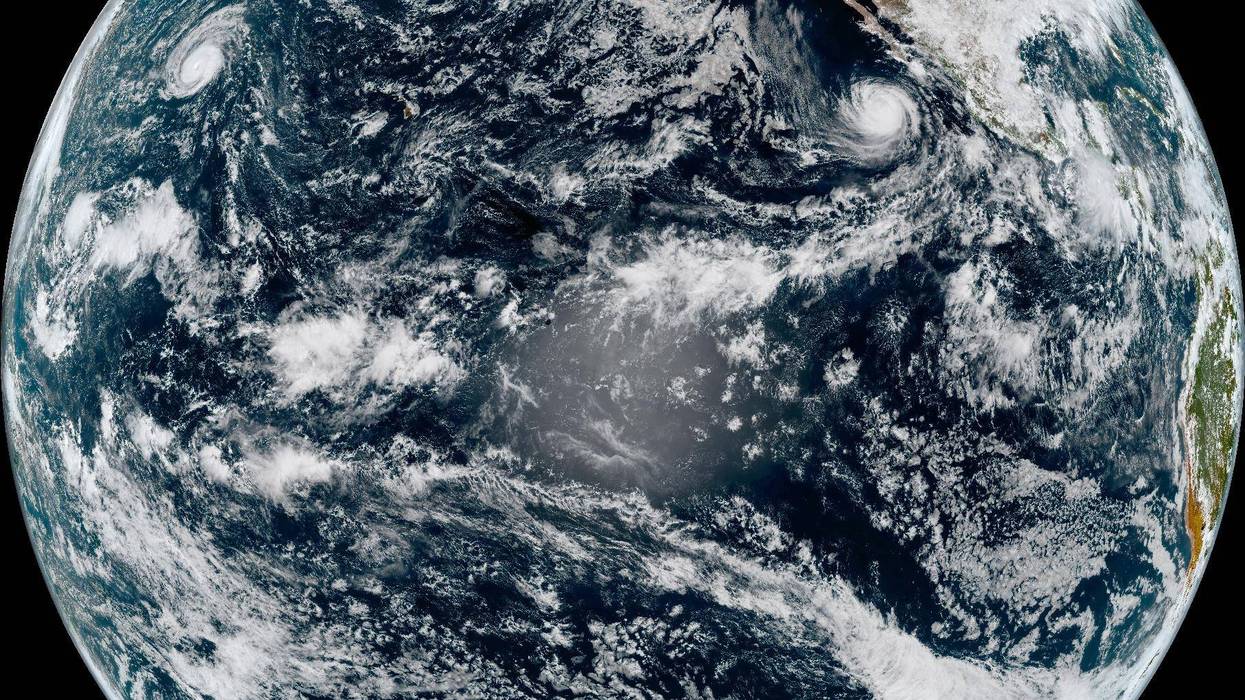


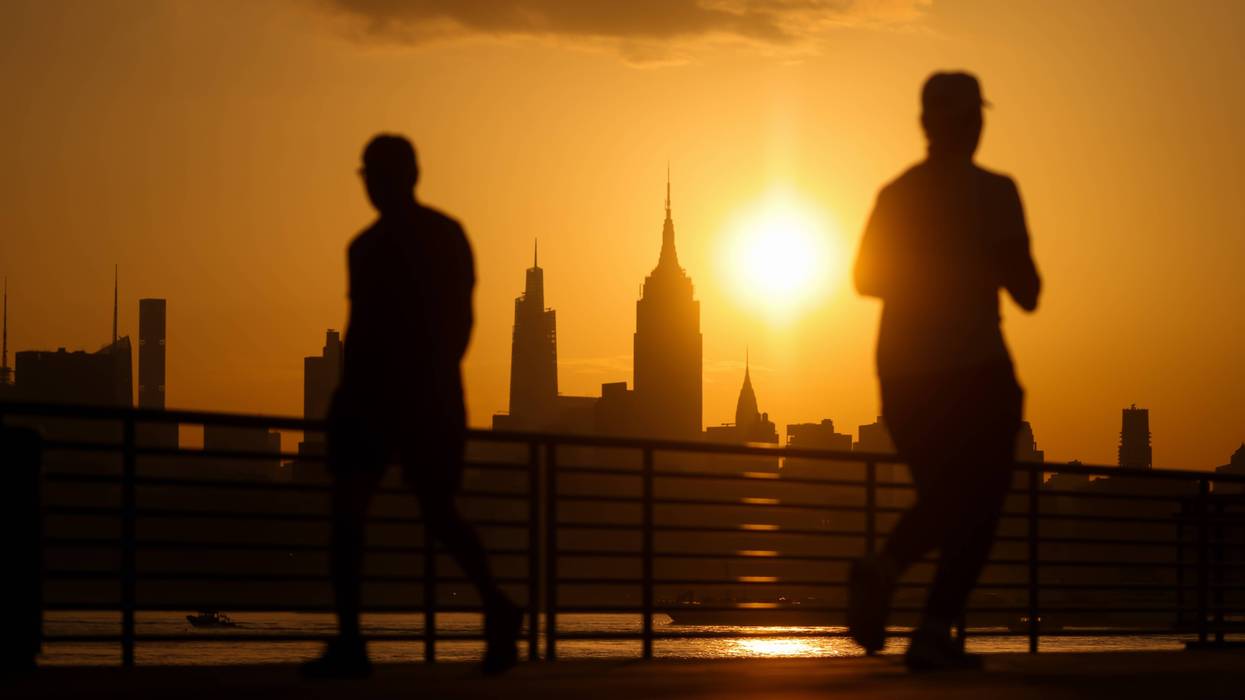

NEW YORK (BLOOMBERG) -- A dangerous heat wave that is trapped over New York City is also trapping people in the city.
The heat dome that’s settled over the East Coast has New York City set for its hottest day since 2012, according to the National Weather Service. Temperatures in Central Park spiked to 100F Thursday afternoon, but swampy, oppressive humidity will make it feel more like 110F. In parts of the city with less shade and more pavement, temperatures are likely to push even higher.
The soaring temperatures are disrupting the start of the long holiday weekend for July 4th. Outdoor concerts are being canceled, tourists are skipping out on daytime sightseeing, and workers are facing sweltering and delayed commutes on the last day of work for many.
Mayor Zohran Mamdani has urged New Yorkers to stay indoors. A Friday night concert in Central Park was canceled because of the “extreme heat threat,” as was a Thursday afternoon Battle of Brooklyn tour in Prospect Park tied to America’s 250th anniversary. As of mid-day Thursday, Amtrak had already announced the cancellation of some trains because of the high temperatures, which can cause issues with the tracks and overhead electrical equipment.
There’s little relief on the horizon: New York is only expected to cool to 84F overnight, more typical of the average high for a July day, before lurching back into the 100s Friday.
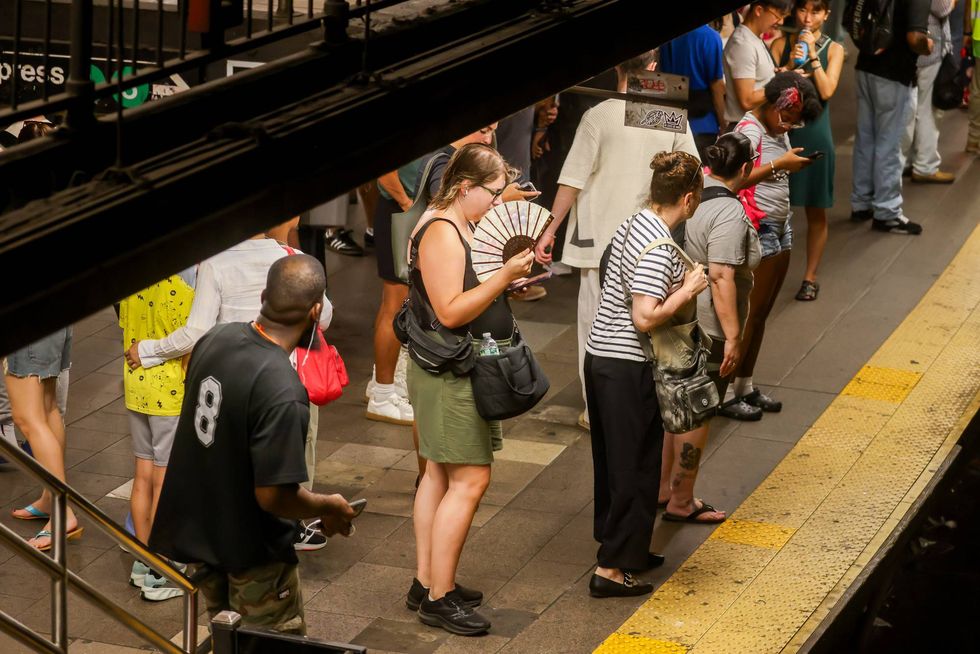 A commuter holds a handheld fan and carries a water bottle while waiting for a train at Union Square station on July 2.Michael Nagle/Bloomberg
“This is a dangerous set of scenarios that we’re sort of living through here in the city,” said Alister Martin, New York City’s health commissioner. “There’s so much happening, and at the same time, we want New Yorkers to enjoy those events, but to also be safe while doing it.”
Shreya Mathur, who is visiting New York from Toronto, said she is reworking her trip itinerary to stay out of the sun as much as possible. Mathur and her friend got out the door 90 minutes earlier on Thursday to try to squeeze in some time in Central Park before it got too hot. They decided to bail on more sightseeing to spend the hottest part of the day at the hotel.
“Travel plans have gotten a little disrupted,” Mathur said from the steps of the Metropolitan Museum of Art. “But we’re trying to make a good start.”
Only a few vendors had set up tables outside the museum on Manhattan’s Upper East Side by the time doors opened, a small fraction of the artists and souvenir sellers who are normally present.
Amtrak canceled some railway service on Thursday due to “temperature-related conditions,” including at least half-a-dozen high-speed Acela trains between Washington, DC, and Boston, as well as 12 regional trains stretching from the northeast to North Carolina. Before the heat began, the passenger-rail carrier placed equipment and personnel along the corridor to better respond to weather issues, according to Jason Abrams, a spokesperson for Amtrak.
“Amtrak’s operations team continues to monitor conditions across the East Coast as extreme heat and heat advisories persist,’” Abrams said in a statement. “As a standard rail industry safety measure, temporary speed restrictions may be implemented when high temperatures affect rail infrastructure, potentially resulting in delays.”
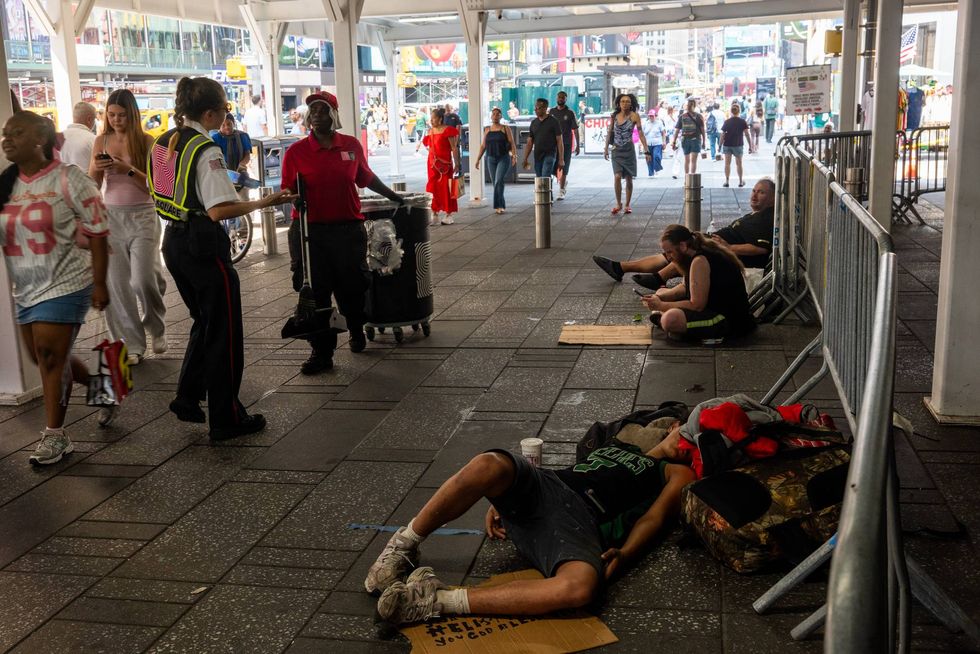 An unhoused individual rests in the shade during a heat wave in New York on July 1.Spencer Platt/Getty Images
New Jersey Transit suspended service in both directions on some of its rail lines Thursday because of a disabled train near Newark Broad Street, but was able to resume by 2 p.m., with delays, according to an agency post on social media. The cancellations happened after NJ Transit warned customers there may be delays because of the high temperatures as trains will need to operate at slower speeds.
John Harold, 62, was on his way to visit a friend on the Chesapeake Bay and said his Amtrak train was rescheduled, canceled and then uncanceled. Harold, who’s from southern Georgia but was in New York to visit his kids, said the hot subway has been a particular challenge.
“We live in a swamp so this sort of situation is normal for us, but I can see that the city is kind of struggling with it,” he said.
Air quality warnings have been issued across the city this week due to high concentrations of ground-level ozone, as intense sun reacts with car exhaust and other urban pollutants. Ozone can cause breathing issues for sensitive groups, including people with asthma and those working outside.
If the heat index tops 100F, the city advises event staff to provide free water, not serve alcohol, and consider rescheduling or moving an event indoors to an air-conditioned space.
Australian DJ Odd Mob, along with San Pacho and Coco Prosecco, was scheduled to perform at Central Park’s SummerStage Friday night, but the outdoor show was rescheduled for May 29, 2027.
New York Classical Theater, which puts on shows in public spaces, canceled its Thursday night performance of The Tragedy of Julius Caesar in Battery Park to keep its “audience, actors, and crew safe.” It also said the closing performance of the typically roving show would be stationary inside Castle Clinton on Sunday.
About 500 New Yorkers a summer die from a heat-related event, according to data from the city’s most recent Heat-Related Mortality Report. It’s a number that’s increasing as temperatures climb higher each summer. Housing inequality and lack of access to air-conditioning are major contributors to people dying from heat stress.
About 90% of households in New York report having an air conditioner. However, that drops as low as 76% in some low-income areas, according to the city’s department of health.
Still, access to air conditioning is far more prevalent than in Europe, where AC has become a political battleground after recent record temperatures.
NYC emergency rooms recorded 43 visits due to a heat-related illness on July 1, the highest level so far this year.
New York City announced that no evictions could take place this week from Wednesday on, because of the heat advisory.
Andrew Wallach, ambulatory care chief medical officer at NYC Health + Hospitals, recommended people stay hydrated and avoid alcoholic beverages, which can cause dehydration. For people planning to camp out for a spot to watch fireworks, increase hydration and rely on electrolyte beverages, like Gatorade, he advised. People should look for signs of dizziness, headaches, muscle cramps, a rapid pulse and heavy sweating as indications of heat exhaustion.
“Everyone should take this heat wave seriously,” Wallach said. “Bring water with you if going outside and slow down.”
As for the Swifties who might be thinking about braving the heat to catch a glimpse of the highly anticipated wedding celebration for pop star Taylor Swift and football player Travis Kelce at Madison Square Garden? “I wish them the best of luck getting a good photo,” said Judah Sueker, emergency medicine physician at Mount Sinai Hospital.