

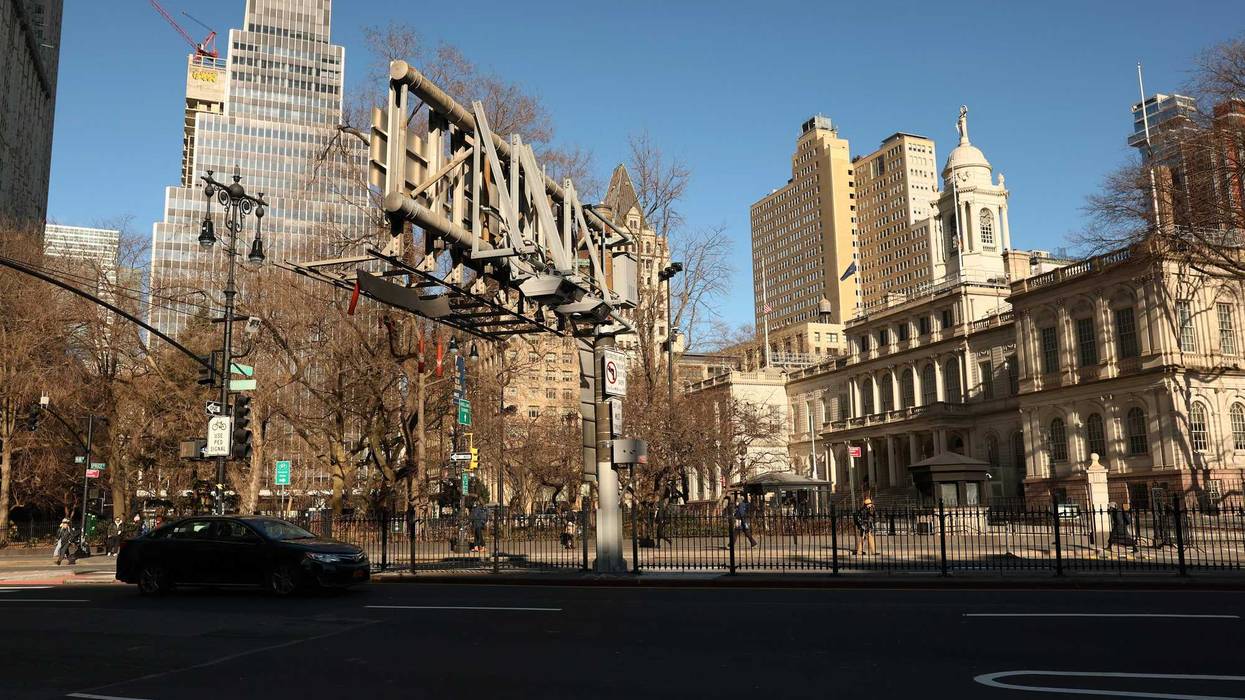
NEW YORK (1010 WINS) – U.S. Secretary of Transportation Sean Duffy, who moved to pull federal approval of congestion pricing this week, has now said he is "100%" open to some form of the tolling program in Manhattan.
The comment by Duffy came during an interview with CBS News correspondent Kris Van Cleave. Duffy said Gov. Kathy Hochul should focus on how much a toll should be to reduce congestion, as opposed to also funding the subway. And he suggested there should be paths to avoid the fee, saying, "If we're going to give approvals, I want to make sure the public can access this cordoned area on some of the roads they paid for."
"So you could be open to a congestion pricing scheme, but you want different data?" Cleave asked.
"Oh yeah 100%," Duffy responded. "Listen, I think there's a lot of great ideas around congestion pricing and how we can reduce it. But you can't take American taxpayers who paid for roads and block them out and say you can't access this unless you pay additional money. And that's what [Gov. Kathy Hochul] has done. I think that's flat out wrong."
"If you're a waiter, or a waitress, or a bartender, or you're working in a department store, that you've got to pay this fee if you've got to drive to the city is flat out wrong," he continued. "I think it's a war on the working-class Americans who work in that space. And it's a favor to the rich people. The rich people can pay the toll. It doesn't bother them, and they get, what, the poor people, the middle-income people off the roads so they can get in faster? It's flat out, I think, wildly unfair. And, again, in government when you pay something you shouldn't have to pay a second time so she can raise money for public transportation."
Duffy suggested he was potentially open to a toll amount lower than $9, an amount Hochul already lowered from the originally planned amount of $15.
"Instead of paying $9, could someone pay $5 to reduce congestion, or $3 to reduce congestion?" Duffy said, adding if "[Hochul's] going to charge a fee, a toll, she's going to charge an amount that's actually going to reduce congestion, not just raise money for public transportation."
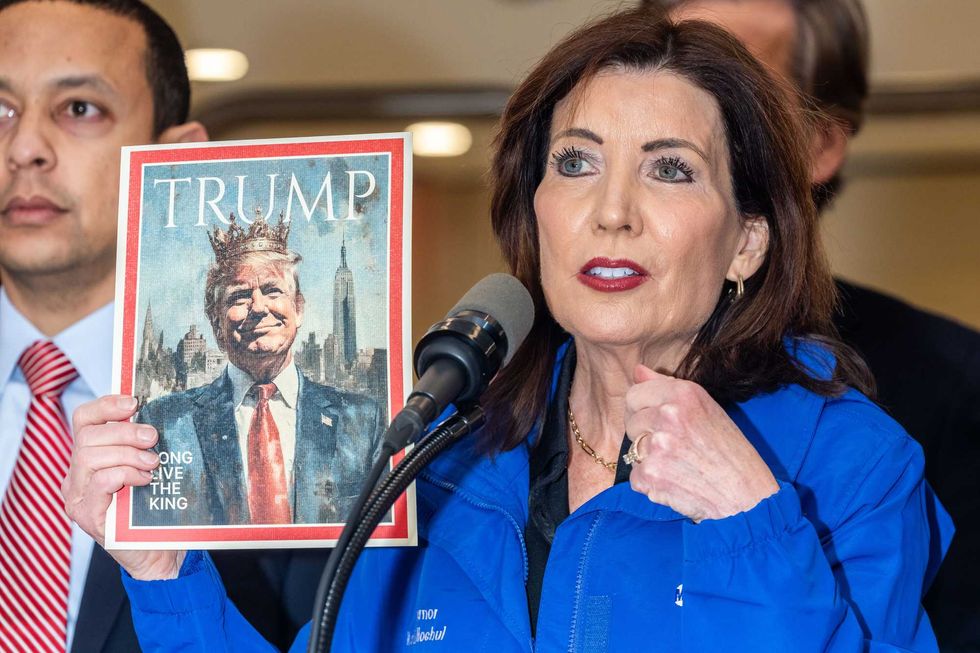 Gov. Kathy Hochul addresses the media following President Trump's efforts to kill New York's congestion pricing on February 19, 2025.Alex Kent/Getty Images
The Biden administration signed off on congestion pricing late last year, and the MTA started collecting the $9 daily toll from most drivers entering Manhattan below 60th Street on Jan. 5.
But on Wednesday, President Donald Trump declared congestion pricing was "DEAD," and Duffy said the federal government was rescinding its approval of the program and would work with New York State on an "orderly termination of the tolls."
The MTA immediately filed a lawsuit after receiving Duffy's letter, and Hochul vowed the "cameras are staying on" to collect the tolls. An expert told 1010 WINS this week that drivers will have to pay the tolls for the foreseeable future as the legal battle plays out.
The tolling program has been controversial, with supporters of it touting less congested streets, less polluted air and more money for the aging subway system in the nation's densest urban center. They say policies have favored drivers for decades to the detriment of public transit riders, who are the majority of people entering Lower Manhattan.
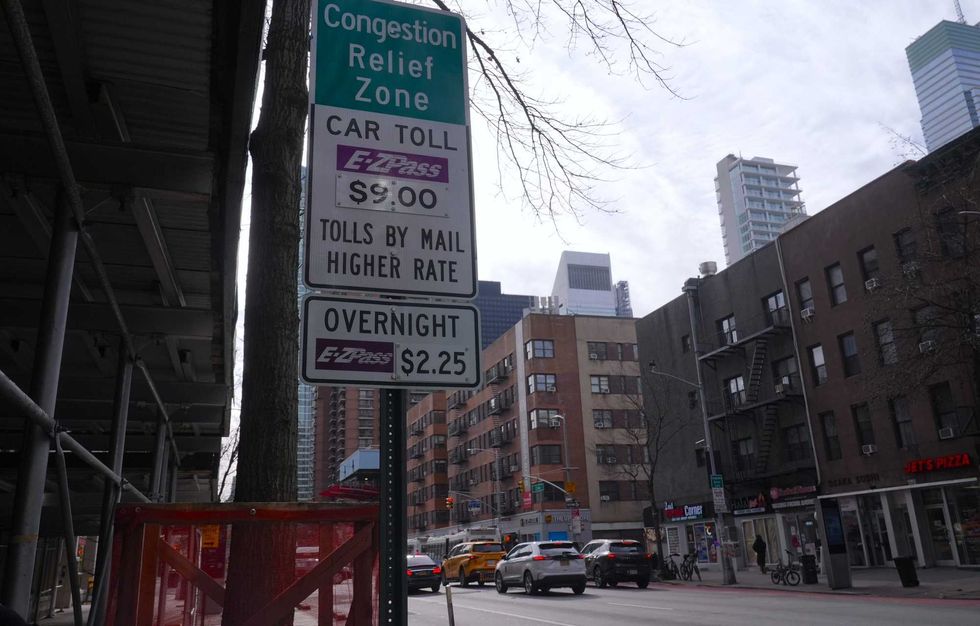 A congestion pricing zone is seen on the Upper East Side on February 19, 2025.Selcuk Acar/Anadolu via Getty Images
The MTA has said traffic was down 9% in January in the congestion zone and that 1.2 million fewer vehicles entered it, leading to faster travel times in the zone and at river crossings.
However, the program has also faced fierce opposition, particularly from drivers who commute into the city from the boroughs and suburbs, as well as small business owners, taxi drivers and truck drivers. They've generally categorized the toll as a "money grab" on the backs of working class drivers.
Duffy said his biggest issues is that the program forces New York taxpayers to pay additional tolls to access streets they've already funded.
"Why am I paying an additional toll to the taxes I already paid?" Duffy said, adding there's "no free pathway" into the area via public roads.
"We've never had a program like that, where there's not a free public road to get into a certain area," he said.
Supporters of congestion pricing have contended the entire point is to force drivers off of public roads and onto the subway, buses and commuter rails.