



NEW YORK (BLOOMBERG) — New York City officials have not yet identified the source of an outbreak of Legionnaires’ disease on the Upper East Side that has infected at least 28 people and hospitalized 21.
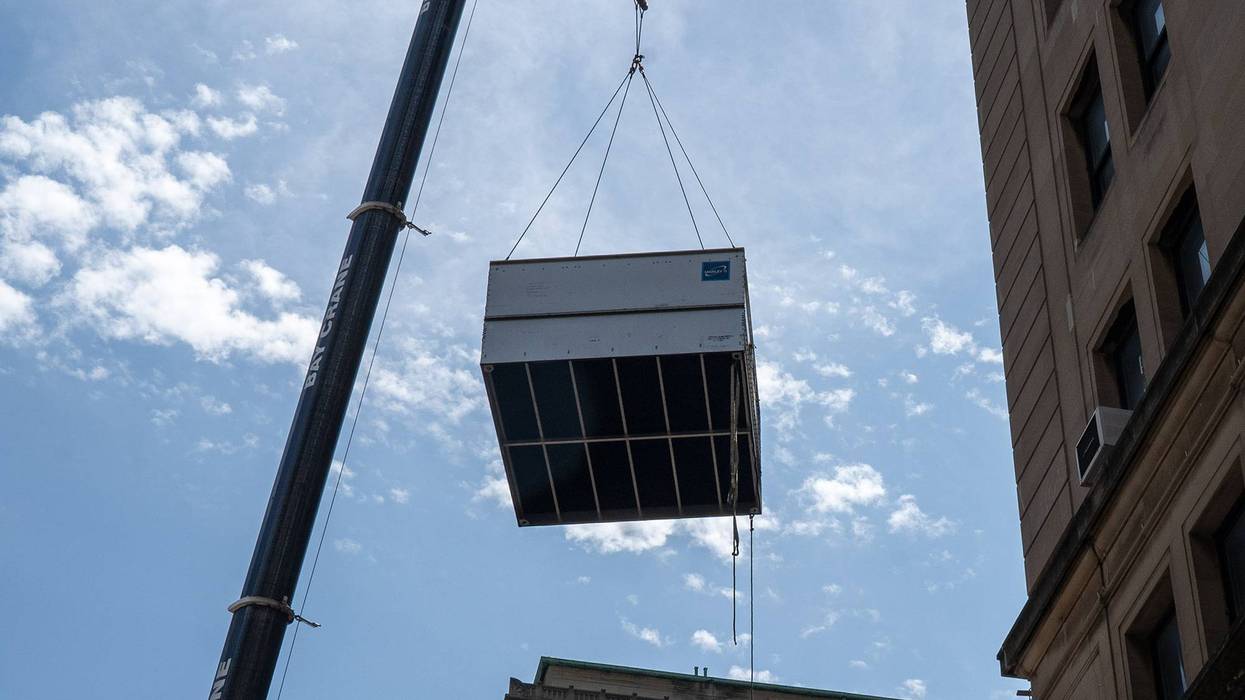
The New York City Health Department has gotten samples from 87% of the roughly 150 rooftop cooling towers in the area where the cases are clustered, officials told attendees at a town hall meeting held at the Church of St. Ignatius Loyola Tuesday evening. The source has not been identified and the agency says it’s racing to complete testing on the remaining units.
Many residents who attended the town hall were worried.
“It feels a bit like the beginning of Covid,” former architect and resident Richard Kadin, 72, said. “It seems really odd it’s concentrated in this community.”
The infections have been identified across three zip codes in the Upper East Side neighborhoods of Carnegie Hill and Yorkville — 10028, 10128 and 10075. This is an area bounded by East 96th Street to East 70th Street and from Fifth Avenue to the East River.
The city is using PCR tests to find evidence of Legionnaires’ bacteria. Any detection of the bacteria — dead or alive — in cooling tower water will bring immediate action in the coming days, according to New York City Health Commissioner Alister Martin.
With a positive PCR test, he said, the city will “jump in right there and begin ordering the cleaning and draining and disinfecting of those cooling towers.” They will release the PCR list of buildings soon, but the actual source of the infections will be released in four to six weeks.
The bacteria that cause Legionnaires’ grow in warm water, and thrive in hotter environments. New York City experienced a record-breaking heat dome through the July 4 holiday weekend.
Health officials have warned people who have visited this area east of Central Park since late June or who live in the area to monitor for flu-like symptoms and contact a health provider immediately if they feel ill. The health department first identified two cases on July 2, and infections have slowly increased. The incubation period ranges from 2 to 10 days.
“It’s troubling that the number is going up,” said Victoria Zygas, a 69-year-old retired public relations worker. “More people are taking action because they know it’s not the flu.”
The city’s latest outbreak comes nearly a year after seven people died from Legionnaires’ in Central Harlem and more than 100 were infected. This sparked the city to change regulations for cooling towers, including requiring building owners to test for the bacteria every 31 days.
The city health department has hired 23 water ecologists to boost inspector capacity after a shortage last summer. Some of the new hires are still coming on board, while others had started before the July 4 holiday, Martin told press at the town hall.
Bicentennial Origin
The disease was first identified in Philadelphia in the summer of 1976, after people attending an American Legion convention mysteriously started falling gravely ill. Eventually, investigators determined that a hotel’s air conditioning cooling tower was likely spreading the bacteria that caused the illnesses that killed 34. It was eventually named Legionella pneumophila.
At the town hall meeting, both Kadin and former emergency room physician Rhoda Eisenberg said they attended graduate schools in Philadelphia during the first outbreak of Legionnaires’.
“As long as all the cooling towers are treated and the follow up is negative, then I would expect this thing to dissipate,” Eisenberg, 79, said.
The bacteria can sicken people who breathe in infected mist and can cause pneumonia-like symptoms, according to the US Centers for Disease Control and Prevention. Not everyone falls ill, but 1 in 10 people who do get sick typically die from the infection. Older people, smokers and those with underlying health conditions are most susceptible.
There’s no vaccine against for the infection. The best prevention is caring for water systems to prevent bacteria from growing.
Legionnaires’ outbreaks occur every year in New York State, where 200 to 800 infections are reported each year.
In the current outbreak zone in Manhattan, thousands of cooling tower violations have been reported since 2017, and many of the violations are connected to the same buildings, according to New York City data. Building owners that fail an inspection in New York can face fines as high as $2,000 for a repeat offense, according to testing and consulting company NYC Cooling Tower Inspections and Services.
More stories available on bloomberg.com.