
When I first moved to Seattle from Chicago, about 100 years ago, and the TV weather people were predicting the first snow of the winter, I didn't understand why everybody was making such a big deal about it. As a Midwest native, I barely batted an eye at snowfall measured in feet, and people here were freaking out about the threat of an accumulation of one to two inches.
Well, it didn't take long for my blasé attitude to change. I lived not too far from Downtown Seattle, over Capitol Hill and allllllll the way down the hill into Madison Valley.
And the first time I tried to drive out of that valley and back up the hill with snow on the roads, I saw what the big deal was: Cars sliding backwards into other cars, Metro drivers abandoning their jackknifed articulated buses, fire trucks struggling to get to an emergency with chains on their giant tires.
After nearly 30 years in Seattle, now I get it.
The Midwesterner in me still feel pretty confident driving in winter, but I respect the hills in the snow, and I realize that things are just generally a lot more unpredictable when everybody's trying to get around this city -- and its less-urban surroundings -- after any amount of snow has covered the roads.
So I scoured articles filled with winter driving tips for the Northwest, and here's the Cliff's Notes version of what I learned:
Don't drive if you don't need to. The easiest way to avoid winter driving mishaps is not to do any winter driving. We're all used to working from home, so do that for a couple of days. I hate to send you to the grocery store for panic buying before the snow hits, like all those people you see on the news, but it's not a bad idea if it makes it possible for you to not drive to the store -- or anywhere -- once the white stuff arrives.
Clear off your windows. Headlights and taillights, too. Seriously. Warm up the car so you get some heat going for the defroster. And while that's happening, scrape off the windshield, and all the other windows. I mean really clean them off. Don't just make little portholes to peer through; get the ice and snow off of there. And the side mirrors, too. And while you're at it, brush the snow off the roof of the car so it doesn't slide down over your windshield or blow onto the windshield of the car behind you.
Drive slowly, and leave lots of space between you and the car in front of you. It's one thing to go in the snow and ice; lots of all-wheel-drive cars can do that. Stopping is a whole other thing. Bracing for impact as you stomp the brake trying to stop your car from sliding uncontrollably into another car gives you a very bad feeling in the pit of your stomach. Don't fool yourself into thinking that just because you have all-wheel drive, you're impervious to the effects of snow and ice. Take it slow.
Look way down the road ahead. This is especially important when you're on a freeway or a Lake Washington bridge. Things happen quickly, and the farther ahead you're glancing, the more prepared you'll be to slow down gradually rather than slamming on the brakes and spinning around on a slippery road.

Know your car and how it drives in the snow. Is it all-wheel-drive? Front-wheel drive? Rear-wheel drive? Each configuration has different characteristics in the snow. (You can Google some tech talk about all that. Actually, here -- I'll do it for you.) One article I read suggested that if you have a front-wheel drive car and you can't get up a hill, try driving backwards so the car's weight shifts to the wheels with the power. The front wheels, weighted down by the engine, kind of push you up the hill. Not sure if I actually recommend that -- you're on your own if you try that trick.
I've also found that if you have an automatic transmission that has a manual shift mode, it's often helpful to use that mode, and drive in a lower gear, like second or third. You'll find that in a low gear, when you take your foot off the gas, the car slows down quickly without the need for braking. This technique could prevent a skid. (It's easy to accomplish the same thing if you're driving a stick shift car.)
Be prepared. If you're going any distance beyond your local grocery store, gas up, charge your phone, and take a look at this Winter Driving Supply Checklist from WSDOT.
Here are more good tips from Car And Driver magazine.
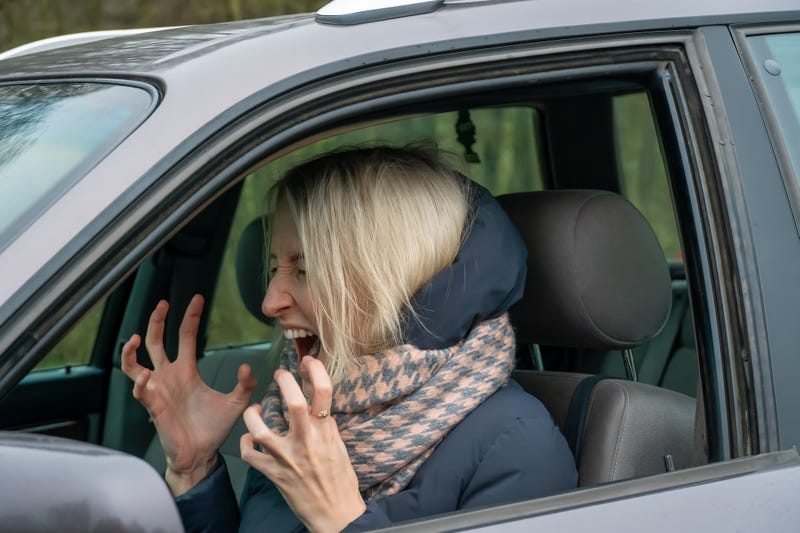
Stay safe, and don't let this happen to you: