



Produce has been identified as a potential source of the ongoing cyclospora parasite outbreak that’s been causing cases of severe diarrhea across the U.S. However, experts have suggested another source: water and storms.
Since water is almost everywhere, that might sound a bit alarming. Water has been implicated in disease outbreaks before – in 2024, Audacy reported on a salmonella outbreak linked to water used to irrigate cucumbers.
“The role of water in the transmission of cyclospora to humans is probably underestimated or underrepresented and less understood,” said former Food and Drug Administration Deputy Commissioner for Food Policy and Response Frank Yiannas, according to USA Today. “There have been some big outbreaks in the United States that were produce-related, but it was likely, and in some cases proven, that the water served as the conduit for the produce contamination.”
In fact, contamination in foodborne illness usually starts early on, with irrigation systems and even the soil where the food was grown, USA Today noted.
As far as water is concerned, waterways can become contaminated with waste (including human waste). Sewage leaks, wastewater overflow and failing septic systems and flooding can all contribute to water becoming contaminated with pathogens.
“When that feces-contaminated water ends up in the irrigation systems used to grow food, cyclospora remains on the produce, which, when eaten raw, then infects people,” USA Today said.
For example, Yiannas conducted an investigation while at the FDA that traced an outbreak of the parasite back to red cabbage grown in South Florida. Two years of testing indicated that cylospora was “readily prevalent” in canals used by local farmers to irrigate crops.
Dr. Robert Mandrell, microbiology researcher and former U.S. Department of Agriculture official, told USA Today that cyclospora also presents a particular challenge because it is not killed by chlorine, the primary disinfectant used in many municipal water supplies. He explained that the microscopic parasite has a tough outer shell that allows it to survive in conditions that would kill other pathogens.
Eating produce grown with contaminated water is one way for a human to contract the parasite. Water itself might have more to do with the recent explosion in cases, though.
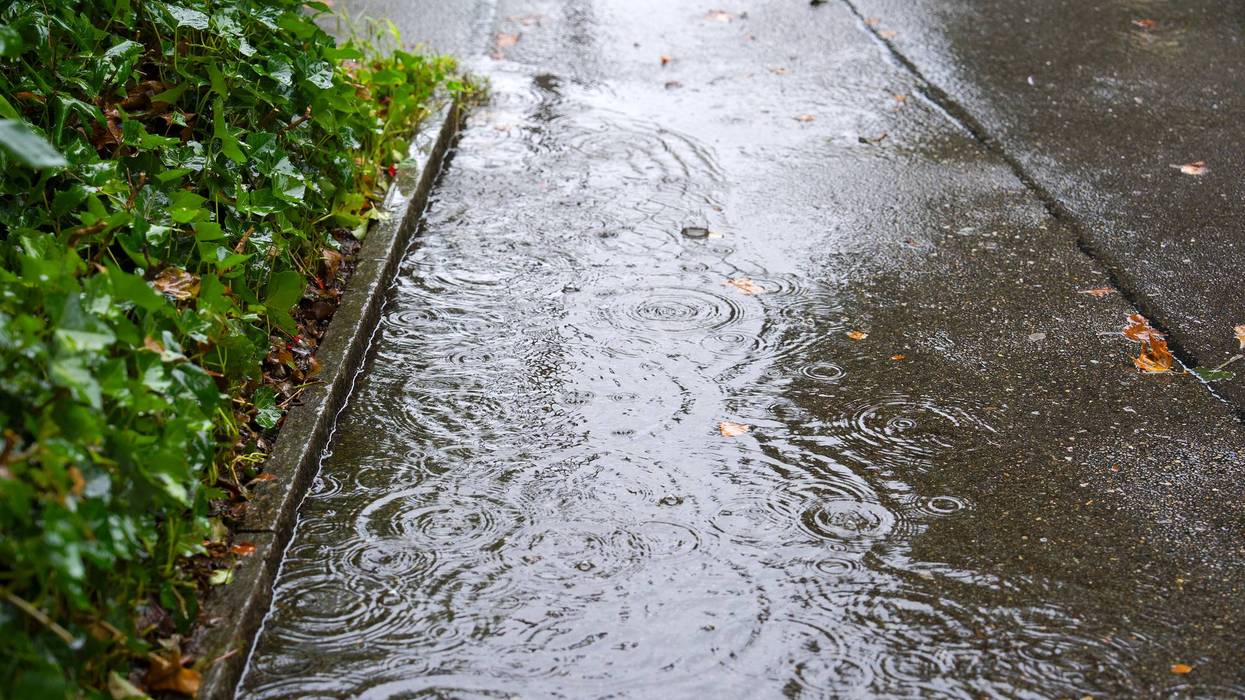
Mandrell noted that Michigan and Ohio, the two states leading cyclospora case counts, both experienced heavy rainfall and flooding recently as wild weather swept across the country.
Those floods could have created those cyclospora risk conditions, such as overwhelmed septic tanks and sewage systems that release raw or untreated waste into floodwater. That water flows into neighborhoods, fields and waterways.
“This could result in exposure that is more direct than the water-to-food route,” USA Today explained. Mandrell said drinking water might become contaminated, but that it is not confirmed. He added that surveillance of cyclospora in water sources isn’t routine in the U.S. and the outlet noted that scientists do not fully understand how the parasite moves through the environment before it makes people sick.
Mandrell recommended a “major study, not just of drinking water, but of the rivers and streams that get the outflow from wastewater in our country,” to better understand the national status of cyclospora in the nation. Thus far, the pathogen proved difficult to study in a lab.
Even though both experts cited by USA Today highlighted the possibility of cyclospora’s water-based transmission, Yiannis noted that the “questionnaire the FDA uses to trace common threads between sick people for a potential outbreak source still did not include questions about water the week of July 6,” the outlet reported. It also said the FDA and U.S. Centers for Disease Control and Prevention did not respond to its questions about water tracing.
“If we can’t solve this outbreak, then I think that really questions the effectiveness of the state of our public health system,” Yiannis said.
Those who are reading this and are getting ready to greet puddles and other water sources with suspicion can take some potective measures. Mandrell said that people in areas with a high degree of flooding in particular can swap tap water for bottled water until things dry up.
“If you want to be proactive, you might just stay away from your water if you’re worried about it, especially if you can see outside your windows that this is definitely contaminating something,” he said.
As of Friday, the CDC had reported 843 cases of cyclosporiasis in 31 states, with case counts starting on May 1. Another 1,500 cases require further analysis.
“So far this year, multiple states have reported an increase in cases in the last two weeks compared to the same period in 2025,” said the CDC. It also said state and federal partners are working to investigate the outbreak and identify sources.
Cyclosporiasis infection symptoms can include watery diarrhea, loss of appetite, and weight loss. Out of the reported cases in the recent outbreak, 86 have included hospitalizations. No deaths have been reported.
“Sick people ranged in age from 5 to 88 years, with a median age of 44, and 59% were female,” said the CDC. “The median illness onset date was June 18, 2026 (range: May 1 – July 5).”
Trimethoprim-sulfamethoxazole, a combination antibiotic sold as Bactrim, Septra, or Cotrim is used to treat cyclosporiasis, per the CDC. People who are allergic to this treatment can discuss other potential treatments with their medical care provider. Those with diarrhea are instructed to contact their doctor, rest and get plenty of fluids.