

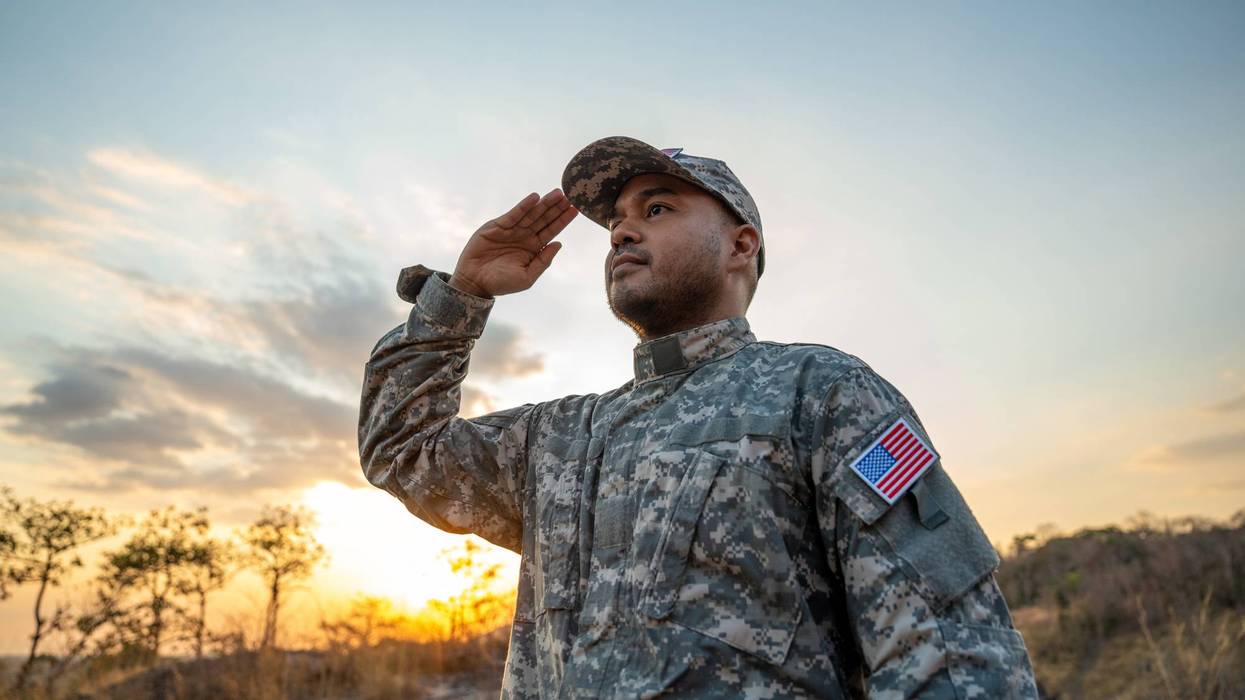

Starting this December, men aged 18 to 25 will be automatically registered into the U.S. military draft pool, thanks to a mandate included in the 2026 National Defense Authorization Act passed last year.
It doesn’t mean that the “draft” is back and, according to The Hill, this change was meant to save money. Let’s dive into what the change really means.
Most men have already been required to register with the Selective Service System within 30 days of their 18th birthday since 1980. Automatic registration shifts the responsibility from individuals to the SSS, which will utilize federal data sources for automatic registration.
“SSS will implement the change by December 2026, resulting in a streamlined registration process and corresponding workforce realignment,” according to the agency.
It also submitted a proposed rule related to the change to the Office of Information and Regulatory Affairs on March 30. As of Thursday, the rule had not been published in a unified agenda.
In the U.S., military conscription (mandatory enlistment in the military for eligible men) was first used to enlist troops for the Civil War, per the National Archives. Then, the Selective Service Act went into effect in 1917 to conscript soldiers for World War I.
Decades later, the Selective Training and Service Act of 1940 was passed. It required all men between the ages of 21 and 45 to register for the draft and it was “the first peacetime draft in United States' history,” according to The National World War II museum.
“Those who were selected from the draft lottery were required to serve at least one year in the armed forces,” the museum explained. “Once the U.S. entered World War II, draft terms extended through the duration of the fighting. By the end of the war in 1945, 50 million men between 18 and 45 had registered for the draft and 10 million had been inducted in the military.”
Then, from 1948 through 1973, men were drafted to fill vacancies in the armed forces that could not be filled through voluntary means, according to the Selective Service System. While it said the “induction authority expired in 1973,” the SSS remained on “standby” in case of emergency.
Starting in 1964, the draft was used to conscript U.S. soldiers to fight in the Vietnam War. By 1972, 2.2 million American men had been drafted out of a pool of 27 million, according to the University of Michigan. This era also brought opposition from people – including draftees and potential draftees – who opposed both the war and conscription, which was often harder to evade for Americans of lower socioeconomic standing.
“Some sought refuge in college or parental deferments; others intentionally failed aptitude tests or otherwise evaded; thousands fled to Canada; the politically connected sought refuge in the National Guard; and a growing number engaged in direct resistance,” the University of Michigan said. “Antiwar activists viewed the draft as immoral and the only means for the government to continue the war with fresh soldiers. Ironically, as the draft continued to fuel the war effort, it also intensified the antiwar cause.”
Registration was suspended in early 1975 and the SSS entered “deep standby” until the summer of 1980, when former President Jimmy Carter brought back the registration requirement.
Fast forward to 2007, about four years into the Iraq War. Gallup polling from that year found that just 18% of Americans thought the U.S. should return to having a military draft. A decade later, nearly half of Americans (49%, compared to 45% opposed) favored the idea of requiring young men and women to give a year of service to the nation, though that was in either military services or nonmilitary work abroad.
White House Press Secretary Karoline Leavitt told Fox News Sunday that bringing back the draft is not part of President Donald Trump’s current plans. Trump, who campaigned on a promise to avoid foreign wars, surprised many when he announced that the U.S. had joined Israel to attack Iran in late February, and war there waged for a month before a tentative ceasefire agreement was reached this week.
However, Leavitt also told Fox that the president “keeps his options on the table.”
Polls have shown that most American’s do not support the U.S. involvement in war with Iran, something that contributed to Trump’s approval ratings falling in recent weeks, as well as war-related spikes in prices at the gas pump. YouGov poll results released Monday showed that a 53% majority of Americans still oppose the war and The Economist said the president’s approval rating remained low as of Thursday.
Based on data from World Population Review, 68 countries across the world have mandatory military service, including Brazil, Iran and Mexico. Of those countries, many only conscript men. However, some countries do draft women, including Denmark, Norway, Sweden and Israel, per DW. Women in the U.S. can enlist in the military, but they are still ineligible for the draft, The Hill said.
“Even as lawmakers in the past few years have attempted to attach provisions adding women to the draft as part of the annual defense policy bill,” according to the outlet. “The measures have all been stripped out before a final vote on the legislation.”
Research published in the Fordham Law Journal in 2024 acknowledged that the U.S. was experiencing a military recruitment crisis, but advised against using the draft to correct course. That same year, Stanford University’s Hoover Institution also warned against reinstating the draft, arguing that it could restrict Americans’ economic freedom.
The Hill noted that “Trump alone cannot bring back the draft through executive action, as Congress would need to pass legislation to amend the Military Selective Service Act to authorize the president to induct personnel into the military.”