

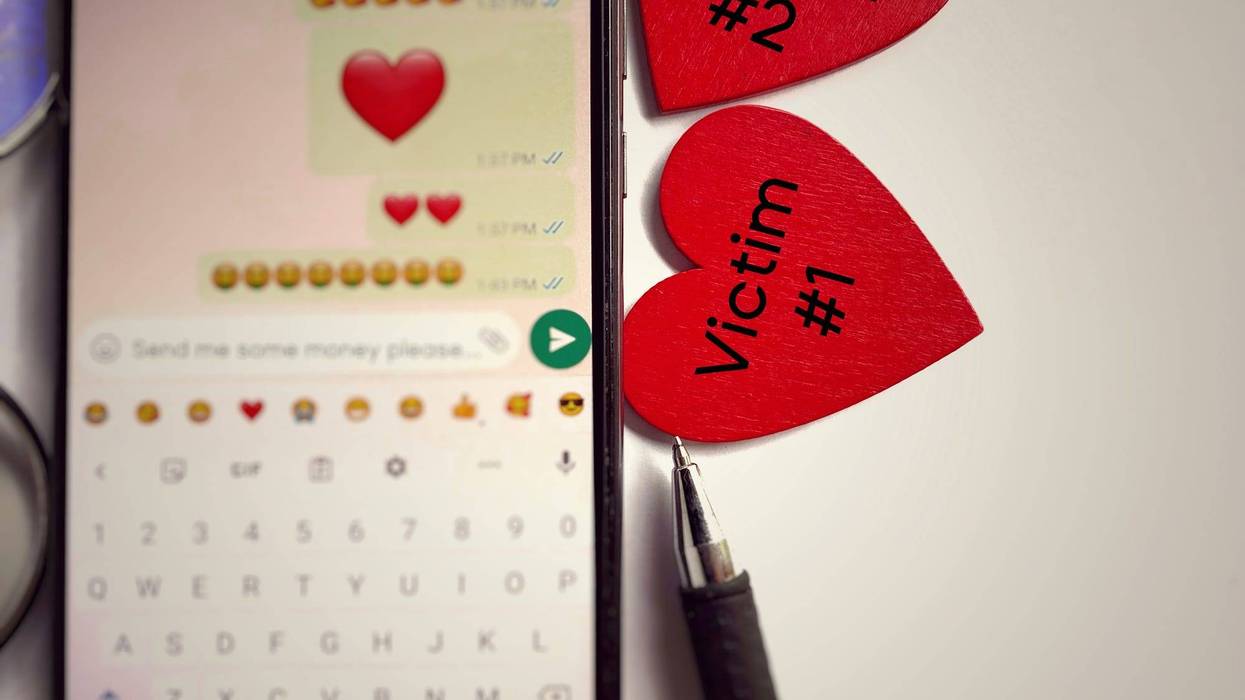

As Valentine's Day approaches, the FBI in Kansas City issued a warning reminding the public to beware of romance scammers. In a typical romance scam, the scammer uses the illusion of love or affection to steal money. The scammer assumes a fake online identity to gain a victim's affection and trust. The scammer will often try to move the relationship along quickly, sending the victim gifts, writing poetry, declaring their love for the victim, or even proposing marriage.
Scammers will make plans to meet in person, but one very telling red flag is that those plans never materialize. Acting Special Agent in Charge Josh Delmanzo says, once the scammer gains the victim's trust they will ask for money.
"People of any age or background can fall victim to romance scams. Anyone who is online and has money may be a target. Scammers move quickly and can be convincing. Before thinking with your heart, trust your gut. If it's too good to be true, it probably is."
Common romance scams may include the following schemes:
• Simple Romance Scam: The scammer asks for money due to purported financial hardship after gaining the victim's affection and trust. The victim sends money through wire transfer, gift cards, or payment app to the scammer after developing a relationship online.
• Money Mule Scam: Criminals recruit victims to become what is known as a "money mule." The victim is directed to receive funds in the form of a cashier's check, money order or wire transfer. The criminals claim they are unable to receive the funds directly, so they ask the victim to redirect the funds to them. In these scams, victims risk losing money and may incur other expenses such as bank fees and penalties. In some cases, they may face prosecution as a money mule.
• Cryptocurrency Fraud: Scammers use romance to entice victims into cryptocurrency investments.
• Verification Scams: Scammers ask victims to take the conversation off the dating app and onto a different site with the pretense that it will be more secure. They send the victim a verification link, where the victim enters personal information such as a phone number and credit card, which allows the scammer to gain access to that information. Romance scammers are experts in what they do and will seem genuine, caring, and believable. They will try to endear themselves to the victim by saying whatever the victim wants to hear. These con artists are present on most dating and social media sites.
Red flags for romance scams include:
• Avoiding meeting in person.
• Asking for money or personal information.
• Seeming too perfect.
• Asking to leave a dating service or social media site to communicate directly.
• Requesting inappropriate photos or financial information that could be used to extort you later.
• Attempting to isolate you from friends and family.
Scam artists often say they are working on projects outside of the US, which makes it easier for them to avoid meeting in person and more plausible when they ask for money for an unexpected expense or medical emergency.
Romance scams result in significant financial losses. In 2024, more than 17,900 victims reported more than $672 million in losses. This number likely does not capture the true financial cost as many victims suffer in silence.
To protect yourself from these scams, the FBI urges the public to:
• Be careful what you post and make public online. Scammers can use details shared on social media and dating sites to better understand and target you.
• Research the person's photo and profile using online searches to see if the image, name, or details have been used elsewhere.
• Go slowly and ask lots of questions.
• Never send money to anyone you have only communicated with online or by phone. If you have been the victim of a romance scam, the FBI encourages you to:
• Stop all contact with the scammer immediately.
• Report any transfer of funds to your financial institution.
• File a complaint with the FBI's Internet Crime Complaint Center at ic3.gov.
• Contact your local law enforcement, the FBI KC office at 816-512-8200, or call 1-800-CALL-FBI.