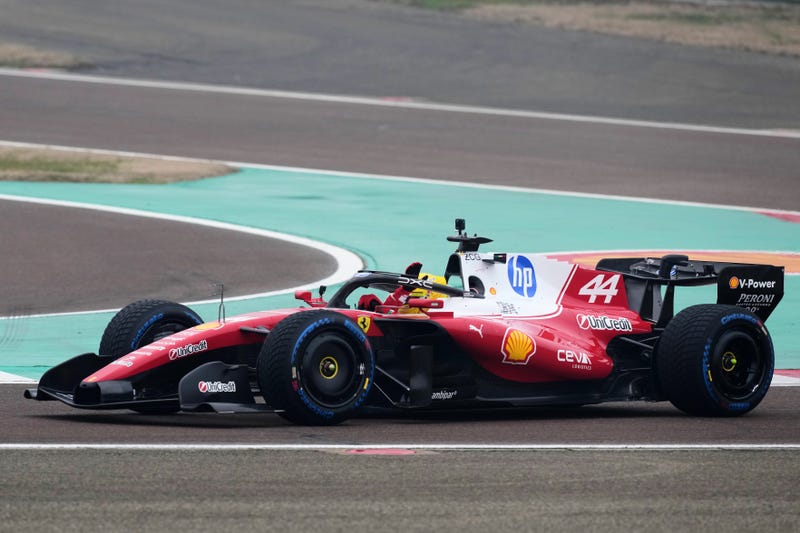
Ten new cars, five days, no fans.
Formula 1 started a new era with the public and the media excluded from its private testing session in Spain on Monday.
It's hard to imagine a bigger contrast to last year's lavish launch party that involved 16,000 fans and famous faces in London.
Mercedes was one of the first teams on the Barcelona track, F1 said, along with Alpine and Audi, which took part in its first official F1 event since it was renamed from Sauber.
F1 has an 11th team this year as Cadillac makes its debut, but only 10 will be in Spain after Williams was hit by delays in getting its car ready. Defending champion McLaren didn't run Monday and Aston Martin said its car will arrive “later this week” and won't be on the track until at least Thursday.
There is no TV coverage, except brief clips from F1's own broadcaster, or official results from the five-day test this week, so it'll be hard to gauge who's got a head start on the new regulations. The second test in Bahrain next month is when the focus switches to performance.
Communications blackout
So, why is F1 blocking fans from seeing the new cars on track?
F1 originally referred to this week's event as a “private test" but now calls it the “Barcelona Shakedown,” a term usually used for short-distance runs to check basic reliability, not the sort of multi-day extended tests in Spain.
That change reflects concerns that some all-new designs might not be reliable enough to make a positive first impression.
Bahrain has a long-running agreement to hold preseason testing and its warm weather is more representative of real races. Downgrading to Barcelona may keep more attention on Bahrain, which has the first live TV coverage of cars doing timed laps.
Some teams, like Ferrari, have revealed 2026 designs and given them brief track time using exemptions for distance-limited promotional events, but plan major changes before the first race in Australia in March.
Defending champion McLaren is unusual for signaling its Barcelona design will be close to race specification. It chose to skip Monday's running “in order to give as much time as possible to the development of the car,” team principal Andrea Stella said last week.
Others, including Red Bull, had until now only showed new paint jobs on imitation cars, making the first runs in Barcelona an especially crucial stage in development.
What can go wrong?
Teams can run on three out of five days in Spain, giving them time to fix problems without losing ground, so McLaren's delayed start isn't a setback.
With all-new engines, battery systems and smaller, lighter cars, reliability is a bigger concern than it has been for years.
The last time the rules changed this much, the first preseason test was a disaster.
Cars broke down frequently on the first day of testing at the remote Jerez circuit in 2014, as teams got to grips with the new turbocharged hybrid V6 engines, and Lewis Hamilton beached his Mercedes in a gravel trap. The problems eventually shook out over the season and the British driver ended the year as champion.
F1 has become a very different sport in the 12 years since then, though. Netflix series “Drive To Survive” brought in a new influx of fans used to detailed broadcasts and all-access social media content.
___
AP auto racing: https://apnews.com/hub/auto-racing