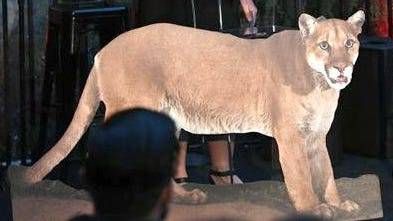


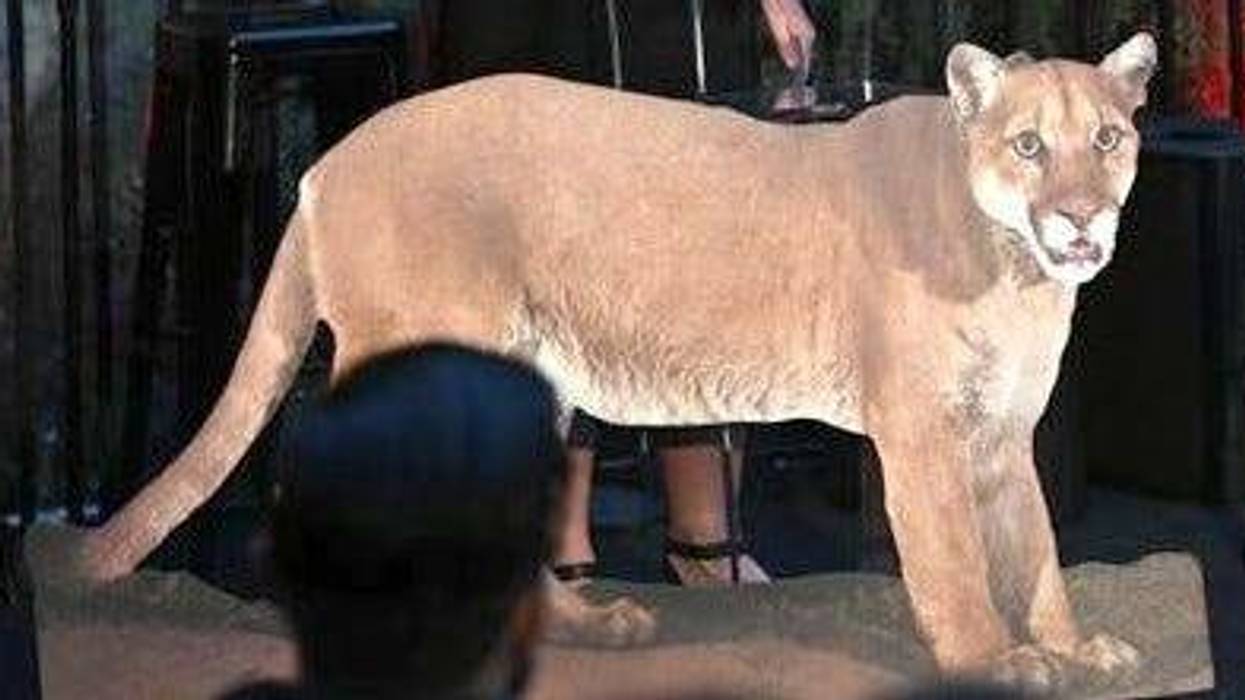
LOS ANGELES (CNS) - P-22, the mountain lion who was captured this week for a health assessment, is severely underweight and may have been hit by a car recent, wildlife experts said on Tuesday.
Officials also noted that it's likely he won't released back into the wild, but could potentially be euthanized depending on further medical tests.
"Nobody is taking that kind of decision lightly," California Department of Fish and Wildlife Deputy Communications Director Jordan Traverso said.
"Everybody understands ... the importance of this animal to the community and to California. And so if that kind of decision has to be made, I just want everybody to understand that it's not something that's taken lightly. It's very deeply thought about. And if something like that does happen, we recognize the sadness of it."
On Monday, P-22 was captured by National Park Service and CDFW officials in Los Feliz. Last week, officials said they planned to capture the mountain lion following a string of recent attacks on dogs and other indications that the mountain lion may be in poor health.
On Tuesday, officials said the lion woke up from the tranquilizer and that the trauma on his face suggested he had recently been hit by a car (this has not been confirmed.)
A CT scan is set to be conducted on the animal to determine if he is suffering from more extensive internal trauma.
Ed Pert, a regional manager with CDFW, said that it's unlikely P-22 will ever be released to the wild and that it's likely officials will have to choose between an animal sanctuary or euthanasia.
"There will certainly be a team of people who ultimately make this decision, although I think that our director will, if need be, if there's a tie- breaker ... would be involved in that decision," he said.
He said the team involved in such a choice would include CDFW officials, the National Park Service, veterinarians and possibly "some folks from the outside to make sure that we have various perspectives fully understood."
He is believed to be about 11 years old, making him the oldest cat in the NPS' study of Southland lions. He was initially captured and given a tracking collar in 2012.
Pert said P-22's capture was due to recent dog attacks.
City News Service contributed to this article.
Follow KNX News 97.1 FM
Twitter | Facebook | Instagram | TikTok