


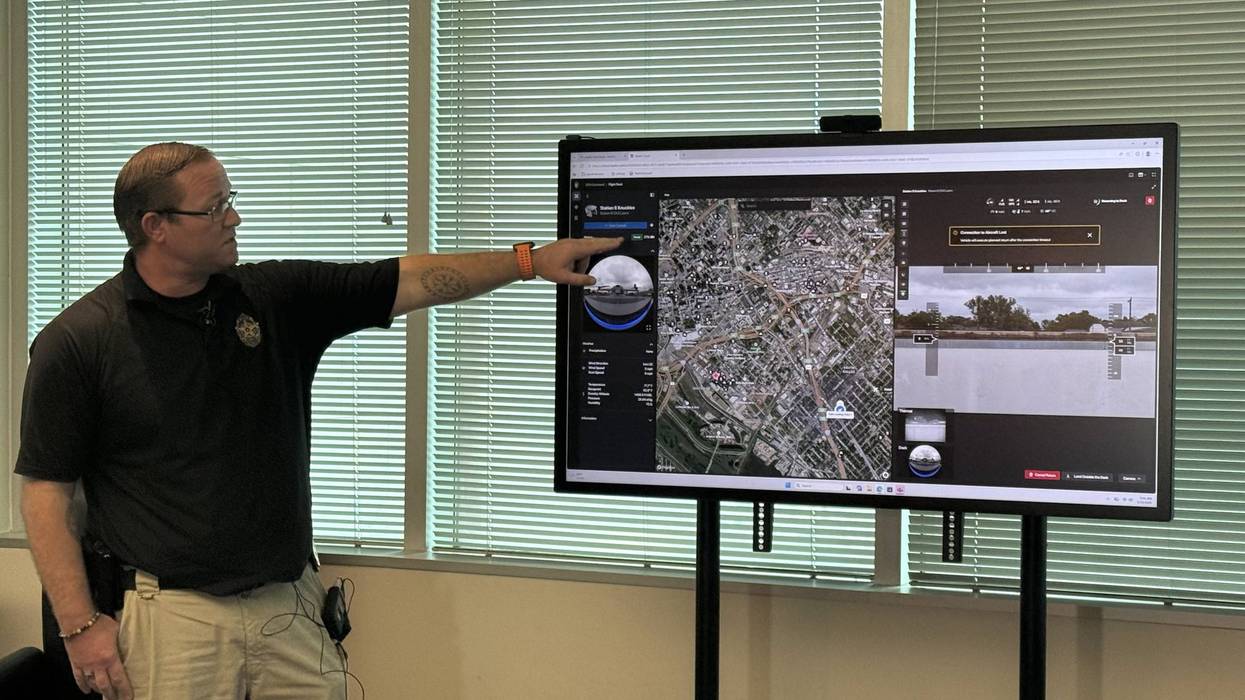

The Dallas Police Department launched two major technology initiatives aimed at improving police response times, officer safety, and investigative efficiency across the city: a new Drone as First Responder program and an advanced data integration platform called Peregrine.
The department officially unveiled its Drone as First Responder program on Wednesday, deploying eight remotely operated drones stationed at Dallas Fire-Rescue facilities throughout the city. Operated from the Fusion and Real Time Crime Center, the drones can respond to calls within a two-mile radius and often arrive on scene faster than patrol officers.
“We can respond to calls for service…we hope that we can reduce response times to calls and actually clear calls from the air without having to have a ground unit actually respond to the call,” Mark Villarreal, Assistant Chief for DPD said.
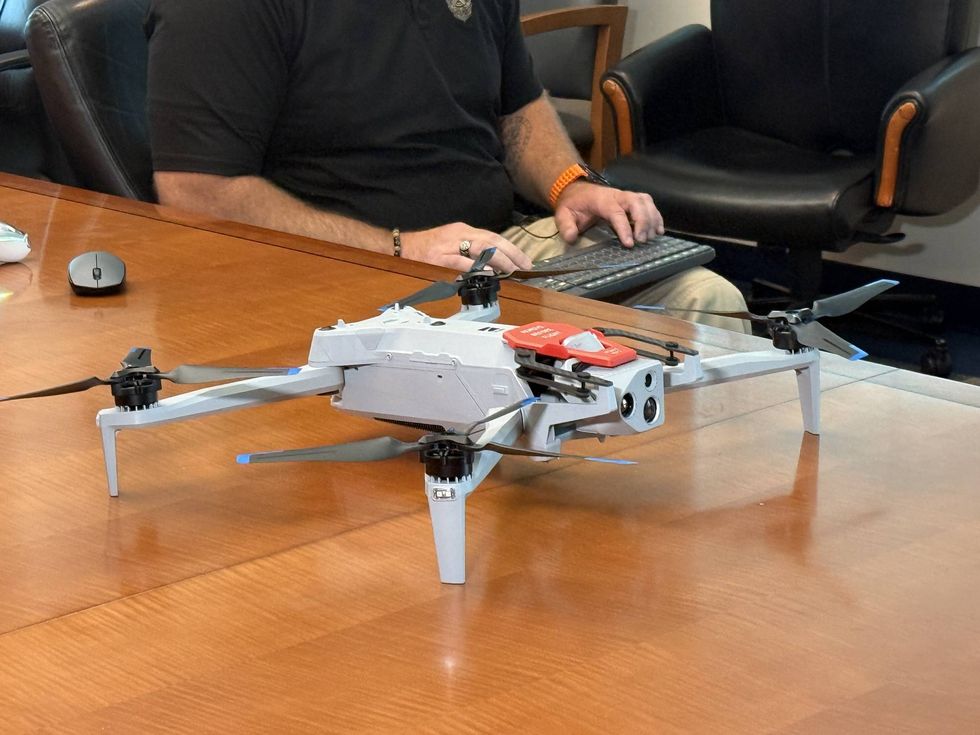 One of the eight drones being stationed around the city Emily Capetillo
Equipped with loudspeakers for ground broadcasts and thermal imaging cameras for night use, the drones can reach a scene in roughly two minutes at speeds of up to 45 mph. They are built to endure weather conditions like hail and wind. The drones can also fly for about 45 minutes and have the capacity to hover over a location for ten minutes.
Drone demonstration roar-assets-auto.rbl.ms
Villarreal described the technology as a “game changer” for response times and officer safety. During training exercises, he pointed out that pilots were reportedly able to clear multiple calls without requiring officers to respond in person.
The drones are expected to assist with missing persons cases, suspicious activity calls, crowd monitoring, and some random gunfire calls.
“This particular purchase in this launch of this unit here is not specific to the random gunfire calls…we are looking at technology, in the future, which integrates our gunshot detection system.”
Officials also said the technology could become especially useful during large public events, including the 2026 FIFA World Cup, where drones may help monitor activity around the FIFA Fan Fest and entertainment districts.
At the same time, Dallas police are also implementing and training to use Peregrine, a software platform that consolidates information from multiple law enforcement databases into one searchable system.
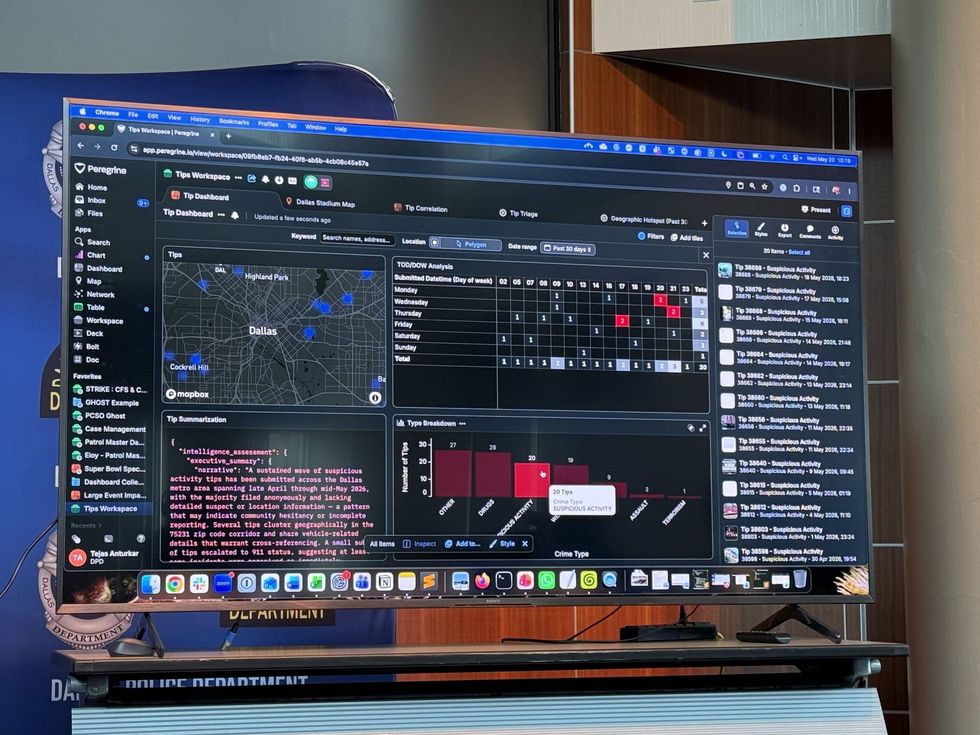 Peregrine softwareEmily Capetillo
Some of the things officers can search for include jail records, incident reports, evidence databases, vehicle information, tattoos suspects might have, and documents. Peregrine allows officers to search through millions of stored data through a single interface.
Officials demonstrated how the software can quickly identify connections between people, vehicles, addresses, phone numbers, reports, and even handwritten documents scanned into department archives.
“Peregrine's goal is to help keep officers and communities safe,” said Tejas Anturkar, lead engineer for Peregrine. “Right now, one of the central problems facing agencies is the large amount of silo data that they have to make sense of very quickly, to respond to a call for service effectively, to follow up on a lead, or to get the intelligence that they need to have successful operations.”
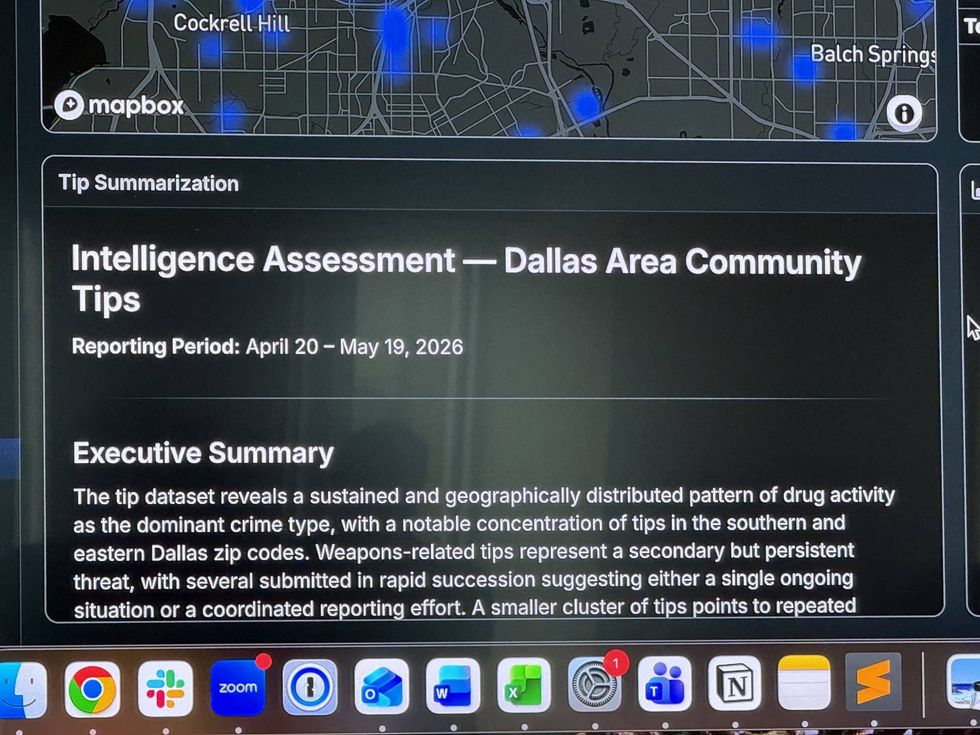 Peregrine softwareEmily Capetillo
The platform also includes dashboards that can organize public tips and identify patterns in real time. During demonstrations, Anturkar showed how AI-generated summaries can highlight suspicious trends, recurring locations, or common vehicles tied to investigations.
Police emphasized that Peregrine does not create new data or conduct facial recognition searches using department body camera footage. Instead, officials said the software organizes existing records already owned and controlled by the department.
“Peregrine works for agencies of all shapes and sizes, all the way from LAPD to some of the agencies that just have a handful of sworn officers,” Anturkar said.
Training for officers began this month, with patrol officers receiving shorter operational training sessions while investigators and crime analysts complete more advanced instruction focused on analytics and case development.
Police leaders say both technologies represent a broader push toward efficient policing tools that can improve response times, process information faster, help solve cold cases and investigations, and protect both residents and officers.


