

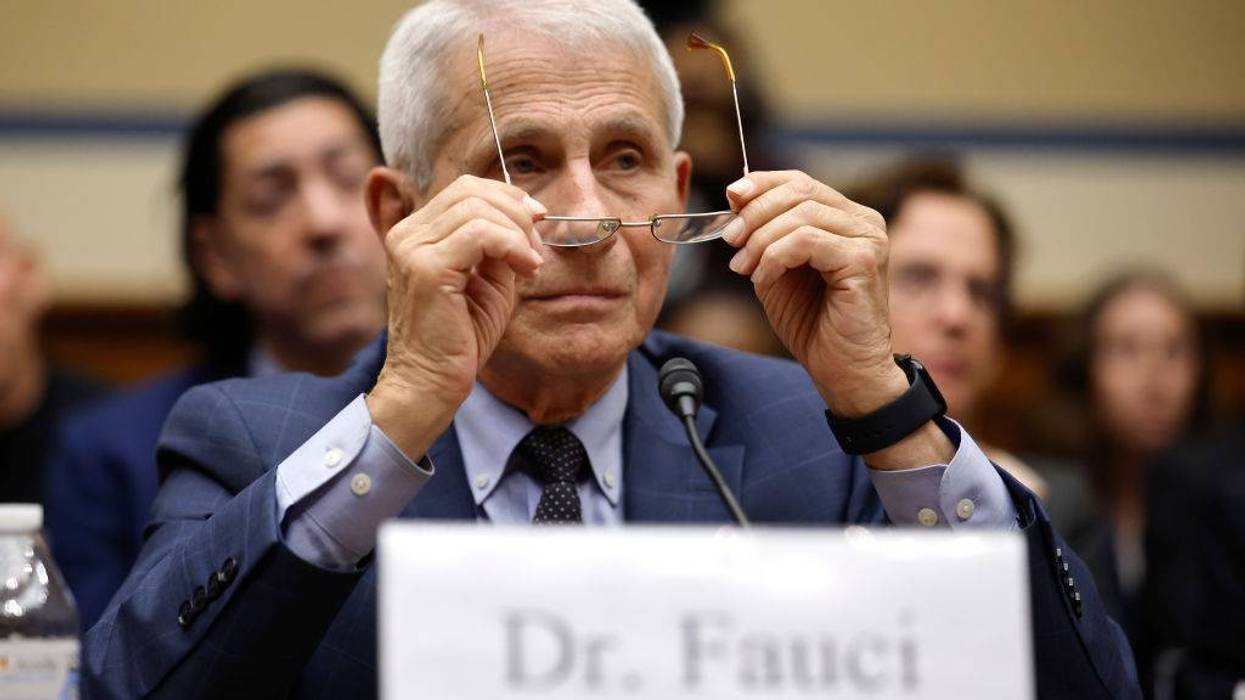

A U.S. Senate committee voted Thursday to recommend holding Dr. Anthony Fauci in contempt of Congress after the former top infectious disease official refused to answer questions about the COVID-19 pandemic.
The Senate Homeland Security and Governmental Affairs Committee approved the referral on an 8-5 party-line vote, with all Democrats opposing the measure. Committee Chairman Sen. Rand Paul, R-Kentucky, led the effort following a July 29 hearing in which Fauci, 85, invoked his Fifth Amendment right against self-incrimination more than 100 times.
Fauci appeared under subpoena as part of the panel’s investigation into the origins of COVID-19 and the federal response. In his opening statement, Fauci accused Paul of having an “unhinged obsession” with him and said he feared the hearing was designed to force testimony that could lead to perjury charges. He then declined to answer further questions on the advice of his attorneys.
Anthony Fauci is fully protected by a sweeping pardon, immune from prosecution, and he still refuses to comply with a lawful subpoena. That's the very definition of contempt for the American people.
— Rand Paul (@RandPaul) August 4, 2026
On Thursday, the HSGAC will vote to hold him in contempt.
Paul argued that Fauci’s Fifth Amendment claim was unsupported, pointing to a sweeping pardon issued by President Joe Biden covering potential offenses from 2014 through January 2025. The Kentucky Republican has said he plans to refer the contempt finding directly to the Justice Department rather than first seeking a full Senate vote.
“The witness had many chances to answer the questions pertinent to our investigation, and he made his decision 111 times,” Paul said during the committee session, according to CBS News.
Democrats on the panel criticized the process as one-sided. Ranking member Sen. Gary Peters, D-Michigan, said the investigation had excluded minority input and selectively released information.
Fauci retired in 2022 as director of the National Institute of Allergy and Infectious Diseases after decades in government service. He has long denied any wrongdoing related to the pandemic response or research funding.
The next step rests with the U.S. Attorney’s Office for the District of Columbia, which would decide whether to pursue charges. Conviction for contempt of Congress can carry fines and up to a year in prison.
LISTEN on the Audacy App
Tell your Smart Speaker to "PLAY 1080 KRLD"
Sign Up to receive our KRLD Insider Newsletter for more news
Follow us on Facebook | Twitter | Instagram | YouTube