


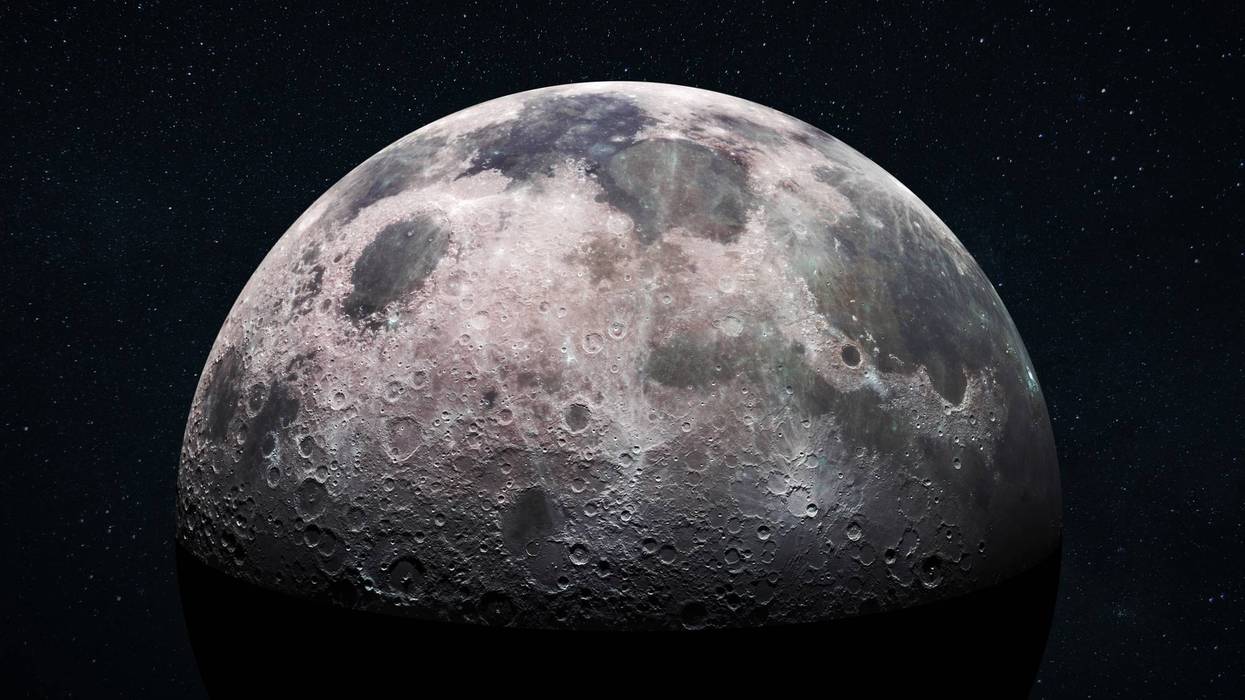

As NASA’s Artemis II crew performs its close lunar flyby Monday, scientists are reminding the public why we only ever see one side of the Moon from Earth.
The Moon does rotate — it just rotates at exactly the same rate it orbits our planet. This phenomenon, called tidal locking or synchronous rotation, means the same face always points toward Earth. The Moon takes about 27.3 days to spin once on its axis and the same amount of time to complete one orbit, keeping the far side perpetually hidden.
NASA explains that billions of years ago, Earth’s gravity created tidal bulges on the still-cooling Moon. Over time, this gravitational tug acted like a brake, slowing the Moon’s faster early spin until the rotation and orbit synchronized perfectly. A slight wobble known as libration lets us glimpse about 59 percent of the surface over time, but never all of it at once. The far side remained unseen by human eyes until the Soviet Luna 3 spacecraft photographed it in 1959.
Monday’s Artemis II mission gives four astronauts a rare firsthand look at portions of that hidden far side. The Orion capsule entered the Moon’s gravitational sphere overnight and begins its main lunar observation period after lunch today. It will reach its closest approach — roughly 4,000 miles above the surface — just after 7 p.m. EDT, with a communications blackout lasting about 40 minutes as it swings behind the Moon around dinner time.
During the roughly seven-hour flyby window, the crew will photograph key features such as the Orientale Basin and conduct scientific observations never possible from Earth. The mission marks the first time humans have flown this close to the Moon since the Apollo era and serves as a critical test before future crewed landings.
LISTEN on the Audacy App
Tell your Smart Speaker to "PLAY 1080 KRLD"
Sign Up to receive our KRLD Insider Newsletter for more news
Follow us on Facebook | Twitter | Instagram | YouTube
NASA explains that billions of years ago, Earth’s gravity created tidal bulges on the still-cooling Moon.
NASA explains that billions of years ago, Earth’s gravity created tidal bulges on the still-cooling Moon.