


A Norwegian government scientist who set out to prove that pulsed-energy weapons couldn't harm the human brain ended up giving himself a brain injury in the process - a stunning development that has reignited one of the most contentious debates in modern intelligence history.
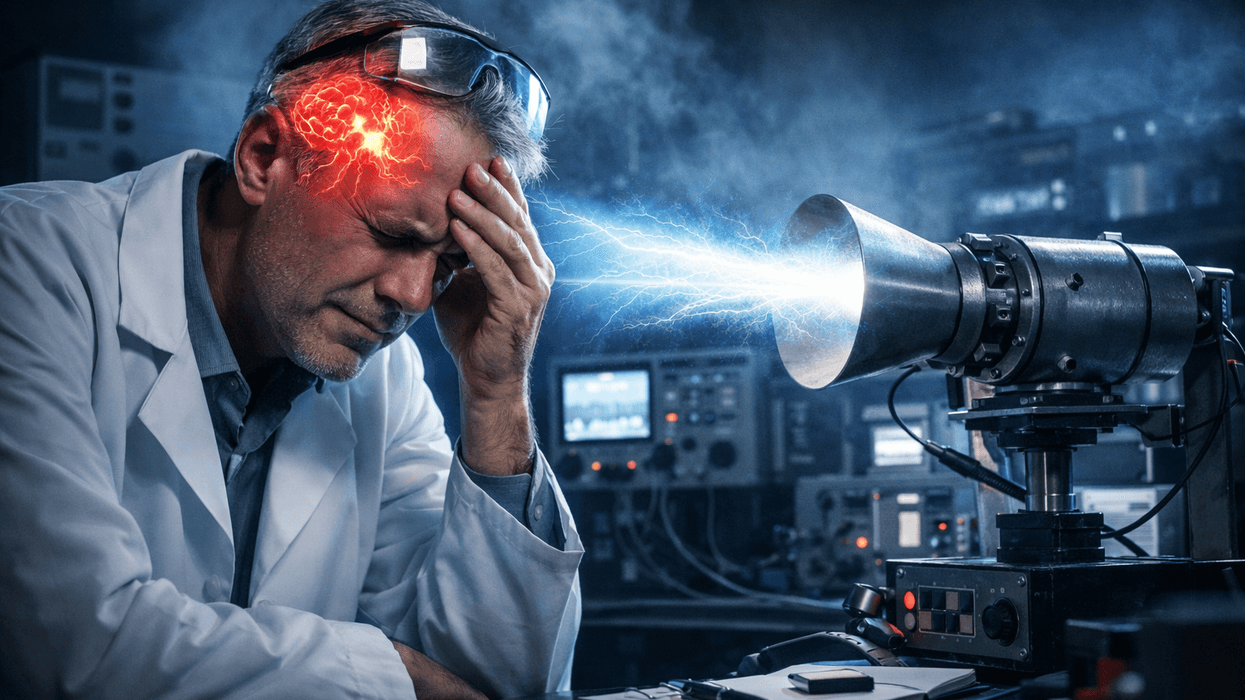
Working in strict secrecy, the unnamed researcher built a machine capable of emitting powerful pulses of microwave energy and, in an effort to prove such devices are harmless to humans, tested it on himself in 2024. He suffered neurological symptoms similar to those of Havana Syndrome, the unexplained malady that has struck hundreds of U.S. diplomats and intelligence personnel around the world.
The researcher constructed the electromagnetic pulse-emitting device using classified information and tested it on himself. Sources familiar with the experiment said he suffered neurological symptoms that were not publicly detailed. The Norwegian Embassy in Washington did not respond to the Washington Post's request for comment.
In 2024, a delegation of Pentagon representatives visited Norway to study the device. In December of the same year, a group of specialists from the intelligence community and the White House administration also traveled to Norway to discuss the findings.
Despite the alarming outcome, U.S. officials stopped short of drawing sweeping conclusions. An official familiar with the case said the researcher's symptoms are not an exact match for a "classic" case of Havana Syndrome. Still, people familiar with the test said the results did not prove U.S. diplomats and spies were targeted by a foreign enemy, but did show that pulsed-energy devices can affect human biology.
Havana Syndrome - formally referred to as Anomalous Health Incidents, or AHIs - first emerged in 2016 after personnel at the U.S. Embassy in Havana reported symptoms including dizziness, headaches, and cognitive difficulties. Hundreds of diplomats in several countries later reported similar symptoms. A 2022 panel of experts commissioned by the director of national intelligence concluded that electromagnetic waves "plausibly explained" AHI symptoms, though it emphasized significant information gaps.
In 2023, the U.S. intelligence community, including the CIA and four other agencies, assessed that it was "very unlikely" a foreign country was behind the incidents. In early 2025, some agencies changed their position, noting the possibility of foreign attacks on American diplomats. The NSA and the National Ground Intelligence Center revised their earlier conclusions, citing new developments suggesting a foreign actor could possess capabilities consistent with at least some AHI symptoms. The CIA and four other agencies, however, maintained that foreign involvement remained "very unlikely."
The Norway case offers no definitive answers, but it adds rare physical evidence to a years-long debate that has divided the scientific and intelligence communities — and left hundreds of American government employees with unexplained, and in some cases debilitating, neurological conditions.
LISTEN on the Audacy App
Tell your Smart Speaker to "PLAY 1080 KRLD"
Sign Up to receive our KRLD Insider Newsletter for more news
Follow us on Facebook | Twitter | Instagram | YouTube